When last we looked at Lieutenant-Governor-Elect John Rodgers’ campaign finances, we saw that he was nearly $53,000 in the red as of the November 19 filing deadline.
Well, now the final numbers are in — and Rodgers’ deficit has grown even larger.
His December 15 filing, which is the last one for the campaign cycle and is officially attested to as his FINAL REPORT all caps, shows total fundraising of $216,468 and total expenditures of $284,588.01.
That’s a shortfall of $68,120.01.
In percentage terms, Rodgers overspent his income by 31.5%.
It’s a curious situation for a common-sense fiscal conservative “balancin’ the books around the kitchen table” kind of guy.
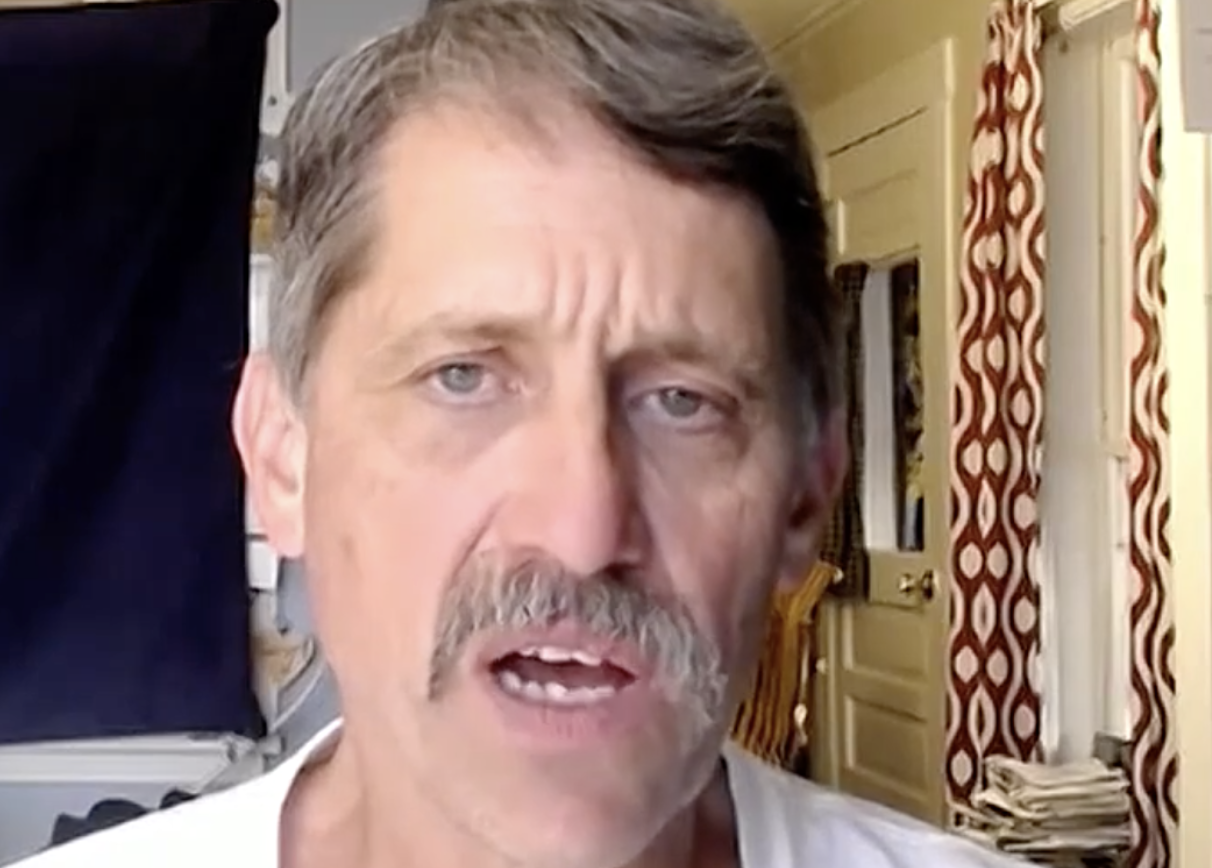
Pictured above is a curious sort of politician: He presents himself as a simple farmer, a rural populist who gives voice to the voiceless — meaning people who live outside the Burlington area. But John Rodgers, former Democratic state lawmaker turned Republican nominee for lieutenant governor, has seen his campaign picked up off the mat by major backing from Chittenden County elites. The Barons of Burlington, you might say.
These same people are writing batches of four-figure checks to a handful of Republican candidates for state Senate who have some chance of winning. The goal, clearly, is to kill the Democratic/Progressive supermajority in the Senate and end the truly historic string of veto overrides in the current biennium. It’s a longshot; the Republicans would need a net gain of four seats to end the supermajority. But if Rodgers wins, they’d only need three because the potential tie-breaking vote would be in their back pocket.*
*Correction: THe tie-breaking vote might be useful but not for veto overrides. If there’s a tie on an override, it’s already lost.
A few months ago, this Barons of Burlington thing was kind of cute. Like, can you really expect to swing an election with a sprinkling of large donations? Now, it’s looking like a serious, coordinated effort beyond anything I’ve seen in my 12+ years of walking this beat. I mean, all these people writing identical checks to the same handful of candidates? It’s beyond anyone’s notion of coincidence.
Well, those Burlington-area business types have slightly expanded their playing field as they try to weaken the Legislature’s ability to override gubernatorial vetoes. They’d backed a handful of centrist Democratic challengers to Dem/Prog incumbents (most notably Stewart Ledbetter and Elizabeth Brown*, only to see them all go down to defeat. (A similar effort was made by Brattleboro businessfolk in support of an unsuccessful challenge to Rep. Emilie Kornheiser.) They also backed some Republican hopefuls with a chance to knock off Democratic incumbents in November including LG candidate John Rodgers, two state reps running for Senate, Pat Brennan and Scott Beck, and the uncle-and-nephew tag team of Leland and Rep. Michael Morgan, running in a two-seat House district currently split between the two parties.
*We’d previously noted that Brown spent an appalling $35 per vote. It was actually $35.42, for those keeping score at home.
And now that same bunch of Vermont-scale plutocrats is throwing their weight, in the form of four-figure donations, behind Rep. Chris Mattos, running for Senate in the Chittenden North district currently repped by Sen. Irene Wrenner, and Steven Heffernan, Republican Senate candidate in Addison County. (A district that, according to Matthew Vigneau, solid Twitter follow and bigger election nerd than I, hasn’t elected a Republican to the Senate since the year 2000. Which was the year of the great civil-unions backlash that saw Republicans win in multiple unexpected locations, so grain of salt required.)
I haven’t come across any similarly blessed Republican candidates for House, but I didn’t do an exhaustive search. Then again, perhaps these low-grade plutocrats have decided (as have I) that the House is a lost cause for the Republicans.
August 1 was another campaign finance deadline, the last before our August 13 state primary. As usual, there was plenty of interesting stuff to be found. And as usual, there was a dearth of coverage in our sadly diminished media ecosystem. VTDigger waited a few days to put together a solid campaign finance database helmed by its longtime (by Digger standards) data reporter Erin Petenko. But any effort, by anyone, to identify trends or develop insights? Haven’t seen any.
Meanwhile, those who follow me on Elon’s Hellscape know why I’m late to the party. After doing a fair bit of spadework around the deadline, I came down with Covid. It was a pretty severe case for a few days and I’m still on the mend, but I feel able to put words on the screen for the first time since last Thursday.
Anyway, got some things to say. Let’s do the toplines first and then get to the details.
While the vast majority of candidates have trouble scratching a few bucks together, there are a few who have more money than they know what to do with. The primary’s one week away, early voting as been going on for roughly a month, and they’re sitting on large quantities of unspent cash.
Many of these hopefuls have been generously funded by a cadre of Burlington-area business types, who may look at their investments post-primary and despair at the improvidence of their strategery.
Two candidates got a rocket strapped to their backs by those business leaders in July. John Rodgers, running for lieutenant governor, and Rep. Pat Brennan, running for state Senate. They went from near zero on July 1 to huge, nigh unspendable hauls on August 1. Congrats, I guess?
Gov. Phil Scott’s campaign has far outstripped Democrat Esther Charlestin. Why his people are bothering to beat the bushes, I don’t know. I remain convinced that he’d be better advised to mothball his campaign and start a PAC — or a Super PAC — and spread his influence around.
The oddities around Thomas Renner’s campaign for lieutenant governor continue to proliferate. His fundraising slowed to a trickle in July, but he spent very little and has a sizeable unspent reserve. I still don’t know what his campaign is about. Or who’s running it, for that matter.
Well, I didn’t really want to wade through all the campaign finance reports filed by House candidates on July 1. But there were questions I wanted to answer, so wade through them I did.
Actually, not all. I didn’t pay much attention to incumbents. I was mainly interested in new candidates. What follows is a daunting amount of detail, so let me give you some topline findings right away.
A lot of candidates, both new and incumbent, are having trouble complying with campaign finance law. Fortunately for them, the penalties for noncompliance are minimal to nonexistent.
There’s been a lot of talk about centrists running as Democrats with financial backing from rich folks and business leaders. What I found, to my mild surprise, is that there aren’t really that many of ’em. Hardly enough to qualify as a trend. But it is worth focusing attention on those trying to poach Democratic seats.
The Republican field of new House candidates is pretty much a financial wasteland. With a few exceptions. Emphasis on “few.”
One of the most successful funders of Republican House candidates is the Rutland GOPAC. But they operate on a modest scale, and aren’t likely to move the needle appreciably.
Okay, on to the details, whether you want them or not. But hey, this is a place for political sickos, so on we go.



 The Vermont Political Observer.