Joe Gervais has returned to the political stage. The extremely unsuccessful 2022 Republican candidate for a House seat in and around Manchester is now running for state Senate in Bennington County. Two years ago in this space, I covered the extreme views ineptly concealed behind a façade of common sense conservatism, such as election denialism, Covid conspiratorialism, and belief in the thoroughly debunked canard that vaccines cause autism.
But that was a mere appetizer for the main course we have on today’s menu. Gervais is once again running as a fiscally conservative Republican of the kind that would make Phil Scott proud… but he made the cardinal mistake of revealing his true self in a blog on Substack called “Vermont Musings.”
And boy, are his views ever extreme. Among the most extreme I’ve seen in Vermont politics, and that includes the likes of Art Peterson, Gregory Thayer, and John Klar.
Fasten your seat belts. It’s going to be a bumpy ride.
My first reaction to the passing of Sen. Dick Sears? I was sad. Honestly. He was a genuinely nice guy who always tried to do what he saw as best for Vermont.
That said… I think the Senate will, on balance, be a better place without him.
See, it’s complicated.
Dick Sears was one of the last remaining Old Lions of the Senate. Like his fellow members of the pride, he was a raging institutionalist who loved the Senate exactly as it was. I see the Senate quite differently: far too self-absorbed and far less functional than it ought to be, too closed to new ideas and too scornful of the Legislature’s junior chamber.
But of all the past and present Old Lions, Sears was the most valuable. He brought a lot to the table. As longtime chair of the Senate Judiciary Committee, he knew the law as well as anyone. Due in part to his own humble upbringing, he often thought of the law in terms of those caught in its crosshairs, and that’s a rare quality in anyone who held a position of authority as long as he did. On the other hand, he thwarted many a reform measure if he thought it went too far, and was especially loath to enact any new gun bills.
It may have adhered, by the tiniest hair on its chinny chin chin, to the letter of tradition, but it absolutely blasted the spirit of tradition right to the moon.
I speak of Gov. Phil Scott’s decision to appoint a Democrat to the seat formerly held by the chair of the House Progressive Caucus. The Progs are furious, and they have every right to be.
Scott’s flimsy rationale is that Emma Mulvaney-Stanak ran for House in 2022 as both a Prog and a Dem. Okay, sure, but c’mon now. Mulvaney-Stanak’s political identification is clearly Progressive. She served on Burlington City Council as a Prog. (For a time, she was the only Prog on City Council.) She ran for mayor of Burlington as a Prog. She served for four years as chair of the Vermont Progressive Party, for Pete’s sake.
I don’t care if she ran for House that one time in the Democratic primary. Emma Mulvaney-Stanak is a Progressive through and through, and her replacement in the House should have been a Prog.
Wow. Not only did the state Senate reject Zoie Saunders’ nomination as education secretary, it did so on a lopsided 19-9 vote. That’s a damning indictment of how out of touch Gov. Phil Scott was in choosing her. I mean, it’s still unclear whether a Vermont Senate has ever rejected a cabinet appointee, much less by a better than two-to-one margin.
And of course the governor immediately appointed Saunders as interim secretary, effectively flipping the bird at the Senate. This won’t do anything to improve his turbulent relationship with the Legislature, but I doubt he really cares about that. If anything, this might presage a flurry of vengeful vetoes that would vault Scott’s all-time record into permanently unbreakable Cy Young territory. Hooray for Governor Nice Guy!
And, well, if condolences are ever in order for someone who just “won,” it’s for Zoie Saunders. She takes on a daunting challenge with an understaffed Education Agency and with the entire educational establishment wishing she would just go away and with two-thirds of the Senate rejecting her. I am convinced she was not the best choice for the job, but man, she’s sitting at the poker table with a deuce-seven off suit. Brutal.
By all appearances, the Senate’s confirmation vote on Zoie Saunders (scheduled for Tuesday) is going down to the wire. The Scott administration sure seems to think so, if chief of staff Jason Gibbs’ obsession with Krista Huling is any indication. I’ve also been told that Gov. Phil Scott is making calls to key senators on behalf of his — Only in Journalism Word alert — embattled nominee for education secretary. That’s a level of personal attention he seldom gives to any matter before the Legislature.
If the Senate does reject Saunders, it will be a seismic (another Only in Journalism word) event in our politics. It’s extremely rare for the Senate to reject a gubernatorial nominee. Certainly the administration took that step for granted. (As did Vermont Public.) Otherwise they wouldn’t have let Saunders disrupt her life and career to take the job. One has to wonder if she was fully informed about the risk involved.
If the Senate does reject Saunders due to her stunning lack of experience as (1) a public educator and (2) an administrator overseeing a sizable bureaucracy, it will be in spite of, not because of, the Senate Education Committee’s failure to carry out its responsibility to vet Saunders’ nomination.
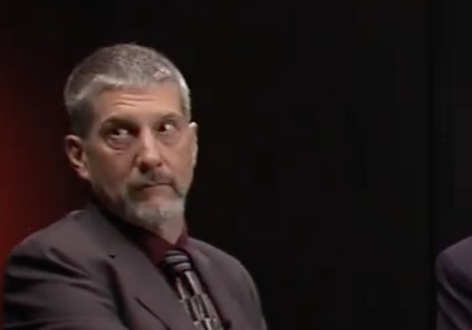
Which leads me to the man pictured above, committee chair Sen. Brian Campion, and the rather curious composition of his committee.
In the above photo, Sen. Bobby Starr is expounding on the moral failings of the “able-bodied” poor lazing around in taxpayer-funded motel rooms while his colleagues try to conceal their discomfort. It was just one of many dispiriting passages in Friday afternoon’s meeting of the Senate Appropriations Committee, in which the panel briefly took up and immediately dismissed one last effort to extend the motel voucher program (the one that currently provides shelter to 80% of Vermont’s homeless) beyond the end of June.
Well. Now that I’ve dropped you directly in the middle of the story, let’s go back and set the stage. After the full Senate on Thursday gave preliminary approval to an FY2024 budget that would end the voucher program on schedule, two first-term solons — Nader Hashim and Tanya Vyhovsky — did something very unusual for a pair of rookies in the seniority-heavy upper chamber: They tested the patience of their superiors by submitting a last-minute amendment that would have dedicated another $20 million to the voucher program. (It would have also defunded the detestable remote worker grant program, but that was just a bonus.)
The figure was based on conversations with housing advocates, who believe it’s the minimum amount required to prevent a large-scale unsheltering of voucher recipients. But multiple members of the committee, including chair Jane Kitchel, dismissed the number as inadequate. Kitchel said the $20 million would run out by year’s end, meaning the program would require a midyear injection of funds. She refused to engage in what she called “deficit” budgeting.
Hashim, who presented the amendment to the committee, didn’t have the information needed to counter Kitchel’s assertion, and no one else was given a chance to testify. Committee members also claimed that spending more on vouchers would mean fewer dollars for permanent housing, as if it was impossible to shift money from elsewhere in the budget or even — horrors! — raise revenue to cover the cost. So you see, they said with a metaphorical shrug of the shoulders, they had no choice but to end the voucher program.
I could go on, and I will, but let’s get back to Bobby Starr. You won’t want to miss this.
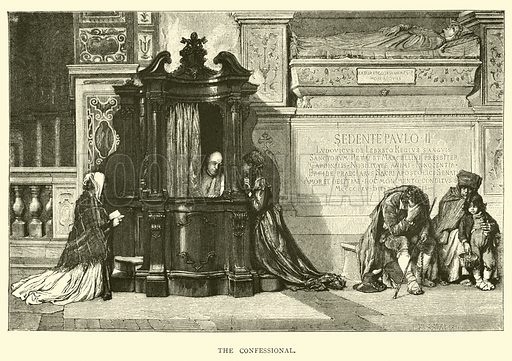
Suresh Garimella’s neutron bomb approach to the humanities notwithstanding, sometimes a professor of religion comes in very handy. Take Friday, March 3 for example. On that day, the Senate Judiciary Committee heard testimony on S.16, a bill that would require clergy to report cases of child abuse and neglect even if they learned of such crimes in confidence while acting as a spiritual advisor. Like, say, a Catholic priest hearing confession, but let’s not get ahead of ourselves.
Lined up to testify were not one, not two, but three Catholics, including Bishop Christopher Coyne of the Diocese of Burlington. You can guess what they had to say: Removing the confessional exemption would force priests to choose between state law and canon law. It would infringe on Catholics’ First Amendment right to free expression of religion.
After all of that, the committee heard from Tom Borchert, chair of the Department of Religion at the University of Vermont. And boy, did his testimony make my ears perk up.
The two big takeaways: First, the “spiritual advisor” exemption describes one and only one religious practice: Catholic confession. Second, the law as currently written creates a First Amendment issue on its own.
In the past, I have referred to legislative study committees as “the last refuge of legislative delay,” the fallback option when a bill that would actually do something gives lawmakers a raging case of the fantods. The Legislature has an insatiable appetite for creating study committees or task forces or, when they want to look as serious as possible, Blue Ribbon Commissions.
The appointed group then goes out and dutifully performs its task, and reports back to the Legislature — where the findings rarely, if ever, change anybody’s mind. More often than not, the report gets a warm reception followed by a quick trip to a dusty shelf.
There are exceptions; the panel on public sector pension reform did much to move a difficult process forward. But those cases are rare. Usually, formation of a study committee is just another way to kick the can down the road.
But I’ve come across a truly egregious example of a toothless study committee. I found one that seemingly never met, heard testimony, or gathered information, and never filed a report.
I’m talking about the Study Committee on Lobbying Activities of Organizations Receiving State Funds, organized by the state Senate in 2013 after some solons raised concerns with such organizations effectively using taxpayer funds on Statehouse lobbying.
I wrote about this in yesterday’s post exploring two continents on Lobby World. But there’s more to say about what happens when a study committee fails to achieve its purpose.
When I set out to describe the contours of the Lobby World under the Golden Dome, I knew I’d forget some pieces. Well, here are a couple of biggies — underwritten by you and me, the taxpayers of Vermont: State officials, and agencies that receive state funding, are frequently in the Statehouse lobbying on behalf of their entity.
First and foremost, officials of the Executive Branch. Cabinet secretaries and departmental commissioners spend a lot of time in the Statehouse when the Legislature is in session. This is legitimate when they’re testifying before a committee, but most of their Statehouse activity consists of roaming the halls and the cafeteria, shaking hands and maybe twisting the odd arm. When hospitality professional Al Gobeille was Human Services Secretary, he seemed to be in the Statehouse every day.
And that’s nothing more than taxpayer-subsidized lobbying.
Administration lobbying is, in fact, the most pernicious and effective lobbying of all. Because the Legislature has few resources — if any — for independent information, they are largely dependent on the Executive Branch (and lobbyists) for input. Administration officials cultivate good relationships with lawmakers because it’s beneficial for them and their governor.
This is all a big feedback loop with the infamous “revolving door” between* elective office, officialdom and lobbying proper. Many of the key players have been on one side or the other, sometimes all three, and the relationships carry forward. (And, of course, they habituate the same watering holes and eateries in the evenings.) A long friendship won’t win you the day, but you’re assured of getting a friendly ear if nothing else.
*I know, I know, you can’t say “between” three things. But “among” doesn’t sound right either. What this is is a three-way revolving door, which would best be illustrated by M.C. Escher.
It’d be interesting but impossible — but interesting — to tally up all the hours that top administration officials spend in the Statehouse, assign a very generous executive-level hourly rate to the activity, and find out exactly how much lobbying we are directly paying for.
After the jump… lobbying by agencies that receive state funds… and a Senate study of the issue that maybe possibly never happened.
It appears that there will be a push in the state Legislature to end qualified immunity for police officers. Qualified immunity makes it almost impossible to sue officers for use of excessive force; it’s become a target for reformers in the post-George Floyd era of, well, at least talking about police accountability.
It has the support of Senate Judiciary Committee Chair Dick Sears, the single most influential gatekeeper on justice-related legislation. Senate President Pro Tem Becca Balint is also signed on, another big positive.
Michael Schirling, on the other hand, is here to tell you it’ll happen over his dead body.
At the Tuesday Covid briefing, Gov. Phil Scott fielded a question about ending QI by immediately tossing it to Schirling, his public safety commissioner and former chief of police in Burlington.
Schirling, speaking on behalf of the administration, made his position quite clear.
“We are gravely concerned about the impact of that potential legislation, and we’re working with a variety of partners and stakeholders to craft a cogent and comprehensive assessment for the Legislature of the potential impacts and downsides of proceeding in that fashion.”
You don’t usually get an administration official cranking it all the way up to “gravely concerned” at this point in the session. It’s usually something milder, like “we have concerns, but we’ll see where it goes.” In this case, Darth Schirling has been sent forth by Emperor Philpatine to make sure the bill never sees the light of day.






 The Vermont Political Observer.