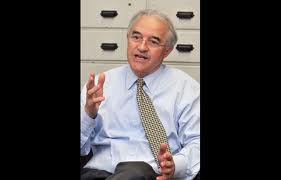
Gun owners lose a skirmish, win the war

Pro wrestling, for whatever you might think of its artistic merits, has some of the most delicious vocabulary you can find.

Today’s entries are “work” and “shoot.” A work is a fake fight meant to look absolutely real to the audience. A shoot is a rare occasion when the confrontation actually is real. (Wrestlers are friends and coworkers behind the scenes, but tempers can run high in a testosterone-fueled industry based on [scripted] physical altercations.)

Cut to a hearing of the Senate Judiciary Committee this morning, as reported by VPR’s Peter Hirschfeld. Ed Cutler of Gun Owners of Vermont is testifying,when he suddenly draws the ire of committee chair Dick Sears. Hirschfeld offers a lengthy account of the affair, which is a fun read; here’s the trigger moment, when Cutler bemoans the annual introduction of gun legislation.

Ed Cutler and Dick Sears, with the corpse of S.31. Not exactly as illustrated.

Ed Cutler and Dick Sears, with the corpse of S.31. Not exactly as illustrated.

“The problem, and you guys, you’ve been thinking about … doing this for years now, trying to figure out some way to do this,” Cutler said.

Sears chuckled.

“How do you know this,” Sears asked.

“Because you keep putting this bill in,” Cutler said.

It was at this moment that Sears’ face began to redden.

“What? Now wait a minute. I keep putting this bill in? Ed! Ed! I have never introduced a gun bill. Ever!”

Sears’ anger continued for quite a while; at one point Cutler’s hands began to shake.

Eventually the moment passed, and after the hearing, the two men shared a hearty handshake.

Bringing us to the question: work or shoot?

Well, I don’t actually think the confrontation was staged — a pretend show of prickly independence by a veteran lawmaker. But the “prickly independence” itself? That’s a work.

These guys are on the same side. Sears said so himself. And if you have any doubts about that, the Burlington Free Press is reporting this statement from Sears regarding the gun bill:

“S.31 is not on the table,” said Sen. Dick Sears, D-Bennington, the chairman of the Senate Judiciary Committee. “Quite frankly, it’s dead.”

It might have been a few uncomfortable minutes for Ed Cutler, but in the end it was just a dominance display by one of the Senate’s leading cocks. And in the end, the two men run in the same pack.

The costs of undevelopment

Sunday’s Burlington Free Press brought us a lengthy cover story about artists in the Pine Street corridor, and their fear of potential gentrification in the area.

The Pine Street corridor is a delightful, funky mix of startups, small businesses, a few larger businesses, food enterprises, art studios, and various creative types. Hipster’s paradise.

It owes its existence to a historical quirk in zoning. As the Free Press’ Molly Walsh reports:

New residential development is prohibited along parts of Pine Street under city zoning rules going back several decades. The rules were created to preserve space for industrial and commercial uses in a 225-acre Enterprise Zone that encompasses much of Burlington’s historic manufacturing section…

Today major industry has largely moved out of the area. In its place art studios, offices and smaller-scale makers of everything from bread to beer to jewelry have sprung up along with start-ups and more established business such as Lake Champlain Chocolates.

That Enterprise Zone has had the unintended consequence of keeping rent artificially low, making it possible for this Creatives’ Colony to develop. The worm in the apple: the corridor would be an ideal place to develop more housing, which Burlington needs badly. But if the zoning were changed to allow housing, propertly values would go up. And rents. And many current tenants of the old industrial buildings would be priced out.

Of course, if you leave the zoning intact, every resident of Burlington is subsidizing the Colony through inflated costs for housing and property taxes.

So the question: is that a tradeoff worth making? If you live in Burlington, are you willing to underwrite the artists and entrepreneurs, and forego the property tax revenue and easing of housing demand?

This is a question that usually goes unasked when we consider development ideas. We see the potential costs (financial, social, environmental) of a proposal, but we don’t as easily see the costs of not developing.

Same question applies to the land formerly owned by Burlington College. The easy question is, “Do we want to preserve it as open space?’ The harder questions are, “Do we all want to subsidize that space through higher property taxes?” and “If we don’t want development there, where are we willing to allow it?” Because we can’t say “no” to everything. We can’t turn Burlington — or Vermont — into a Colonial Williamsburg, frozen in time like a beetle in amber.

Walsh interviewed quite a few Pine Street artists. Frankly, some of them seem a little whiny and entitled. One, for example, acknowledged the need for more housing but asked, “‘Why here?’ is my question. Does it have to be here?”

Well, no, it doesn’t HAVE to be there. But, given the fact that more people want to live in Burlington, it has to be somewhere. If not in the South End, if not on the former Burlington College land, then where? More suburban sprawl in Williston and Essex? (You want to see bad development? Drive a few miles north from I-89 Exit 12, past the endless and growing expanses of strip malls and subdivisions in Williston and Essex.)

If Burlington says “no” to any significant upgrade in housing stock, who does it hurt most? The low- and middle-income people who’ll be priced out of the city, and the environment of the outlying areas, where development pressure will grow.

I hope there will be a reasonable compromise on Pine Street, relaxing the strictures of the Enterprise Zone or trimming its borders. Personally, I’d like to see the Pine Street Corridor retain its character — but I’d also like to see more housing that would make use of existing infrastructure and give residents a short commute by car, bike, or bus to downtown (or Pine Street) jobs.

Overall, I’d like more attention to be paid to the hidden costs of undevelopment. It’s possible to do this intelligently, allowing desirable development while retaining our character.

Grüberdämmerung

Ah, Jonathan Gruber, the gift that keeps on taking.

The latest twist in this uncomic opera: Auditor Doug Hoffer has examined Gruber’s invoices for consulting work on behalf of the Shumlin adminstration, and found them seriously wanting.

In Hoffer’s words, his review of documents “raised questions about Dr. Gruber’s billing practices and the State’s monitoring and enforcement of particular contract provisions.” More:

Dr. Gruber’s invoices referred only to “consulting and modeling” and offered no details about specific tasks. In the broadest sense, those three words describe the work performed, but such generalities do not appear to satisfy the intent of the contract.

It’s like taking a math test where you’re asked to show your work, and you turn in a sheet with “WORK” in big letters on an otherwise blank page.

Hoffer further states that top Shumlin officials Robin Lunge and Michael Costa “were aware of the need for more details in the invoices, but approved them nonetheless. … [they] had an obligation to request additional detail from Dr. Gruber, and they failed to do so.”

Gruber’s first and second invoices raise suspicion because each showed the same round number of hours worked (100 for Gruber and 500 for research assistants). Hoffer judges the round figures, and the fact that two invoices totaled exactly the same, “implausible.” He concludes that the administration “ignored the obvious signs that something was amiss.”

To me, this is the real Gruber scandal. The conservative shitfit over a handful of intemperate remarks — made during a period of years in which Gruber must have spoken on the record hundreds of times — was nothing more than political opportunism by the opponents of health care reform. But this?

Even if Gruber was invoicing to the best of his ability, it certainly reveals shoddy management by the Shumlin administration. Which is, unfortunately, of a piece with the administration’s general performance on health care reform. Did they take a relaxed approach to spending money because so much of it came from the federal coffers? Perhaps.

Here’s another fact that reinforces my interpretation. Late last year, Gruber submitted two more invoices. In an email to Hoffer earlier this month, according to VTDigger’s Morgan True, Lunge wrote that the administration was “no longer satisfied with the level of detail provided” in those later invoices.

Why “no longer”? Because Hoffer was examining the invoices and they knew they’d be embarrassed? If there’s another explanation, I’d like to hear it.

There are other problems, as reported by True: Tax documents appear to show that Gruber actually paid his research assistant far less than the amount received from Vermont for the RA’s work. DId he pocket the rest? Did the state’s lax oversight let him get away with it?

I’m a liberal, and I’m strongly in favor of universal access to health care. Our current system is an expensive stinkin’ mess, and no amount of wrongdoing by Gruber or others will convince me that reform is a mistake. But in my book, my fandom only feeds my desire for sound management by those we’ve empowered to enact reform on our behalf, and with our dollars.

The Gruber fiasco makes me wonder about the administration’s oversight of all the other consultancies associated with the reform effort. And, for that matter, its handling of the entire process.

Hoffer has referred his findings to Attorney General Bill Sorrell, who says Gruber’s invoicing raises “major questions.” He says he will meet with administration officials to see “what evidence and records are available to justify the billing amount.”

On behalf of health care reform supporters, and those who backed Peter Shumlin because of his promises to institute unversal coverage, all I can say is I hope there are no more shoes to drop. I fear that we’re only just getting our first peek inside the closet.

Choosing enemies

In case you were wondering which politicians are most feared by the other side, just check out recent press releases from the two major parties.

The Dems reacted swiftly, and harshly, to Lt. Gov. Phil Scott’s basket o’ chestnuts (issued, not through his own website, but through his government account, hmm) on the Plasan closing:

“Phil Scott should be ashamed of himself. Yesterday he sought to use news of job losses due to defense cuts and the winding down of wars throughout the world to advance his political career. These are real people’s lives, not poker chips in Lt. Gov. Scott’s political game. As the company itself said, the closure of the Plasan plant in Bennington has nothing to do with Vermont and everything to do with the fact that America is spending less on military contracts. But that didn’t stop Lt. Gov. Scott from trying to use these real individuals’ pain to try and tear down Vermont’s reputation for his own political gain. We’re better than that in Vermont.”

Ooh, harsh. You might think they’re worried about a Scott for Governor candidacy in 2016.

Well, that’s not a surprise. A little more unexpected was a recent series of releases from the VTGOP, little noticed nor long remembered, lambasting “the Shumlin-Shap Smith Economy.”

Gee, I hadn’t realized that Shap Smith had joined the Shumlin administration, or that he had any more responsibility for the economy than, say, anyone in the Cabinet. Or, for that matter, poor unfeared John Campbell.

I’m sure that Shap is duly flattered by the backhanded show of respect.

The real lessons of Plasan

Vermont’s pro-business community couldn’t hardly wait to score a cheap political point (and, as usual, soil the state’s reputation) after Plasan’s announcement that it was relocating to Michigan. Decent interval, bah: we’ve got a boilerplate press release ready to go.

Lt. Gov. Phil Scott did the honors for the VTGOP, offering a quick word of sympathy to Plasan’s workforce and then pivoting to the red meat:

This announcement is yet another clear sign that we in Montpelier must put our full focus on not only protecting, but on growing Vermont’s economy and face the reality that we are competing in a regional, national and global marketplace. We cannot continue to blame “forces beyond our control” for our job losses, but turn the mirror back on ourselves and ask ourselves: “What can we do to change the direction of this trend? How can we make Vermont better?”

The best part is Scott’s dismissal of “forces beyond our control,” when Plasan made it abundantly clear that Vermont’s business climate had nothing to do with its decision, and Vermont couldn’t have done anything to change it. But let’s not let a little inconvenient truth get in the way of a stale talking point.

Former Wall Street supremo Bruce Lisman kept it simple; he made time for one self-congratulatory Tweet, with nary a word of sympathy for the workers.

(The link is to WCAX’s story about the Plasan closing.)

Nice, Bruce. Way to show your concern for the common folk.

Okay, so the Usual Suspects reacted in the usual way: grabbing at any available pretext for regurgitating their political cud. (Please chew with your mouths closed.) But there are lessons we can learn from the departure of Plasan and other industries, and things we should bear in mind.

FIrst, let’s re-examine the unique strengths of Vermont. We do have our share of weaknesses, even if you omit the tired bromides of rightist politicos. So why do so many businesses establish themselves here or move here? Why does anybody stay? Why don’t they all move to Michigan or Texas or Mississippi?

Quality of life must be near the top of the list. Our topflight public school system is a draw. We have some very nice cities and small towns, good places to call home. Low rates of violent crime. Abundant recreation. A market small enough that entrepreneurs can gain a foothold before venturing out into the big time. (Ben & Jerry’s would have had a much harder time starting out in a big state with big distribution systems.)

I’m sure there are others. My point is, before we try to tear down Vermont, let’s figure out what we’re good at, do what we can to make it even better, and market the hell out of it.

Okay, so now: what are our weaknesses?

We should certainly review the items on the VTGOP hit list. If there are ways to smooth regulatory pathways without selling our souls, great. If forms or bureaucratic procedures are cumbersome, simplify them. But there’s no way we can compete with bigger states or other countries on things like taxes and incentives. Vermont can’t come anywhere near the packages being offered by New York state, for instance. We can’t be as low-tax as Florida or as development-friendly as Arizona, nor would I want us to be. That’s why our first priority should be identifying and maximizing our strengths.

Beyond the usual GOP talking points, I see three major areas that are drawbacks for Vermont’s business climate. In no particular order:

The high cost of post-high school education. It’s the one thing we consistently hear from business owners (as opposed to their political mouthpieces): “We can’t find enough skilled workers. We can’t fill available jobs.”

The cost of attending our public colleges and universities is absurdly high — especially at the community college level. Governor Shumlin has done some incremental things to nibble away at this problem, but has failed to tackle it in a thorough, systemic way.

Getting around. When Chris Graff wrote his memoir a few years ago, he ranked the top stories in recent Vermont history. His pick for #1: the coming of the interstate freeways. They made it possible to travel and transport goods much more quickly, at least in certain corridors. They brought dramatic change to Vermont — mostly for the good.

But large stretches of Vermont are still remote — or remote enough that it’s a significant competitive disadvantage. The biggest obstacle for places like Bennington and Rutland is the lack of high-speed roadway. The best thing we could do for them is turn U.S. 7 into a freeway. We could also use speedier corridors across central and southern Vermont.

(We pause while liberal readers gasp for breath.)

Also, and just as significantly, we need more public transportation. This is a tough nut to crack in a place with a small, scattered population, but if it was easier to get around Vermont without a car, it’d help convince people to live somewhere besides Chittenden County.

The lack of housing, for purchase and rental. One of the biggest drags on our economy is the aging demographic. What do young families need? Rental properties and small- to mid-sized houses. Just what we don’t have.

This is one area of regulation that needs to be loosened in a targeted way. We need to do more to encourage affordable housing — by which I don’t just mean Section 8 or mobile homes, I mean houses costing less than $250,000 and enough rental stock to keep rents reasonable. I’d like to see an emphasis on in-fill housing in existing cities and towns. I don’t want to open the regulatory door to more suburban sprawl.

Housing affordability touches on a fundamental problem with our 21st Century economy: wage stagnation in the middle and working classes. Part of the problem with affordability is depressed wages, something that’s beyond the scope of this post. But as long as young people are starting their lives with college debt and low salaries, we need to help them find housing that fits their budgets.

So there you have it. My initial prescription for improving Vermont’s business climate. And it has nothing (much) to do with taxation or regulation.

Metapost: All right, already

I’ve gotten a couple of comments/complaints about the Header image on this blog. My usual response is, “How dare you besmirch the name of our former President Warren G. Harding?”

Because, in case you didn’t recognize the Great Man in the later stages of his wastrel existence, that is, indeed, a photo of our 29th President, pretending to type. (Note lack of paper in the machine.)

But hey, I’ll acknowledge that after several months of unmediated Harding, it’s time for a shakeup. So I’ve uploaded several images related to writing or newspapering, and set my Header Image on “random.”

You’ll still get Old Winnie from time to time, but he’ll be one element in the rotation instead of a constant, looming presence.

So far, I’ve got six Header Images. I’ll add more when the spirit moves.

Here’s a completely unsurprising bit of news

According to the Valley News, Senate President Pro Tem John Campbell is waving the white flag on legislation that would expand background checks for gun purchases. Campbell is the chief sponsor of the gun bill; he promises to continue fighting for two other provisions: one would create a state crime for possession of a firearm by a convicted felon, the other would restrict access to guns for those declared mentally ill by a court.

The background check provision had been the chief battleground — although now that it’s seemingly off the table, the Orange Vest Brigade is stepping up its attacks on the other two items.

The news is unsurprising because (a) Senate Judiciary Committee panjandrum Dick Sears said earlier this week that the background-check provision would not pass his committee, and (b) I don’t believe Campbell ever intended the bill to pass.

Call me cynical, but I’ve seen too much of John Campbell to believe he was ever serious about background checks. He’s never been visibly pro-gun regulation, he never stakes out politically risky positions, and he rarely takes the lead role on any legislation.

I’d go so far as to speculate that he made himself lead sponsor so he could pull the bill when it became politically expedient.

In vowing to fight on for the rest of the bill, Campbell portrayed himself as a Profile In Courage:

“I’ve been told that my political career’s over because of this, and I’m more than happy to deal with that, but that’s how important it is.”

Good God, what a blowhard. His political career will survive this just fine. For one thing, he represents a completely safe Democratic district; he’ll be a Senator as long as he wants to be. For another, the two remaining provisions simply aren’t that big a deal. Nobody’s going to do an over-the-top charge into No Man’s Land for those two items.

He’s talking tough right now, but I suspect that Campbell has another white flag in his back pocket, ready to wave at the proper time.

Connect the dots, and reveal a black hat

The Senate Government Operations Committee, last seen saying yes to the Fourteenth Star, held a hearing Friday on a bill that would increase disclosure requirements for ad campaigns meant to influence legislative debate.

The bill would require disclosure of public-policy advertising over $1,000 within 48 hours. Under current law, disclosure is only required three times a year: January 25, April 25, and July 25. The April report is the biggie, since it covers the bulk of a legislative session. And it comes at the very end of the session, which means the disclosure is almost useless for finding out who’s spending money to influence which piece of legislation.

The Associated Press’ Wilson Ring was there, and reports that one of the top lobbyists in Montpelier, Andrew MacLean, testified against the idea.

Ring failed, however, to deliver the context. Which I will now do. You’re welcome.

MacLean makes a darn fine living representing numerous business interests. He told the committee that the 48-hour disclosure requirement would be difficult for lobbyists to meet.

Which is, pardon my French, pure bullshit.

The same requirement is already placed on political candidates in the last 45 days of a campaign season. If candidates can meet the requirement, surely a well-endowed lobbying firm can do so.

MacLean also efforted the First Amendment argument —  “the proposal… could infringe on free speech rights” — which is also bullshit. Disclosure imposes no limits on speech.

His alternative? “… change your disclosure dates and maybe add one or two.”

Uh-huh. And why, you might ask, is Mr. MacLean so anxious to avoid prompt disclosure? Committee chair Jeanette White gave us a hint:

[White] said the proposal grew out of a case in which a lot of money was spent trying to get members of the House to vote against an issue. She did not say what the issue was.

Well, I’ll tell you what the issue was. It was the 2013 attempt to impose a tax on sugar-sweetened beverages. The beverage and retail industries mounted an all-out effort to kill the bill, spending more than $600,000 in the first three months of 2013. We didn’t find that out until April 25, 2013, by which time the beverage tax was dead.

The chief local lobbyist for that effort? Andrew MacLean.

Fast forward to 2015, when the legislature is once again considering a beverage tax, and Andrew MacLean is once again at the forefront of a very expensive advertising and lobbying campaign against the bill.

Naturally, he prefers disclosure to be as infrequent and untimely as possible.

MacLean’s testimony was motivated by blatant self-interest. I hope the committee sees through that, and proceeds with a reasonable effort to add some transparency to the flow of money through our politics.

A new day in an old way

Vermont lawmakers, in their infinite wisdom, have decided to make a change in the hidebound office of Sergeant-at-Arms. Formerly a sinecure for beloved dodderers, the post is now apparently being filled on merit. Who knew?

In a rather shockingly one-sided vote, Francis Brooks — who was SaA for eight years after serving for 25 as a state representative — was dumped in favor of Janet Miller, deputy director of the Legislative Council. The final tally was 128 Miller, 47 Brooks.

I take it as a sign of a new attitude toward the management of the Statehouse. Gone are the days when an 87-year-old Statehouse fixture (Dwight Dwinell) could hang onto the job as long as he could get up the steps of the building. Now, wewant an actual manager.

Is this a harbinger of tighter security at the people’s house? Perhaps. There’s talk of fire drills and active-shooter drills for lawmakers. (If they’re serious about evacuation procedures, they might want to cut another couple of doors in the House and Senate chambers. The House chamber is a huge room with three exits from the main floor, two of them tiny; the Senate is a smaller room with one main-floor exit plus a small side door that leads to a room right next to the main exit. Hope the desk nearest the door doesn’t catch fire.)

So, a new day, but carried out in old-Vermont fashion. There had been complaints about Brooks, some quantifiable, some passive-aggressively vague, and many of them anonymous: he didn’t run a tight enough ship, security wasn’t up to snuff, he didn’t recruit enough legislative pages from other parts of the state, there was “a general level of discontent,” he was too “grumpy.”

Of course — and this is the “Vermont fashion” part of it — nobody told Brooks about any of this. On the eve of today’s vote, Brooks told VTDigger that “no one came to me… No individuals or group have come up and said it to me that, ‘You were wrong,’ or ‘You should have handled it this way.'”

As a flatlander who’s lived in Vermont for less than a decade, I can tell you this happens A LOT in Vermont. Direct confrontation is avoided; grievances are allowed to accumulate until the situation reaches the breaking point.

To Vermonters, this probably seems like a positive: what’s wrong with politeness?

Well, when it’s used to paper over issues instead of dealing with them, it’s counterproductive. By all accounts, Brooks didn’t see this coming until it was too late. And that’s a shame. My sense is that he operated under the old-timey conception of the job: a low-impact sinecure for a man (cough) of a certain age.

Not any more. And the fact that Brooks got a standing ovation after his unceremonious ouster is a very Vermont thing to do: it was a nice tribute to a senior figure, but coming right after the lopsided vote against him, there was something curiously hollow about the gesture. Yeah, let’s have a nice round of applause for the guy we just kicked in the teeth.

Revenge of the Slummin’ Solon

Aww, just when I thought we were rid of the guy, his tainted legacy comes back to haunt us.

GalbraithI speak of the person formerly known as The Most Hated Man in the Senate, Peter Galbraith. In a building full of people convinced that their shit don’t stink, he stood out for his towering self-regard. He saw himself as a master lawmaker and deal-broker, when in fact he was an egotistical meddler always willing to block the process if he thought things could be done better.

By which I mean, of course, that things should be done the way he wanted them done.

One of his more notorious episodes is now making life more difficult for his former Senate colleagues, who now have to relitigate the aid-in-dying law because of a classic Galbraithian power play.

Back in the spring of 2013, after an exhaustive debate across multiple sessions, the state legislature was poised to enact a bill that would have allowed terminally ill patients to seek lethal medication under strictly controlled conditions. The version that passed the House was modeled on Oregon’s successful law.

The Senate vote was expected to be very close. And at a crucial moment, Galbraith and another guy I’m pleased to call “former Senator,” Bob Hartwell, forced a radical rewrite of the bill that basically stripped away all the controls and protections. Galbraith was the driving force behind the idea; he wanted aid-in-dying without any state controls. The idea appealed to no one else, but he refused to budge. In the end, a House-Senate conference committed settled on a Frankenstein monster of a bill that imposed Oregon-style protections at first, but is set to remove them in the year 2016.

It was a ridiculous bill, but it did get aid-in-dying onto the books. And by all accounts, it’s been a success so far: very few people have used it, and even fewer have actually taken a fatal dose, but it does provide a safety valve for those truly in extremis without posing any visible danger to anyone else.

It works. But because of the Galbraith-Hartwell maneuver, the bill has to be reopened this year. Otherwise, we’d enter a Wild West situation, as the Vermont Press Bureau’s Neal Goswami outlines:

If the law is not changed, physicians will no longer be required to tell patients in person and in writing of their diagnosis, prognosis, range of treatment options, risks of taking medication and probable result of taking medication.

Nobody wants that. But thanks to Galbraith and Hartwell, the issue has to be reopened. This week, the Senate Health & Welfare Committee held a hearing on a bill that would continue the current protections beyond 2016. This has given opponents of aid-in-dying a second crack at killing the legislation. According to Goswami:

… opponents of Act 39 will look to repeal it and have allies in the Legislature who will sponsor amendments with that purpose when the legislation to keep the safeguards hits the Senate floor.

Great. We spent endless hours debating aid-in-dying and arrived at a substantial consensus. The resulting bill has worked as intended. But now, in a session already overloaded with contentious issues like the budget, taxes, Lake Champlain cleanup, education reform, and health care, we may have to live through a repeat of the 2013 debate.

And we have Peter Galbraith and his running buddy Bob Hartwell to thank for that. I really, really hope we’ve seen the last of those two assclowns.