The Cops Don’t Exist in a Vacuum

In the least shocking news of the year, Vermont Police are still being racist about their traffic stops.

The same research team that found racial disparities in traffic stops and searches two years ago, has updated its report to reflect two more years of data. And while there’s been some incremental improvement, things “are getting worse or staying the same,” according to lead researcher (and UVM prof) Stephanie Seguino.

Topline takeaways: You’re much more likely to be pulled over if you’re black or Hispanic in Vermont. If you’re pulled over, you’re much more likely to be searched — even though searches of white drivers are much more likely to uncover illegal activity.

The cherry on top: Despite a 2014 law mandating that police report the apparent race of each driver stopped, plenty of cops are flouting the law. Take, for example, Bennington’s racist PD, which is omitting the data more frequently than ever. And the Rutland PD, which has a specific problem with including racial data: “…for the 457 stops where race of the driver is not known, less than 1% of those stops had any other missing information about the stop.”

So now what? More sensitivity training? “Tough conversations”? Earnest promises to do better?

Yeah, a lot of that — although some can’t even be bothered to pretend to care. Bennington chief Paul Doucette lamely offered that he needed more time to look at the report before commenting. (The report notes that the volume of traffic stops in Bennington increased by 65% between 2015 and 2019. If Doucette has had any second thoughts about his minions’ racist performance, the word hasn’t filtered down through the ranks.)

And, judging by his track record, he probably hung up the phone and tossed the report into the circular file.

Which is not to say that we should place all the blame at the feet of a few cops and chiefs. After all, the thing about “bad apples” is that they spoil the barrel.

Or maybe the whole barrel was spoiled to begin with.

Continue reading

Bask In The Glory

Rarely do you see something so perfect that you wonder if it can possibly be real.

Submitted for your consideration: The above Craigslist ad from a rebel wannabe right here in Vermont. If you needed any evidence that we’ve got people like that just like every other state, here it is.

Now, I can’t swear to the authenticity of this thing. You’ll pardon me if I’m not anxious to get in touch with the self-described vendor. But let us take just a moment to marvel at this piece of artfully rancid Americana.

Confederate flag? Of course.

Random articles of militaria hanging on the wall? Yuh-huh.

Symbol of anti-American rebellion proudly displayed by someone selling U.S. military — pardon me, “millatery” — supplies? Oh the irony.

Only the vaguest acquaintance with the fineries of one’s native language? F’sho.

Prepper wannabe? Mmm-hmm.

Couldn’t resist sampling the goods? That freeze-dried SOS was calling to him.

Hoping to land a pickup truck worth $720? Definitely transport-challenged.

But if you’re in the market for 118 yummy-in-the-tummy military-grade meals that can be served hot or — eeeewwwww — cold, don’t let me stop you. I’d hate for you to be left Un prepaired.

How Many Merkels?

Get a load of this mook, all tac’d up like he patrols the Mean Streets of Detroit or summat

The tiny city of Vergennes is in an uproar, largely due to disagreements over its police department, which is led by George Merkel, the guy pictured above. Dude does love him some tactical gear, doesn’t he?

You wouldn’t know from his outlandish getup that he keeps the peace in a city of only 2,601 with vanishingly small rates of violent crime. You wouldn’t know that the vast majority of police calls are for things like noise complaints. I bet all that gear comes in handy when there’s a cat up a tree, eh, Chief?

You probably could guess that Merkel has come under fire for unapologetically regressive policing. I mean, he looks like he’s about one second away from Tasing the cameraman.

It’s bad enough that Addison County Sheriff Peter Newton filed a report accusing Merkel of multiple misdeeds, to wit: (1) signing official documents with “patently false information,” (2) knowingly failing to report demographic data on VPD traffic stops, and (3) falsely reporting work time and collecting double pay as a result.

(Newton’s report originated in a February meeting that included then-Vergennes mayor Jeff Fritz, an unnamed city alderman, and a sheriff’s officer who formerly served under Merkel. The four, according to VTDigger, “described Merkel as being out of control.”)

Never fear! Attorney General TJ Donovan, the persistent protector of law enforcement, has reviewed a Vermont State Police probe of Newton’s report and concluded — you’ll be shocked, I know — that “there is no evidence to suggest that Chief Merkel acted with intent to defraud” in reporting his work time, and that this concludes concludes “all ongoing investigations regarding Chief Merkel.”

Donovan’s press release — a Friday afternoon newsdump — made no mention of the other two allegations against Merkel. The most serious, to me, is the failure to report demographic data on traffic stops. The Vergennes PD, after all, has a record of racial bias in traffic policing that’s among the worst in Vermont. So there’s a real bad odor around Merkel’s failure to report pertinent data on nearly two-thirds of all his force’s traffic stops in a two-year period.

I guess Donovan, or the VSP, ignored that? The press release is silent.

Donovan’s inaction leaves the city of Vergennes a broken place. Some residents fear the police and want Merkel gone; others support their longtime chief to the hilt.

This may seem outlandish, and uncharacteristic of small-town Vermont society with its vaunted community ties and cherished slash fetishized Town Meeting Day traditions. But there are other Merkels out there. The only questions are, how many? And, since nobody in officialdom seems willing to face this issue, what do we do about it?

Keeping in mind that every unjustified, race-inspired traffic stop is a stab in the heart to our BIPOC neighbors, a disincentive for people to relocate to Vermont, and a stain on our state’s reputation.

Continue reading

Which Side Are You On, VT Dems?

Let the doubts begin! about whether Vermont Democrats really want to defeat Gov. Phil Scott in November.

VTDigger’s Kit Norton reports today that the party is dithering about whether to provide full access to its voter database to its duly nominated candidate for governor.

Full stop. That’s all that matters. I don’t care that the ponytailed pol in question is a longtime Progressive. I don’t care how many loyal Dems are butthurt over the alleged offenses of the Progs — such as daring to win elections that are, I guess, the Dems’ by birthright.

The Dems couldn’t field a stronger candidate than David Zuckerman. They should get over themselves, pull up their pants, and do the right thing.

One of my favorite people in Democratic politics, former executive director Conor Casey, gave the following rationale:

“Until we reach a point where Progressives and Democrats are not running against each other, the Democratic Party also just needs to be cautious with its data and make sure that it stays in the hands of people really underneath the party banner and not a party that is competing against them,” he said.

My advice stands. Pull yer pants up. Sure, you may think it cheeky when Progs run in Dem primaries. And I’d agree with you when Progs do so unsuccessfully and then run as Progs, which they have a habit of doing.

But the Dems are complicit in a system that makes it almost impossible for Progressives to exist purely as Progressives, which I’m sure they’d prefer to do. It’s a duopoly, unless or until we get some form of ranked-choice voting. And the defined-in-state-law primary system is an open one, so Zuckerman ran as a Dem fair and square, just like Bernie. Go ahead and enact a closed-primary system, I dare ya.

Continue reading

Why Planning and Zoning Get Such a Bad Name

As noir as it should be.

This came out a couple weeks ago, but I didn’t want to let it pass completely by.

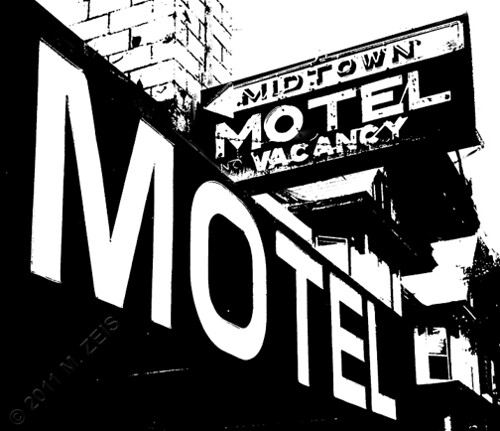
Earlier this month, Seven Days published a story about a hearing that happened in June about the fate of Burlington’s long-derelict Midtown Motel. Until The Curse of The Pit struck the city, this motel was arguably the biggest eyesore on a generally good-lookin’ downtown.

The Midtown’s been closed for 15 years, and every time I pass it by, I wonder how in hell this thing is still standing. In fact, to give you an idea how long this situation has lingered, Seven Days published one of its “WTF” pieces about the Midtown in 2011 — nine years ago. It was entitled “What’s the deal with Burlington’s Midtown Motel?” (To get the full effect, use your Jerry Seinfeld voice.)

Even then, the Midtown’s survival was a topic of befuddlement. And now, nearly a decade later, Burlington’s Development Review Board has rejected a proposal by the building’s owner to tear it down and create a small parking lot in its place.

A parking lot isn’t the most creative use for the property — but it’s a tremendous improvement over a blighted building that’s way beyond repair. So why the official cold shoulder?

Continue reading

Cris Ericson Can Go To Hell

I’d say this is another unfair screengrab, but it does seem to capture the candidate’s essence.

Perpetual candidate Cris Ericson didn’t quite manage to corner the market on Progressive nominations, and she just can’t take it.

Per VTDigger, an unofficial count of the Progressive vote indicates that the Democratic nominee, Lt. Gov. David Zuckerman, earned juuuuuust enough write-in votes to secure the Prog nom. He leads Ericson, who was actually on the ballot, by 273 to 254.

Ericson ought to be embarrassed by the tiny sliver of votes she received… but instead, she launched an all-out attack on Zuckerman, by way of an email to Secretary of State Jim Condos. She referred to Mr. Heartbeat Away as “a slimy spoiled brat” and “a low-life flatlander.”

For the record, the 49-year-old Zuckerman has been a resident of Vermont since his college days. So, more than half his life. But the attack springs from the obvious nativist impulses behind her candidacy. For instance, she advocates for closing the state’s borders to block the spread of Covid-19. (She’d exempt long-distance truckers because, I guess, they’re known for their hygiene?)

I could go rooting around in Ericson’s political past to provide more evidence of her nutbaggery, such as this candidate’s statement in which she is interviewed by a rat puppet, but I’d rather eat compost.

Continue reading

The Issueless Candidate

@thevpo1, Vermont’s Trusted Source for Unfair Screengrabs

Early contender for Best Inadvertent Laugh Line, 2020 General Election Edition, comes to us from Sen. Corey Parent, who’s got such a tough re-election fight on his hands that he’s devoting his spare time to managing Scott Milne’s bid for Lite-Guv. Fortunately for him, VTDigger has no laugh track, so the line is presented as if it were… serious:

Parent also said Milne “has always run campaigns based strictly on the issues.”

Corey’s a seasoned pro at this point, so it’s not too surprising that he managed to get through that line without breaking character. But still, congrats on a job well done.

Truth is, Milne is about the most issue-free major party candidate in recent memory. His two previous runs for office have featured a lot of snark, plenty of criticism for the incumbent, and virtually no actual positions or proposals on the issues.

In support of his assertion, Parent references Milne’s 2014 gubernatorial campaign: “Scott famously nearly defeated Peter Shumlin on the issue of health care.”

Well, yeah, I suppose. But Milne didn’t actually take a position on health care. He simply tried to make hay out of the disastrous rollout of Vermont Health Connect and Shumlin’s failure to enact a single-payer system. Just as he tried to make hay out of Shumlin’s other failings.

During the 2014 campaign, Milne kept promising to release a platform for his candidacy — and then delaying any announcements.

Continue reading

A Hero’s Journey

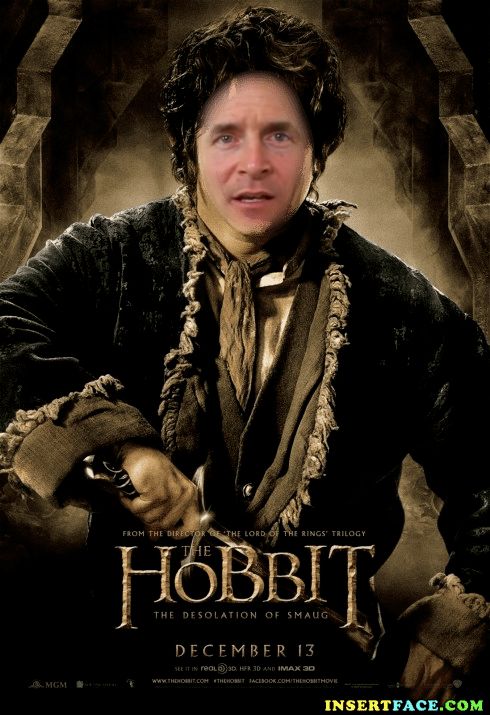
He has a hobbit’s chance.

David Zuckerman, that is. Having won the Democratic gubernatorial primary, he now faces an epic adventure in his attempt to defeat Gov. Phil Smau– I mean, Scott.

If the election were held today, Scott would win in a walk. But there is a path to victory for our friend the Zuckerhobbit. Not gonna be easy, though. And quite a few factors are largely out of his control.

As I get to play the role of J.R.R. Tolkien, here’s the long and winding road to a Zuckerman victory.

First, he needs a bunch of money right quick. Zuckerman’s campaign entered the month of August with a cash balance of $42,000. He also had a $26,000 surplus from previous campaigns. At the end of July, he reported several mass media buys totaling $15,000 that weren’t included in his August 1 financial report. I conclude that his actual cash balance on 8/1 was $27,000. Add in the surplus, and you’ve got $53,000.

To be competitive in a statewide race for governor, you need to have — conservatively — at least a million bucks. Preferably a million and a half. Between the launch of his candidacy and the end of July, Zuckerman raised $347,000. In the 2016 cycle, which had some different deadlines, Dem nominee Sue Minter had raised over a million bucks by mid-August. He has to pick up the pace at a time when liberal donors have plenty of calls for their money, including the race for president, the battle for a U.S. Senate majority, and efforts to turn state legislatures blue in time for the 2022 redistricting wars.

Second, he needs not to wake the dragon. In this case, the Republican Governors Association. So far, the RGA has committed very little money to defending Scott. But that could change in an instant. If the RGA sees evidence of a rising Zuckerman insurgency, it can pour in boatloads of cash in an instant. In 2016, it spent more than $3 million to get Scott into the corner office. It can, and will, do so again if Scott looks vulnerable. Zuckerman has to hope that the dragon doesn’t wake up until late October or thereabouts. Seems unlikely; the RGA is smarter than that.

Continue reading

The Dems’ Campaign Begins With a (Literal) Bang

Besides that, Mr. Sullivan, how did you like the play?

When outgoing state Rep. Mary Sullivan agreed to emcee this morning’s post-primary Democratic unity rally, I doubt that she realized she was taking her life into her hands. But there, right in the middle of her introductory remarks, came a-tumblin’ the state flag of Vermont, crashing down within inches of her head, rattling the podium on its way to the earth.

Undaunted, Sullivan continued to speak. Although afterward, there might have been some sharp words for whoever set up that flag.

That wasn’t the only cock-up of the morning. The microphone was not correctly tied into the Facebook Live feed of the proceedings, so most of the speakers could barely be heard. A note must also be passed to whoever wrangled that podium, which was too tall for a couple of the speakers — Sen. Debbie Ingram and President Pro Tem In Waiting Becca Balint. They looked like old drivers peeking over the wheel to get a glimpse of the road.

The speakers’ list was comprehensive. The winning and losing candidates for governor and lieutenant governor were there (except for Carcajou), as were the rest of the party’s candidates for statewide office, U.S. Rep. Peter Welch, designated hitters for our two U.S. Senators, and legislative caucus leaders.

All the speakers touted unity. Not all were specific about their calls. In fact, it wasn’t until the sixth speaker that someone actually endorsed the party’s nominee for governor, Progressive/Democratic Lt. Gov. David Zuckerman. It was Attorney General T.J. Donovan who broke the ice, “proudly” endorsing Zuckerman and lite-guv nominee Molly Gray and devoting the bulk of his remarks to praise for the Democratic ticket.

Continue reading

Initial Thoughts on a Robust Primary

So many votes, they barely fit

With the exception of the 462-candidate pile-up that was the Chittenden County Democratic Senate primary, it was an election night bereft of drama. The big races turned out to be uncompetitive, and all were called early in the evening. Which is not to say it wasn’t interesting, at least not to political dead-enders like me. So, thoughts in no particular order:

The Laracey Effect is strong. My own invention, the Laracey Effect is named for Mel Laracey, a deputy city treasurer in Ann Arbor, Michigan many moons ago. He decided to run for State House in an extremely competitive primary. It did not go well; he finished in the back of the pack. Because everyone in and around City Hall knew him, he thought that meant everyone knew him. But in truth, the vast majority of voters had no connection to City Hall.

Tim Ashe is well known in Burlington and Montpelier. He and pretty much everyone else thought that made him well known across the state. Not true. And when the pandemic prevented him from campaigning until the end of June, his fate was sealed.

I thought Molly Gray was going to win, but I was far from certain about it. Turned out she won easily. More easily in a competitive four-way race, in fact, than David Zuckerman did in (effectively) a two-way race. Zuckerman beat Rebecca Holcombe by 10,552 votes. Gray beat Ashe by 11,679, and came within 510 votes of Zuckerman’s total.

Ingram, by the way, was an even bigger victim of the Laracey Effect, believing she had a substantial statewide profile. She finished a distant fourth, and was never a factor in the race. So was former legislative counsel Peter Griffin, who ran for the House seat being vacated by Kitty Toll and finished a poor second.

Expanded mail-in voting was a resounding success. Record turnout when neither of our Senate seats were on the ballot, and with little apparent drama in either race for governor. With universal mail voting available in November, we’re on course to set another turnout record. It’s also a strong argument for mail voting everywhere — that is, if you like maximizing participation in our democracy. At least two of our three political parties do.

There was a lot of unhappiness with the Democratic gubernatorial choices. There were 6,569 write-in votes, more than six percent of the total. (Most of them presumably cast for Gov. Phil Scott.) There were 7,739 blank ballots for governor. Think of that: Seven percent of those who bothered to cast votes couldn’t be bothered to choose a gubernatorial candidate. That’s stunning. And seems to reveal a broad dissatisfaction with the choices on offer. One more sign that Zuckerman has some serious work to do.

Continue reading