The Friday edition of VTDigger’s “Final Reading” was a dereliction of journalistic duty. It was a failure by reporter Sarah Mearhoff and whoever edited and approved this piece.
Why? Well, the subject was the Senate Appropriations Committee’s all-afternoon discussion of the FY2025 budget. At the end of the day, the panel voted out a budget and sent it on to the full Senate.
That much we know. What we don’t get a shred of information about is… what was in the budget? We read about benumbed butts and Senatorial wisecracks and staffers rushing around with revision after revision of the budget and late-afternoon hunger pangs. We hear about Our Fearless Scribe discovering, to her relief, “a protein bar squished at the bottom of her bag.”
It’s not that I mind a bit of fluff. It can add some color and a sense of humanity to the proceedings. But for Pete’s sake, leave some space for the substance.
Vermont’s longest-running Cold War ended this week, with Seven Days waving the white flag and surrendering to Sen. Bernie Sanders.
It had been nine long years since Bernie had deigned to speak with Vermont’s leading weekly newspaper. The streak ended this week, with Seven Days accepting what was presumably a limited sit-down dedicated to one of the senator’s favorite issues, the plight of America’s senior citizens.
Ultimately it means little to nothing, but it made me a little sad. Way back in December 2017 when I helmed the gone-but-not-forgotten Fair Game column, I covered one of the great events of the Burlington social/political calendar: the late Tony Pomerleau’s annual Christmas shindig. It was a blatant exercise in noblesse oblige, with Pomerleau footing the bill for a big dinner and holiday gifts for selected members of the Queen City’s neediest. And every top-rank political type felt obliged to kiss Pomerleau’s ring, including America’s most notorious Democratic Socialist.
Bernie and Tony had a longstanding relationship, going back to the former’s first days as mayor of Burlington. Sanders had just won a shock victory in 1981, but he didn’t let it go to his head (at least not immediately). He realized he needed to find common ground with The Great and Good of Burlington, including its leading real estate mogul. The unlikely pair did indeed figure out how to work together, which helped get Sanders’ mayoralty off the ground and set the stage for his very successful political career.
Okay, I’m making a short story long. Point being, I wanted to get a quote or two from Sanders about this Odd Couple partnership. That was all. I approached him before the event, when he was glad-handing his way around the room. He seemed amenable at first, but that changed when I mentioned the magic words “Seven Days.” He said “Not right now” and turned away. He could have added “And not ever, either,” but it went without saying. At the time, Bernie held a grudge against Seven Days because it dared to cover some of his rare missteps. I was just caught in the crossfire.
As I walked up to him I started recording on my phone, and captured the entire 10-second exchange. I’ve saved it ever since for sentimental reasons, which is why I can quote it back to you now.
Gov. Phil Scott and his party are going in opposite directions in just about every way, and that’s bad news for both sides. And great news for the Democrats.
This campaign season ought to be a good time for the VTGOP. Scott is pushing hard on “affordability” and there’s every reason to think it will resonate with the voters. Many people are finding it harder and harder to make ends meet. Few think of themselves as comfortable.
And while Scott has a simple, compelling narrative, the Democrats are trying to address tough issues through the messy process of legislating. And yes, the Dems are looking for revenue to pay for the things they see as necessary. It’s not an easy case to make. If you want a depressing example of the Dems’ messaging problems, take a listen to the February 28 edition of Mark Johnson’s “802 News” podcast. He interviews several Democrats about the school funding situation, and they all say it’s complicated and will take time, probably years, to sort everything out. It was a bleak outlook on the verge of a Town Meeting Day where many Vermonters rejected school budgets with big tax hikes.
And all the while Scott is hammering on a single point. I’m not saying he’s right; I’m saying it’s politically effective. And it should pay dividends. The Dem/Prog supermajorities ought to be in mortal peril. Scott should be able to emerge from 2024 with a stronger hand.
But he probably won’t because the Republicans are completely unready for the moment. The party is underfunded, under-organized, and dominated by extremists. Case in point: recent events in Windsor County.
The Gods of Time were very kind to Gov. Phil Scott when they arranged for March 15 to fall on a Friday this year. The 15th was the expiration date for the Adverse Weather Conditions emergency housing program, and that’s when the governor, in all his infinite wisdom and alleged niceness, deliberately unsheltered nearly 500 vulnerable Vermonters.
And partly because it happened on a Friday, the press coverage was scant and woefully incomplete. Almost to the point of moral bankruptcy.
It was bad enough that the coverage of Scott’s decision was slanted pretty strongly in his direction. But the lack of attention to the details of his slapped-together temporary shelter “system” may well let him off the hook entirely for an administrative failure of the worst kind
Friday afternoon is the beginning of the long, dark, largely journalism-free weekend. Staffing is minimal at best. Our biggest outlets (VTDigger, Seven Days, Vermont Public) may have a designated reporter who’s on call to cover big breaking news, and the bar is pretty high for that. The TV stations have smaller staffs but still maintain a weekend presence because they’ve got airtime to fill. But don’t expect their A-Team, such as it is. Any coverage from Friday afternoon to Monday will mainly focus on fires, crashes and crime.
With the background set, what did we get for shelter coverage from Friday evening, when the shelters opened, until now? Damn near next to nothing.
The media coverage of this week’s Scott administration temporary shelter ClusterfuckTM has been dispiritingly spotty and incomplete. This has helped the admin play a little game of “Hey, look! A Squirrel!” with the press. Gov. Phil Scott came out swinging in his Wednesday press conference, bashing the Legislature for allegedly failing to address Act 250 reform when, in fact, the legislative process is a lengthy one and it’s way too early to declare victory or defeat. Since the environmental and development lobbies seem to be unified behind the effort, there is every reason to believe that significant reform will be enacted and Scott’s panic will prove unwarranted.
But all the whining and finger-pointing diverted press attention from the simultaneous rollout of the shelter plan, which involves kicking 500 vulnerable Vermonters out of state-paid motel rooms and into hastily-constructed temporary shelters that will (a) only be open at night and (b) will only be in operation for one week. Or less.
Starting tonight.
The press took a while to get in gear on the shelter issue. It’s a complicated situation, and most of the stories failed to get a full grasp of it. Some weren’t much better than water carriers for administration policy.
I was prepared to write a scathing critique of our press corps, and I will, but then I listened to a really good podcast this morning about the fallen state of journalism today. It made me realize that every one of us plays a part in the health of our media ecosystem, and that I should do something about it as well as complain about it.
A sad but inevitable day for the dwindling cadre of Burlington Free Press readers, whoever they are. The “newspaper,” if that is indeed the proper term by now, has announced that as of April 1 (no foolin’), it will no longer deliver paper editions to subscribers’ homes, instead depending on the tender mercies of Louis DeJoy’s US Postal Service to get the papers to your doorstep mailbox within probably mere days of publication.
(As a subscriber to a paper that went to mail delivery a few years ago, I can tell you that this is a road to newspaper irrelevance. We hardly ever get the Times Argus on the day of printing. There’s often a gap of two or three — or four or six or more — days between publication and delivery.)
The announcement of the change, penned by the Freeps’ Dinosaur-in-Chief Aki Soga, contained a goodly quantity of desperate word salad meant to obscure the harsh reality of the business and make this seem like a good thing.
The reality is this: Free Press readership is cratering. I doubt that there are enough print subscribers to justify anyone’s time covering ever-longer delivery routes with ever-fewer paying customers.
I hadn’t realized how bad the carnage was until I read Seven Days’ writeup, which includes some extinction-level statistics:
A couple Sundays ago, the Doonesbury comic strip took us to an imaginary Florida high school classroom where a teacher was sharing some uncomfortable truths about the Civil War as some of her students pondered reporting her apostasy to the authorities.
The strip did not appear in Gannett newspapers across the country, including the Burlington Free Press. Which raised a kerfuffle about censorship: Did our biggest national newspaper chain remove the strip out of concern for the tender sensibilities of southern readers? Were Free Press editors on board with the decision or were they forced to go along with a corporate kill order?
Well, no. The truth is a lot less scandalous, and a lot more depressing about the fallen state of print journalism in general and the comics in particular.
Truth is, Gannett canceled a whole bunch of comics including Doonesbury six months ago, almost certainly for budgetary reasons. The Free Press hadn’t run Doonesbury since last September. Nobody noticed. And that’s just sad.
It’s been a bad month for “print” media between the abrupt shutdown of Sports Illustrated, the purchase of the Baltimore Sun by a right-wing rich guy, mass layoffs at the Los Angeles Times, and the assimilation of music review site Pitchfork by GQ. There are signs that the already parlous state of journalism in America is about to get a whole lot worse.
Here in Vermont, we are relatively blessed on that front. We have robust nonprofits like VTDigger and Vermont Public and a reduced but still energetic Seven Days, plus a number of daily and weekly newspapers that are battling to produce meaningful reportage on a shoestring. A lot of energetic, smart people are doing their best to keep us informed.
But over the past couple of weeks, our media have repeatedly failed us. I feel compelled to point this out because the worse they do, the less informed we are. In the words of Peter Parker’s Uncle Ben, “With great power comes great responsibility.”
Welp, the other shoe has dropped. Two months after the death of NASCAR legend and central Vermont radio mogul Ken Squier, the stations of Radio Vermont have been sold. Depending on which source you trust, the new owner is failed Republican candidate (and very briefly head of the Ethan Allen Institute) Myers Mermel (Radio Vermont press release) or Mermel and failed Republican candidate and travel mogul Scott Milne (VTDigger). The press release, posted at the Vermont Daily Chronicle, lists Milne as “an investor” and “key advisor,” while Digger bills him as a full partner. Either way, the two men are deeply conservative. Milne somehow got a reputation as a moderate, but he’s a lot less moderate than Phil Scott.
The crown jewel in the Radio Vermont firmament is WDEV, a throwback of a locally-owned, community-oriented station with a mixed format of news, talk, music and sports. The station bills itself as “a forum for all voices to be heard,” although in recent years the loudest voices have come from the right. I expect that trend will only accelerate under its new Republican ownership.
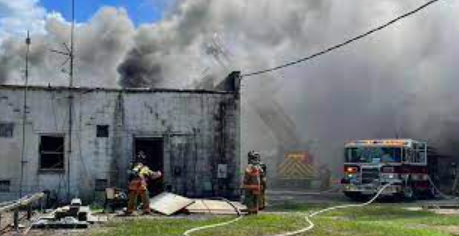
Coincidentally, the call letters “WGOP” are probably available for pocket change. The letters are currently assigned to a tiny AM station in Pocomoke City, Maryland, whose building was destroyed by fire in August 2022. It’s been off the air since then.
I’m a bit sad that the Squier family has exited the scene after owning WDEV since its founding in 1931. I’d be more dismayed by the partisan lean of the new owner/s, except that the station — and all of terrestrial radio — is a mere shadow of its former self.
A fond farewell to Ken Squier, member of the NASCAR Hall of Fame, owner of Thunder Road, and the last vestige of a lost species: the locally-oriented broadcaster. His passing made national headlines in broadcasting circles because of his place in the history of NASCAR broadcasting. Around these parts, Squier is best known for single-handedly keeping Waterbury-based WDEV Radio going for decades as an independent voice after the vast majority of his peers had sold their stations to big national corporations.
Squier was a solid Phil Scott Republican, but he did his best to keep his station open to all viewpoints because he firmly believed he was the steward of a public trust. I have nothing but respect for him and his life’s work.
There used to be WDEV equivalents in every community in America big enough to warrant an FCC license. Those stations were basically the public commons of the airwaves, virtual gathering places for their communities. It’s impossible to imagine the impact these stations had. We’ve got nothing like them anymore. And we have no idea what we’re missing.


 The Vermont Political Observer.