Category Archives: justice and corrections

Pearl-Clutching in the Publisher’s Office

It’s been a long, long time since Seven Days began its life as a scrappy alt-weekly in the grand tradition of the Village Voice and the Boston Phoenix. Credit for sheer survival unlike those spiritual ancestors, but it’s safe to say that 7D is now the voice of comfortable Burlington, the Good Folk who habituate Leunig’s and the Flynn Center and love to amble undisturbed on Church Street and in Battery Park.

That’s my conclusion from co-founder Paula Routly’s latest Publisher’s Note, “Burlington Blues.” She’s far from alone in expressing dismay about crime, drugs and homelessness in the Queen City. But what’s missing in her column is the tiniest shred of compassion or empathy. She seems to be describing a plague or an infestation of vermin with no sense at all that there are living, struggling human beings on the other side of this equation.

Routly seems to expect that her “beautiful burg” will forever be a playground for the well-to-do, a clean, safe, secure landscape that can be enjoyed without a second thought. She doesn’t roll out the reactionary language of “lock ’em up” or call for the BPD to let loose a SWAT team, but she makes it clear that she just wishes The Unwashed would just go away, doesn’t matter where, somewhere, anywhere, and leave this “beautiful burg” to those who rightfully deserve it.

Continue reading

You Can Rely On Our Stouthearted Guardians of Justice (Terms and Conditions Apply)

I guess the good folks of Pawlet know how Kiah Morris felt.

When she was subjected to racist abuse and threats, the former state representative got no backing from law enforcement on any level, from the local police to the state attorney general’s office. And now the people of Pawlet have gotten the same quality service from the Rutland County Sheriff’s Office and Vermont State Police, who failed to enforce an order for the arrest of militia training center chief Daniel Banyai.

And now the arrest warrant has expired, so Pawlet is seeking an extension with the addition of court oversight so the cops can’t stall out the clock once again.

The expiration was first reported last week by the Bennington Banner, and re-reported this week by VTDigger. The details show two police agencies with no heart for the task, making excuses for their lack of action.

I get it. Driving onto the grounds of the heavily-armed Slate Ridge compound with the intent of arresting its founder seems like a perilous endeavor. But still, it’s their job.

Continue reading

Why Don’t We Govern As If People Mattered?

Two stories on a common theme appeared Monday morning on VTDigger. The first was about a “spate” (their term) of deaths in Vermont’s prison system, mainly at the Springfield facility. The second was about another rise in opioid-related deaths that puts us on track to break the all-time record set in 2022.

In both, I heard echoes of the lamentable deal struck by the Legislature and Scott administration for a partial extension of the motel voucher program — an extension loaded with poison pills. Not only does the program leave 800 or so households without shelter, it also makes the voucher experience as unpleasant as possible for its clients from now on. Who are, just a reminder, some of Vermont’s most vulnerable. You know, the ones Gov. Phil Scott likes to say he’s committed to protecting. Echoes also of a fundamental approach toward human services programs for the poor: Make the experience difficult and unpleasant so recipients are incentivized to GTFO, one way or another.

It’s like a soup kitchen that dumps vinegar into its food because if it tastes good, people won’t be incentivized to get their own damn dinner. Mind you, not enough vinegar to make anyone sick; just enough to discourage them from partaking unless they’re truly desperate.

This approach is all too common in our social programs. It’s a lousy way to meet the needs of our most vulnerable. It’s morally questionable, and if you’re not into the “morality” stuff, it’s also counterproductive in terms of financials and outcomes. People suffer needlessly and face tougher barriers to achieving self-sufficiency, which I think is what we’re supposedly aiming for.

Continue reading

He Was the Very Model of a Modern Major-General

He was way, waaaaay worse than we realized.

And we already knew he was pretty bad.

And he was, somehow, a legit national figure in his field.

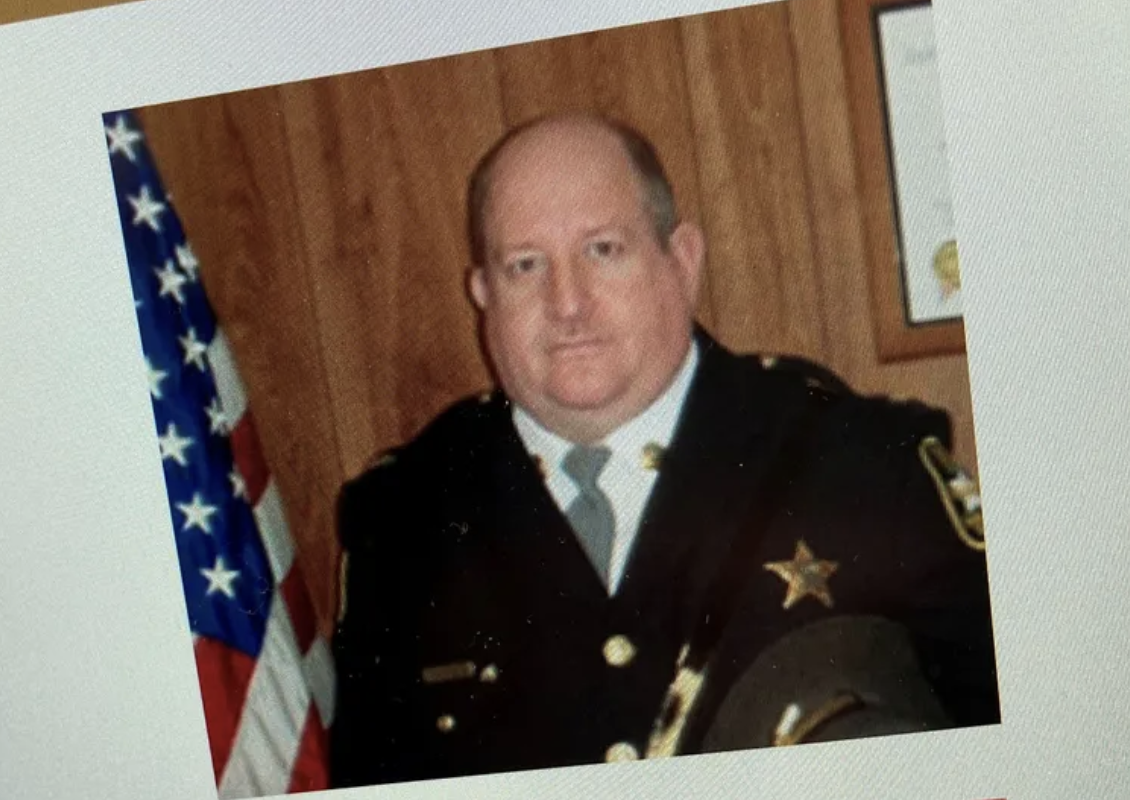
Submitted for your consideration: Bill Bohnyak, former Orange County Sheriff and second runner-up in the Tunbridge Fair’s hotly-contested Alexander Lukashenko Lookalike Contest, now revealed to be a financial mismanager on an epic scale.

Reminder: This guy was president of the National Sheriffs’ Association. Well, he was until he somehow managed to lose his bid for re-election last year, after which he no longer qualified to hold the position. In the past I’ve wondered if Vermont really needed sheriffs at all; if Bohnyak was a prominent national leader of his kind, I wonder if the whole country would be better off without them. Actually, check that. I don’t wonder. I’m convinced.

Bohnyak was also a frequent and respected presence in the Statehouse, strutting around in his physics-defyingly skin-tight uniforms, advocating for the interests of law enforcement in general and the sheriffs in particular.

And now here we are, with auditors throwing up their hands and walking away from a mandatory audit of the Orange County Sheriff’s Department because its financial records were a complete shambles.

Credit to his profession, I tell you.

Continue reading

Is Jon Murad Really Worth All of This?

I can’t say for sure what happened in the University of Vermont Medical Center’s emergency department last August. But I can say two things: It stinks, and it makes me wonder why Burlington Mayor Miro Weinberger is so bound and determined to elevate acting Police Chief Jon Murad to permanent chief.

I mean, he’s been trying since January of 2022. And the city hasn’t had a non-interim chief since December of 2019. That’s not a healthy state of affairs.

And the ER incident, in which Murad reportedly threatened to arrest a trauma surgeon who was treating a critically wounded gunshot victim, raises legitimate questions about Murad’s temperament and respect for the law.

But even worse is how Weinberger and Murad have handled the matter since. They’ve done everything they could to cover it up and minimize the consequences. That doesn’t speak to the soundness of their position.

We wouldn’t even know about the incident were it not for Seven Days dogged pursuit of the story. As it is, Weinberger managed to keep it out of sight until after the defeat of a ballot measure to create an independent police oversight board.

Continue reading

Meet the New Health Care Provider, Same As the Old Health Care Provider

Let there be rejoicing in the streets, for lo, the Vermont prison system has a new health care contractor!

Even better, they already know their way around the place. The new provider is Wellpath, a private equity-owned firm whose name just screams “Corporation Pretending to Care.” Under its former monicker Correct Care Solutions, it held Vermont’s prison health care contract from 2010 to 2015.

None of this is heartening, not the private equity ownership, not the trying-too-hard name, not the return engagement, not the recent rebranding, not the fact that it was one of only two bidders for the contract.

But let us not rush to judgment. Maybe Wellpath is different from all the others. Maybe it does business honorably and with the best of intentions. Wait, I know, let’s DuckDuckGo “Wellpath scandal” and see if we get any — oh dear.

Wellpath Founder and CEO Pleads Guilty to Federal Bribery Charges

Yep, that’s the first hit. It’s from March 2022, when former CorrectCare CEO Gerald “jerry” Boyle faced up to five years in the slammer for bribing a Virginia sheriff over a period of 12 years in exchange for the county’s jail health care contract. (Shortly after htat article was posted, Boyle was sentenced to three years in prison, a substantial penalty for a purely white-collar crime by a top corporate executive.)

But hey, after Boyle was indicted his former company thoroughly distanced itself from him, so it’s all good, right?

Boyle’s case may be an outlier, but this is an industry rife with incentives for abuse. Wellpath is one of its biggest and most experienced players. I’m not sure which I have less confidence in: Wellpath’s dedication to its duties, or the Vermont Department of Corrections’ ability to perform effective oversight of the deal.

Continue reading

The Police Protect Their Own, Part Eleventy-Billion

The guy responsible for this little piece of… art… has been allowed to leave his post at the Vermont State Police with a face-saving resignation. And that doesn’t sit well with Nancy Sheahan, the longtime head of the State Police Advisory Commission, a body not known for taking a harsh line against the Beings in Blue.

The background: In early February it came to light that state troopers had used racist, ableist and misogynist language while playing a rap battle-inspired computer game. After an initial hiccup, VSP Chief Jennifer Morrison launched an internal investigation. A month and a half later two of the troopers — Nathan Greco and Nathan Jensen — resigned, which is lightning speed for a situation like this. The VSP described the resignations as “voluntary,” but added that the SPAC had agreed with Morrison that the troopers’ actions warranted discipline “up to and including termination.”

Now comes Sheahan, calling bullshit. The Commission issued a statement on Tuesday saying that the troopers should have been fired outright. VTDigger reports that Sheahan said “it was atypical for her and her colleagues to make such a public statement,” which, no shit, Sherlock. “But, she said, ‘We felt really strongly about this case, and we wanted it out there how we viewed it and what advice we offered.'”

In other words, Morrison let her two former employees off easy and tried to use the Commission as cover. Slick.

Continue reading

Housing the Homeless as Economic Development Strategy

We could view homelessness as a moral failure… or a failure of capitalism… or a failure of individuals to live productive lives… or a problem in need of resources we can’t afford to commit…

Or… just spitballin’ here… a waste of potential and precious human capital.

For this discussion, we’re leaving out the moral and ethical dimensions of the issue. We’re not declaring an obligation to protect our most vulnerable. We’re putting on our green eyeshades and considering homelessness from a purely bottom-line point of view.

To hear the Scott administration tell it, extending the emergency motel voucher program is kind of like taking a pile of money and setting it on fire. It produces a bit of transient warmth, but it’s otherwise a waste of resources. Legislative Democrats and even some housing advocates often fall for this: They tacitly accept the premise instead of making the economic case for (a) giving everyone a roof to sleep under in the short term and (b) ending homelessness in the longer term.

When you look at it that way, you find that we can’t afford not to end homelessness. There is abundant evidence that addressing homelessness is an economic winner — not just in the long term, but almost immediately. So let’s stop talking about whether we can afford $72 million for another year of motel vouchers or $31 million for a stripped-down version of the program or a few hundred million to provide enough housing for all. Instead, let’s talk about the economic positives of a humane policy choice.

(I don’t pretend that any of this is my idea, but it ought to be more of a factor in our policy debates.)

Continue reading

Hang On, Female Inmates, We’ll Get You a New Prison In Maybe Less Than a Decade

This charming space, with its comfy chairs and natural lighting and complete absence of books, is either a prospective rendering of Vermont State University’s new “library” or a possible concept for a new women’s prison in Vermont.

Spoiler alert: it’s the latter. On Thursday morning, the House Corrections & Institutions Committee took the next small step toward building a new facility to replace the inadequate and unsanitary mess that is the Chittenden Regional Correctional Facility, a.k.a. Vermont’s women’s prison.

I say “small step” because, as the hearing revealed, it’s going to take — maybe — five to eight years to complete the process of designing, siting, and building a new facility. Or possibly longer. There could be roadblocks, and everything is dependent on a solid funding commitment. I’m sure the inmates can be patient about this.

The hearing centered on a presentation by HOK, an architectural firm that’s best known for building sports stadiums but has also designed more than $4 billion in what it euphemistically calls “justice facilities.” HOK’s Justice Division, so they say, “focuses on designs for human rights and a more just world as a whole.” By building prisons. (It received $1.5 million from the state for doing the research that led to Thursday’s presentation, which can be downloaded from the committee’s website.)

In the first phase of its study, commissioned in 2020, HOK unreservedly recommended closure of CRCF and replacement with a new facility. The state is committed to do so, but that’s about as far as it’s gotten. Veteran C&I Chair Alice Emmons said this year’s work will focus on finding a location for the new facility. “You don’t do nothin’ without land,” she said. The 2024 session will focus on moving from the concept-idea stage toward an architectural design. After that comes project bidding and selection, construction, and making the transition from CRCF to the new place.

There was no attempt to determine how large the new facility should be, but there was plenty of discussion on the subject that broke down into two camps: We’ve got to build it as big as it might possibly need to be, or we can take a less maximalist approach because we’ll continue on the path of justice reform because incarcerating large numbers of people is fundamentally inhumane and counterproductive.

Sorry, couldn’t resist.

Continue reading

I Don’t Know What This Is, But It’s Not “Fantastic”

The political leaders of St. Albans have reacted enthusiastically to a report from the city police department indicating that there were 15 internal investigations of SAPD staff in the year 2022.

That’s 15 investigations in a department with 18 staffers. You do the math.

I have a hard time being “impressed” by that (Alderperson Marie Bessette), or viewing it as “fantastic” (a member of the city’s Police Advisory Board). They are taking the report as a sign the department is unafraid to ride herd on itself. Sure, but I think it’s more like getting a fence around a toxic waste pit and starting the cleanup. I mean, if the SAPD is averaging almost one internal investigation a year per employee (which they did in the previous two years as well), there’s clearly a lot of work left to do.

VTDigger has a lengthy piece giving as much detail on the investigations as the city will release, which isn’t much. It’s still worth reading.

This is one more sign of a big problem with oversight of city and town police agencies. Civic leaders and top cops are often in codependent relationships (See also: Weinberger, Miro). I think it’s safe to say the police chief is the most influential figure in a city or town government. Not necessarily the most powerful, but the most influential. You see it in town after town: Even when a police chief or department alienates the public and stains the community’s reputation, civilian leaders are eager to close ranks with them.

Continue reading