Category Archives: Environment

A passel o’ peevishness on Inauguration Day (Part Two)

In Part One, I mused about the overreactions and hurt fee-fees on both sides of yesterday’s Inaugural protest. Now, let’s turn our attention to the Republican reaction to Gov. Shumlin’s inaugural address.

Their main point, according to VTDigger’s Laura Krantz?

Gov. Peter Shumlin ignored the most pressing issues facing Vermont in the first speech of his third term, Republican leaders said Thursday in response to the inaugural address.

… Republicans, gathered in the Senate cloakroom, said they were disappointed Shumlin ignored property taxes and health care — two issues that topped voter concerns during the elections last fall.

The speech focused on energy and the environment, so the complaint is technically accurate. But it deliberately ignores the fact that Shumlin billed this speech as Part One of a two-part 2015 agenda. And the governor specifically said he will address the “missing” issues in next week’s budget address.

“Just because the governor has acknowledged that his plan is a failure doesn’t mean he can ignore health care. We still need to address it,” said Rep. Patti Komline, R-Dorset.

Well, he didn’t “ignore” health care. He said he’d address it next week.

Sen. Joe Benning, R-Lyndonville, said the speech focused not on saving money but on spending more.

Again, the budget address hasn’t happened yet. That’s when Shumlin promises a plan to balance the budget. And, for the fiscal conservatives among us, Shumlin’s energy/environment speech contained very little in the way of new spending. The energy part was mainly about new regulation of renewables, which doesn’t involve any state spending. The Governor did propose two fees to help fund Lake Champlain cleanup, but both are narrowly targeted on sectors that contribute heavily to Champlain’s problems — agriculture and commercial/industrial development.

Republicans said they are open to his ideas about cleaning up Lake Champlain and other waterways but those are not the big problems.

Well, actually it IS a big and urgent problem because, as they well know, the EPA is holding Vermont’s feet to the fire. If we don’t come up with a solid plan, including new funding, then the feds will come down on us hard. That makes Champlain a top priority.

Speaking of new urgency, here’s another Republican missing the point.

“It needs doing but where was he four years ago on this?” said Rep. Brian Savage, R-Swanton.

Well, he was doing the same thing Jim Douglas did before him: postponing the Day of Reckoning as long as possible. As Rep. Savage well knows, the EPA has run out of patience, so Shumlin can’t possibly put it off any longer.
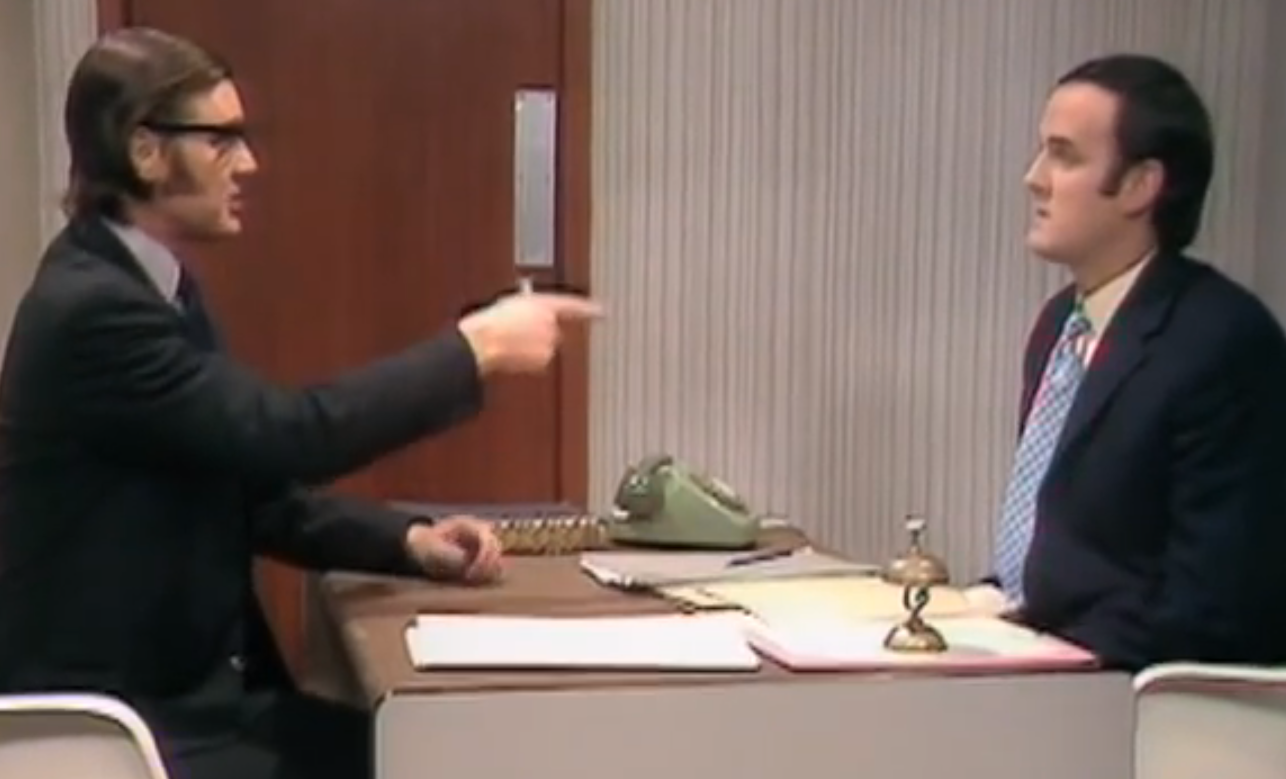
 Argument is an intellectual process. Contradiction is just the automatic gainsaying of anything the other person says.

“Argument is an intellectual process. Contradiction is just the automatic gainsaying of anything the other person says.”

House Minority Leader Don Turner was his usual obstructive self, strongly opposing any new taxes or fees, and even blasting Shumlin’s proposal to use the current use law as an enforcement mechanism for farmers and loggers. And he did so in a stunningly inarticulate fashion:

“I think that we know that current use is a very popular program, and it is a very expensive program. But if we want open land in Vermont its been one of those tools that has worked really well,” he said.

So wait. Current use is “very expensive,” and, in fact, Republicans have called for new limits on the program, but it’s “worked really well” and we can’t possibly do without it. You’d need a couple hours of pounding ’em back at the Capitol Plaza bar before that started to make sense.

The entire Republican response consisted of the automatic gainsaying of anything Shumlin said.

With one exception. Lt. Gov. Phil Scott released a statement that began thusly:

“I was encouraged to hear the Governor talk about economic growth. It was good to hear about the Governor’s support of research and development, especially after this important incentive was reduced last year. I hope that the Governor’s mention in his speech today is a precursor to a proposal included in the budget next week.”

Admittedly Scott sort of bent Shumlin’s message in his own direction, but look at what he did:

— He identified common ground instead of just saying “No.”

— He acknowledged that the inaugural address was Part One of Shumlin’s agenda.

A hint of politics, but overall gracious and inclusive. That’s the way you do it.
The Inaugural Address: A pretty good start

The speech by Governor Shumlin — which he billed as the first of two parts — included some welcome elements. It left a lot unsaid; presumably he will confront property taxes, school governance, health care, and government spending in his budget address next week.

Today’s address focused on two areas: energy, and the environment. In the latter category, his primary focus was on Lake Champlain. It was, if I recall correctly, the first time he’s drawn attention to these issues in a major January speech. To me, it’s a welcome development.

It’s also an opening for him to regain some credibility among liberals. When Peter Shumlin was running for Governor in 2010, his two big issues were single payer health care and the environment (climate change, green energy and Vermont Yankee). But while his administration has made some good incremental gains on the latter issues, they’ve never seemed to get the spotlight. Now they have.

With single payer off the table, perhaps Shumlin is returning to his other signature issue and hoping to put his stamp on Vermont’s future on energy and the environment. If he can’t be the single-payer governor, perhaps he can be the environmental governor. It’s a good strategy.

The caveat, of course: Now he’s gotta deliver.

He also opened the door to raising taxes as part of the effort to close a $100 million budget gap. In a brief preview of next week’s budget address, he said this:

We cannot simply cut our way out of our fiscal challenge year after year – taking away services that are important to so many Vermonters. Nor can we tax our way out of the problem.

Which would seem to indicate that his plan will include a mix of cuts and “revenue enhancements.” I’d urge him to take a long look at the plan that nearly passed the House a couple years ago, which would have raised taxes on the wealthy (by closing loopholes and limiting deductions) and provided some tax relief to the middle and working classes. I say “nearly passed the House” because it was stopped in its tracks by Shumlin’s stubborn opposition.

As for the details on energy and the environment:

The centerpiece on energy is a new renewables strategy, as the current (and, in some circles, controversial) SPEED program is sunsetted in 2017. The Energy Innovation Program is aimed at further boosting our investment in renewables and energy efficiency. Shumlin called the EIP “our single biggest step so far toward reaching our climate and renewable energy goals.”

Sounds good. We await the legislative process with anticipation and a bit of trepidation.

On Lake Champlain, Shumlin came up with a decent-looking package. It doesn’t go far enough, but it’s better than anything he’s offered before. He realizes, as he told the legislature, that if the state fails to meet EPA muster, we’ll face some burdensome federal regulations.

His plan includes:

— New transportation funding to curtail runoff and erosion around our roads and streets.

— New funding and technical assistance for farmers and loggers, to help them meet water-quality standards.

— More thorough efforts to enforce current water quality regulations.

— Making a change in the Current Use program, which would take away that tax break from farmers who fail to reduce pollution.

As for funding, his plan includes two new fees: One on agricultural fertilizers, and one on commercial and industrial parcels in the Champlain watershed.

The revenue would go into a newly created Vermont Clean Water Fund, a repository for state, federal and private funds. The first private money, he announced today, is a $5 million donation (over the next five years) from Keurig Green Mountain, which Shumlin called “a company that depends upon clean water.” He expressed the hope that KGM’s generosity will “inspire others.”

If he can leverage substantial donations from the private sector, his plan could accomplish quite a bit without too much stress on the state’s bottom line. Maybe enough to get the EPA off his back, at least for a while.

From this liberal’s point of view, it’s a good start. But as VPR’s Bob Kinzel said today, the Governor effectively served us dessert before dinner. Next week’s budget address will be a much less appealing dish. Plenty of mushy steamed vegetables scattered around a hunk of gray meat.

Beyond that, well, actions speak louder than words, and we’ve heard plenty of words from this Governor in the past. The political question is: Can he deliver on this agenda in a way that will repair his reputation for effective governance and bring liberals back into the fold? He can; but will he?

Our Proud Heritage of Shit-Dumping

If you happened to be hanging around Fort Cassin Point on Christmas Eve, perhaps you noticed an unusual smell. Perhaps not; but I sure hope you didn’t drink the water.

The State of Vermont legally permitted the City of Vergennes to dump 467,000 gallons of sewage and stormwater into Otter Creek and Lake Champlain on Christmas Eve. Ho ho ho.

That lovely tidbit from the Facebook page of our friends at Lake Champlain International. In case you have trouble visualizing 467,000 gallons of sewage and stormwater, LCI helpfully points out that it’s equivalent to “about 65 tractor-trailer milk tankers.”

Welcome to Vermont, kiddies!

Welcome to Vermont, kiddies!

Mmmm, good. I hope the critters at the Fort Cassin/Otter Creek Wildlife Management Area didn’t mind the state’s creative “Wildlife Management Through Sewage” technique. Or perhaps they’ve gotten used to shipments of Vergennes’ untreated crap, since state regulation of sewage and stormwater discharges is downright laughable — especially for a state with such a strong, and often unwarranted, reputation for environmental purity.

The comments on LCI’s post are often endearingly innocent: “How could this happen?” “How is this allowed?” Stuff like that.

Well, not only is it allowed, but it’s standard operating procedure in our Clean, Green state.

James Ehlers, executive director of Lake Champlain International, …says sewage spills and overflows from Vermont’s wastewater treatment systems are common occurrences.

But the public is only notified when they’re exceptionally large, as was the case in April 2005, when a Burlington sewer line ruptured, spewing millions of gallons of raw sewage in the Winooski River for days before it was repaired.

That, from a July 2013 piece by Seven Days’ Ken Picard, outlining the appalling sketchiness of state policy on releases of stormwater and sewage. By law, he writes, the state is required to post online any illegal discharge that “may pose a threat to human health or the environment” within 24 hours of learning about it — but it may take days or even weeks for the state to learn of a discharge from a municipal wastewater treatment operator.

And while the state is required to post the information online, just try to find it. I tried, and got thoroughly lost in a morass of bureaucratic jargon.

Now, if there’s a torrential downpour, just about any system will be overloaded. But many of Vermont’s municipal systems are outdated. We haven’t faced the issue because, well, we can’t afford to.

This is part of our decades of noncompliance with the Clean Water Act regarding Lake Champlain, and one reason why the EPA has had to step in and force Vermont to clean up its act.

It’s sad, if not surprising. Too often, Vermont fails to live up to its own self-image. We react with horror when new things seem to pose a threat, like ridgeline wind and the Vermont Gas pipeline. We’re much more passive about the bad things we’ve always done, like inadequate water treatment, unregulated junkyards, and the discharge of particulate matter from thousands of residential woodstoves. (The latter is largely responsible for our highest-in-the-nation rate of adult asthma. Not West Virginia or Texas; good old Vermont.)


David Mears seems like a nice guy

DEC Commissioner David Mears was on WDEV’s Mark Johnson Show this morning, mostly talking Lake Champlain cleanup. I’ve been, shall we say, somewhat critical of the Shumlin administration’s response to Champlain’s deteriorating water quality (recent post was entitled “At this rate, Lake Champlain will be cleaned up about the time the sun goes nova and the Earth becomes a cold, dead husk,” which I guess could be taken as critical). So I wanted to hear what he had to say.

The face of earnest concern.

The face of earnest concern.

And a lot of it sounded reasonable. He does, however, have a problem: the cynicism of people like me is based on decades of neglect and delay by multiple administrations — and the bare fact that the current Powers That Be are being forced to act by the feds. So pardon us if we don’t accept bland assurances at face value.

First, he made an important correction. Many news outlets reported (and I echoed the reports) that the Shumlin administration had proposed new levies on “impervious development” and agricultural fertilizers that would raise about $1 million per year for Champlain mitigation. Which is a drop in the bucket.

Well, according to Mears, the $1 million figure was a “for example” number, and the administration actually intendes to set the levies at rates that would produce $4 million to $6 million per year. Mears describes this as “seed money.” And while it still seems rather small, it’s a lot bigger than I thought. (See note at end of this post.)

Overall, Mears made a good case for the administration’s dedication to the issue. And at one point he said, “We’re used to fighting on this issue” in a way that seemed to lay the adversarial blame on both sides.

To which I’d point out that the last two administrations, at least, have been dragged kicking and screaming into taking any action whatsoever. The Conservation Law Foundation’s lawsuit against the state, for violating the Clean Water Act regarding Lake Champlain, was first filed in 2008. And that came after years of diligent efforts to convince state government to live up to its responsibilities without an expensive court battle. So if “we’re used to fighting,” it’s not because the environmental community is feeling a bit stroppy — it’s because they’ve been consistently stonewalled by state  government. There’s been little or no cooperation, at least as far as we can tell in public.

When such obstructionism is practiced by a Republican government, we’re disappointed but not terribly surprised. When it’s done by a Democratic administration that professes to hold a strong environmental ethic, it seems like a betrayal of shared ideals. And it’s the plain truth that the current administration has slow-played the issue to a crawl, even as Champlain’s quality continues to degrade.

Mears’ presentation fell short in some key areas. When Johnson (who did an excellent job holding Mears’ feet to the fire, by the way) asked about items like Ag Secretary Chuck Ross’ decision not to mandate “best practices” for farms near Mississquoi Bay and the potential laying of a natural gas pipeline under the lake, Mears ducked the questions, saying it wasn’t his responsibility.

Well, yes. But as Johnson pointed out, Lake Champlain is his responsibility. We should expect him to be fully informed on issues that affect water quality even if they’re not primarily in his bailiwick.

I came away from the interview with a greater appreciation for the nuances of the issue, and for the administration’s interest in addressing it. But there’s a whole lot of history to overcome regarding Lake Champlain — and regarding the administration’s often-slippery relationship with the truth.

In short, telling me about your plans and dedication isn’t enough. You’ve got to show me.


Postscript. In the interview, Mears noted that he’d been in contact with reporters to correct initial reporting that proposed levies on fertilizers and “impervious development” would raise $1 million per year, rather than the administration’s target of $4 million to $6 million per year. 

Well, Mr. Commissioner, nobody ever contacted me. I realize that I don’t know everything about state government, and my ignorance sometimes results in errors. I am always open to correcting any errors in the most transparent way possible. But rarely, if ever, do I get feedback from the administration. (Generally speaking, I get more feedback from Republicans than Democrats.) Now, I’m not as high on the pecking order as your established media, but I would rather be corrected than allow a mistake to remain in place. I may be a partisan blogger, but I do have a sense of responsibility. 

At this rate, Lake Champlain will be cleaned up about the time the sun goes nova and the Earth becomes a cold, dead husk

Among the news stories buried in the avalanche of Grubermania are three separate developments regarding Lake Champlain. They adhere to a familiar pattern: one baby step forward, one big step back, and yet another dopeslap from the feds.

Yep, we’re making progress by… uh… well, it’s not leaps and bounds. Creeps and crawls?

A reminder before we begin on this week. The stoutly environmental Green Mountain State would still be ignoring its stewardship of Champlain if not for the Conservation Law Foundation’s 2008 lawsuit that compelled the EPA to enforce the Clean Water Act for Lake Champlain. Specifically, to set a Total Maximum Daily Load (TMDL) for phosphorus, the chief nutrient responsible for our festive annual outbreaks of toxic algae.

Our pride and joy.

Our pride and joy.

Yeah, Green Mountains and, er, a green scummy lake. Nice.

In response to the suit, EPA decided to force tighter standards on Vermont. That happened in January 2010. In the nearly five years since, EPA has been chasing the state in an extreme slo-mo version of a Benny Hill scene, with Yakety Sax playing at 78 r.p.m. (Ask Grandpa, kids.)

(Historical sidelight: In January 2010, Louis Porter was CLF’s Lake Champlain Lakekeeper, and he hailed the EPA decision as signaling a new day and “a new, science-based approach to cleaning up Lake Champlain and making sure it remains a safe and enjoyable resource.” Today he’s a top Shumlin Administration official, which either means he’s a double agent working from within or he’s gone over to the Dark Side.)

Since early 2010, the state’s response has consisted of delay, baby steps, delay, lip service, promises, delay, half-baked initiatives, delay, pleas of poverty, delay, and… checking my figures here… delay.

Fast forward to this week.

First, the Shumlin Administration proposed a new fee on “impervious development” and a 1% hike in the fertilizer tax. The moves made sense, because agricultural fertilization and impervious development are two prime contributors to our plentiful nutrient flows into the Lake. Problem is, the two measures combined — assuming the Legislature approves them — would raise $1 million a year for lake remediation.

With cleanup costs estimated at $150 million, that’s a drop in the bucket.

(Addendum, 12/4/14. According to DEC Commissioner David Mears, the $1 million figure was basically a “for-example” sort of thing, and the administration wants to set the tax and fee rates high enough to produce $4 million to $6 million in annual revenue.) 

Second, the Administration released a 36-page Clean Water Initiative that promises to tighten water-related regulations and establish a Clean Water Fund (revenue sources decidedly sketchy) to help pay for needed improvements, One of the Initiative’s provisions involved a pirouette by the Governor; in August he downplayed the need for upgrading wastewater treatment facilities, but the Initiative called for more investment in wastewater treatment.

Then there was a step back. Or, at least, a refusal to step up, from Ag Secretary Chuck Ross. He decided not to mandate “best management practices” for farms in the Missisquoi Bay watershed, one of the most phosphorus-laden parts of the Lake. Ross gave two primary reasons, per VPR: 

— Mandating best practices “would be inconsistent with EPA’s ongoing process for water quality improvement in the Lake.” Which sounds downright Orwellian to me; limiting ag runoff “would be inconsistent” with EPA’s efforts to, uh, limit ag runoff?

— Also, “the state doesn’t have the resources available to help the basin’s farmers achieve compliance.” As if EPA is hat in hand, making a polite inquiry, rather than enforcing compliance with the Clean Water Act. Does Ross expect that, upon hearing his plea of poverty, EPA will say, “Oh, sorry. Never mind, then.”

And finally, a regional EPA official said the newly-minted Clean Water Initiative “does not go far enough to comply with federal regulations.” Stephen Perkins noted that phosphorus loads are still on the rise in many sections of the Lake, and said:

It’s going to take an awful lot of work to take those red trend lines and get them to bend down in a different direction.

VTDigger’s John Herrick summed up the bad news:

Even if the state’s plan were fully implemented, projected phosphorus levels in South Lake A and B and Missisquoi Bay would still exceed phosphorus limits set by the EPA. These are sections of the lake where phosphorus levels already must be cut by more than 50 percent to meet the federal requirements, according to the EPA.

And let me remind you that some of the worst pollution, caused by us Vermonters, is at the upstream end of the lake, in southern Quebec. We’re lucky Canada isn’t suing our asses.

In response to his comments, Perkins got some vintage rope-a-dope:

David Mears, commissioner of the Department of Environmental Conservation, said Monday that his agency has no other proposals to present to the EPA at this time. “We’ll continue to have our sleeves rolled up and we’ll continue to work.” he said.

Mears pointed to the additional but intangible impact of “technical assistance and educational outreach” programs, which he admits cannot be quantified, “but we expect it will be substantial.”

If ifs and buts were candy and nuts, we’d have a clean Lake by Christmas.

And then Mears pulled a Chuck Ross:

“We don’t want to put forward a plan that we can’t actually achieve,” he said.

Instead, I guess, EPA is supposed to be happy with a completely inadequate — but achievable — plan.

This isn’t all the Shumlin Administration’s fault. They’re dealing with the consequences of decades and decades of ignoring the problem and letting it get worse. But it has fallen in their laps, and their response has been… how did I put it… delay, lip service, delay, pleas of poverty, delay, half-baked initiatives, and delay. It’s safe to say the only way we’ll get a good cleanup plan is if EPA holds our feet to the fire until they’re glowing red.

For a liberal administration in a state that’s supposed to have a strong environmental ethic, this just sucks. To think that Vermont is having to be dragged, kicking and screaming, to do stuff we should have been doing all along, well, it makes me doubt the existence of our strong environmental ethic.

The public response to all this has been underwhelming, to say the least. Little attention seems to be paid. Even the environmental community, which ought to be spitting fire, seems oddly passive. (I’m sure CLF would say they’re working hard behind the scenes, but I don’t see it.) We look at that $150 million figure and shrug our shoulders. What can we do?

Well, apparently, our inclination is to keep loading our prize jewel with guck, and put off our day of reckoning as long as we can.

Scott Milne borrowed a bucket, and he’s going to clean up Lake Champlain

The ever-constipated Campaign of Ideas has pooped out another rock-hard nugget… this time, by way of emailed press release without any live contact with reporters.

And no wonder. Even Mahatma has to realize this one’s a clunker.

It’s a two-part plan to clean up Lake Champlain.

I repeat: “two-part.”

And part one is:

Catalyze the cleanup of Lake Champlain without raising new revenue.

Yes, part one is nothing more than a restatement of the overall idea.

Step two is even worse: he wants to raid an existing fund to pay for a tiny fraction of cleanup costs:

Amend the “Vermont Housing and Conservation Trust Fund Act” to allocate the part of the Vermont Housing and Conservation Board’s funds used for conservation to cleaning up Lake Champlain.

(Bold type is Milne’s.)

I've got just the idea for you! Low mileage, runs good, new battery & tires. Don't mind the rust.

I’ve got just the plan for you! Low mileage, runs good, new battery & tires. Don’t mind the rust.

The appendix to part two is renaming VHCB as the “Vermont Housing and Lake Champlain Cleanup Trust.”

And that’s it. That’s his entire Lake Champlain cleanup “plan.”

Okay, a couple of small problems right off the bat.

This would strip VHCB of its ability to do any other conservation work: conserving farmland through the purchase of development rights; helping preserve natural areas, historic properties, wildlife habitat; purchasing land for new parks and wildlife areas; and helping provide public access to conserved land.

— It would provide, by Milne’s own estimate, a measly $7.4 million per year for a cleanup that’s estimated to cost $150 million. In the absence of a comprehensive plan, that money won’t have much impact.

Milne isn’t bothered by robbing VHCB to pay for the lake; indeed, he says there’s no need for VHCB to do any conservation:

Milne said more than half of Vermont’s land is either owned by the state or federal government, or under some sort of easement that prohibits development today.

“I say half of our state being set aside is good enough for the next five years,” according to Milne. “Let’s have this board and these dollars go towards affordable housing and cleaning up the Lake.

Hmm. He thinks there’s more than enough conserved land in Vermont. And this is the same guy who wants to suburbanize a chunk of land off I-89 in Hartford. And who has said he’d like Vermont to take a more New Hampshire-style approach to conservation and development.

Which makes me suspect that Milne wouldn’t like to see any new regulations on farmland or developed areas or wastewater treatment.

Oh, I forgot another small problem with the plan: There’s no way in Hell the feds would buy it. And we’re under pressure from the EPA to do some real substantive stuff. This ain’t it.

I think I see why he slipped this one over the transom and avoided interacting with the media. Even by Milne’s standards, this idea is a real clunker.

(Note: As of this writing, Milne hadn’t posted the plan on his website. I’m sure he’ll think of it sometime.)


A modest entreaty to our conservation groups

Okay, here I go again, disappointing some of my lefty friends. My request:

Please don’t pursue the Burlington College land. Let the sale to a developer go through, and find another use for the $7 million you’d need to block the sale.

The news kinda got lost in the IBM/GlobalFoundries shuffle and resultant flood of Republican petulance, but Burlington College announced Monday that it would sell most of its 32-acre lakefront property to a real estate developer, who would build a mix of affordable, senior, and market-rate housing. The College desperately needs the money to get out of debt and give itself a fighting chance at survival.

The deal includes a 60-day window for preservation groups to match the purchase price and keep the land from being developed.

And I’m begging you, please don’t.

Look, I realize this is Vermont and we’re going to be inundated by earnest calls to Keep This Land Pristine and Save It For Our Children. But sorry, I’m not on board.

Vermont needs more housing. A recent report by the Champlain Housing Trust and Housing Vermont shows that a lack of housing stock is driving purchase prices and rental rates upward, making housing unaffordable for many. The high price of housing is also a drag on the economy: the report says the housing crunch hurts businesses trying to recruit workers into Vermont. Which we need, to kickstart our stagnant economy and bring more kids into our under-populated schools.

And for the sake of the environment, we especially need new housing in our cities and towns. We don’t need more sprawl, particularly in Chittenden County, which already suffers from the effects of sprawl. Infill housing is good for our environmental footprint.

Every chance for a new development brings a value judgment. Do we want to preserve the land, or do we think the benefits of a development outweigh the preservation interest?

The best answer depends on the specifics of an individual project. But bear in mind: Every time we opt for preservation, we lose property taxes, we keep housing prices high, we make it harder for people to move to Vermont, and we encourage sprawl.

So please. Go ahead and raise $7 million. But use it for something that’s a clear environmental plus, instead of the usual kneejerk reaction against a project that would actually do some good things.

Hey, I think we finally found a conspiracy theory too nutty for Vermont

Saturday was a big day for a certain group of Internet-based nutbars. Namely, the Chemtrail folks — the ones who believe the water-vapor contrails emitted by jet planes are actually “chemtrails” meant to control the weather and make us sick. Or something like that.

Well, it would’ve been a big day if anybody had showed up. It was promoted online as the Global March Against Chemtrail and Geoengineering. Its webpage showed a map with dozens of protest sites around the planet… including one in Montpelier, Vermont!

Problem is, the actual turnout at the marches was so underwhelming as to be positively comical. Each city’s “march” had its own Facebook page, and some of the post-event comments are downright sad.

Some poor sap in Rhode Island was the only one who showed up for his “mass protest.” The ringleader in Philadelphia posted some photos that show no more than a handful there. Louisville had four. A dutiful correspondent in Denver plaintively inquired, “Am I missing something? I saw no one here.” A similar “Nobody showed” from Hartford, Connecticut.

The diligent nutbars in Omaha posted a brief video of their march — featuring four protesters.

The NYC organizer posted a photo of three people leaning on a railing — but he had perhaps the ultimate conspiracy theorist’s explanation for the dud turnout: the sky was clear. CLEAR, do you understand??? “They” called off the Chemtrail spraying for the day “which, of course, portrayed protesters as ‘fringe crackpots’ in an attempt to take the wind out of our sails.”

Ohhhhh. I see. No vapor trails in the sky for one day, so all your thousands upon thousands of invisible NYC supporters stayed home. Uh-huh. Don’t let nothin’ stand in the way of your pet theory.

Nice, professional-looking logo anyway.

Nice, professional-looking logo anyway.

Anyhoo, the alleged Montpelier event apparently didn’t happen. No sign of anyone posting on its Facebook page — not before, not during, and not after. Most of the Facebook pages had at least a smattering of people promising to attend — and then not doing so. And the plaintive wails of the few who did.

But in Montpelier? Not a whisper.

I didn’t think it was possible for there to be a fringey cause beyond the pale of us quirky Vermonters, but I guess I was wrong. Congratulations, Vermont: your annoying streak of crazy has its limits.

Meet the new bird, not the same as the old bird

Oh, goodie.

[Vermont’s state bird, the] hermit thrush is just one of half of Vermont’s more than 200 nesting bird species threatened by rising temperatures that are reducing the breeding range of flyers that prefer cooler climates, according to a new National Audubon Society study.

“Every year migrating birds tell us that the seasons are changing,” says Jim Shallow, Audubon Vermont’s conservation and policy director.

… “The potential is there for about 50 percent of our birds in Vermont to see big shifts in their ranges,” Shallow says.

If we’re taking nominees for a replacement State Bird, how ’bout the flamingo?

Seriously, though. One of the arguments from the anti-renewables crowd is that we need to preserve Vermont as it is. Only problem is, that Vermont is under assault from climate change. If you think a few ridgeline wind farms will fundamentally change the character of Vermont, just wait till global warming starts kicking our ecological ass. If you don’t want to see any turbines in your viewing space, just wait till we lose all the maple trees and snow cover.

And then there’s the follow-on argument: We can’t affect the course of climate change because of China or tar sands or Al Gore’s travel schedule or NASCAR or Shumlin’s SUV, so why should we even try?

To which I say: (1) we have a moral obligation to do our best, (2) if we all think that way we’ll never get anything done, and (3) as with health care, Vermont can serve as a model for others to follow.

If we’re ever going to get a handle on carbon emissions, it’ll be through creating a fundamentally different system for energy generation and distribution — a smaller-scale, more broadly distributed system where the environmental footprint is much lighter because it’s spread evenly. That’ll require, among other things, a goodly helping of wind, solar, and hydro power — the resources Vermont can tap in abundance.

It might not be enough to save the hermit thrush, but it might help prevent its replacement by a bright pink bird that likes to stand on one foot.

Scott v. Corren, round one: a spirited, informative debate

The two major-party candidates for Lieutenant Governor stood their ground and clearly articulated their positions in their first debate this morning. Incumbent Republican Phil Scott and Prog/Dem Dean Corren debated on WDEVs Mark Johnson Show, broadcasting from a windy, chilly Tunbridge World’s Fair.

(Johnson has posted the audio as a podcast for your listening pleasure. Also, the video is available here, thanks to CCTV.)

Scott and Corren provided the voters with a clear choice… although the Scott option involves his usual bobbing and weaving on the issues. But that’s Phil Scott, and he said as much in his closing statement: if you like the job I’ve been doing, I promise two more years of the same. Corren made a strong, understandable case for his progressive agenda, particularly single-payer health care.

Neither candidate made any notable stumbles. If you went in a Phil Scott fan, you almost certainly left as one. Ditto Dean Corren. Undecideds were given a lot to think about, and a clear choice between two contrasting styles and philosophies.

I also have to say a word on behalf of host/moderator Mark Johnson. He conducted the proceedings without a hard-and-fast format, which often results in a stilted faux-conversation; instead, Johnson was able to maintain a flow and pursue follow-up questions as he saw fit.

The first half of the debate was dominated by health care reform, and especially whether to

Dean & Pete: Best buds

Dean & Pete: Best buds

pursue single-payer. That was to Corren’s advantage; since he has a clear position.

He began with the fiscal case for single-payer. He argued that single-payer would be simpler than the former or current system, and far better for controlling health care costs. It will require new taxes, he acknowledged, but the current system is extremely burdensome; single-payer will reduce the overall burden. As Lieutenant Governor, he would be an advocate for single-payer, communicating its virtues and being a “watchdog” to ensure that the details are done correctly.

Cost control efforts have failed, Corren argued, because no one entity has full control over all the costs. If a reform cuts costs in one area, those costs are actually shifted to an unregulated area. Single-payer would allow for a unified effort to cut costs.

Phil & Pete: Best buds

Phil & Pete: Best buds

Scott remains “skeptical” — his favorite word, as he himself admitted. He wants to see the details before making a decision on single-payer, but he clearly prefers to stick with the current system instead. Which involved a bit of tortured logic: he said that the rollout of Vermont Health Connect has been “disastrous,” but that nonetheless, having a health care exchange “makes sense.”

He also said that reform may be difficult because Vermont is such a small state, and offered the idea of a tri-state insurance “coalition” involving Vermont, New Hampshire, and Maine.  Not sure he articulated the advantage of such an approach, but there you go.

Personality and approach: Scott kinda tried to have it both ways — but hey, that’s the way he is. He played up the advantage of his “collaborative” approach but also claimed that “I stick to my guns.” When asked to cite an example of an issue he feels strongly about, he offered the environment and growing the economy. Not a convincing display of passion or principle; everybody is in favor of both. The devil is in the details.

Corren portrayed himself as a strong progressive voice on the issues. As such, he’d be a valuable part of Governor Shumlin’s team. But at the same time, he’d be independent enough to take stands when he sees fit. As such, he argued, he’d be a better “watchdog” over health care reform than Scott because he truly wants it to be successful: “We need a Lieutenant Governor who will work for reform, not be skeptical.”

Party problems: When asked about past differences between Progs and Dems, including his own criticism of the Dems, he said that was all behind him, and asserted that the Democratic Party and the electorate in general have moved to the left, making a better fit between D and P. “I feel very comfortable working with the Democrats,” he said. “I’m proud of what the Democratic majority has done.”

Scott was asked why the Republican Party struggled so much in Vermont. He blamed perceptions of the national party’s stands, especially on social issues. He said the “core of Vermont Republlicanism” was embodied by leaders like George Aiken, Bob Stafford, and Jim Jeffords, and said “We lost that, and we need to refocus.”

Property taxes and school funding: Scott said he was “disappointed in the Legislature” for failing to tackle the issue this year. He said “we need to do it,” but acknowledged that “it’s difficult.” He said that education costs need to be brought under control and acknowledged that might require some school consolidation. But he said it should be on a “case by case basis” instead of an overall mandate.

Corren said the school funding system has hurt the middle class more than anyone; the wealthy pay a smaller proportion on a per capita basis, and income sensitivity eases the burden on poor and working Vermonters. He advocated expanding income sensitivity to the entire populace — which would presumably shift some of the burden upward. He also pointed out that health care is perhaps the biggest driver of school cost increases, and again stumped for single-payer.

Energy. Corren is a strong proponent of developing renewables, including wind. He referred to the “imagined horrors” of living near wind farms, which won’t make him any friends in the Annette Smith camp. He did say that the state should have a clear plan that includes specific areas where wind should be developed and where it should not.

Scott is, to use his favorite word, a wind power “skeptic.” He declared himself a “big proponent of renewable energy,” but emphasized solar power over wind. He repeated his earlier support for a moratorium on new wind projects.

On the Vermont Gas pipeline, Scott tried to have it both ways, expressing his support for the project as a “bridge to the future,” but also supporting a second look at the project by the Public Service Board. Corren declared himself a “skeptic,” saying the economic and environmental benefits of the pipeline are “not proven.”

Children and DCF: Neither candidate had much to offer. Corren said that “problems persist” but acknowledged that he’s “not sure what to do.” Scott said that the Department of Children and Families is full of “good people doing good work,” and wondered if they needed more resources without committing to it. And he returned to his hobby-horse of economic development, arguing that the “affordability crisis” puts more “stress on families.”

Top priorities: As a closing question, Johnson asked each man what they would pledge to do in the next two years.

Corren: He would “work on the details of health care reform, and make sure we have a sustainable plan.” He also promised to work on jobs and development, particularly in the renewable energy sector. He sees that as a major growth opportunity for Vermont.

Scott promised “the same thing as in the past. A collaborative effort to bring people together as a team to move Vermont forward.”

And then, given the last word, he fired a shot at the Democrats. In the last legislative session, he said, there were hundreds of bills, but only about 20 of them had to do with growing the economy. And most of those, he added, failed to pass.

The truth of that assertion probably depends on your definition of bills that have to do with the economy. But Corren didn’t have the chance to respond.

With that, the debate was over. I have to say that, thanks to Johnson’s stellar work as moderator and two candidates who can articulate their positions well, it was one of the more informative debates I’ve ever heard. Too bad there will only be three more, thanks to Phil Scott’s reluctance.