Author Archives: John S. Walters

Unknown's avatar

About John S. Walters

Writer, editor, sometime radio personality, author of "Roads Less Traveled: Visionary New England Lives."

The Legislature’s vote for governor will not be close

The Man Alone, Scott Milne, briefly emerged from his hidey-hole a few days ago to tell the Associated Press’ Dave Gram that his chances of being elected governor “are getting better on a weekly basis, if not a daily basis.”

Curious thing to say, with less than a week until the vote. Speaking calendrically, there ain’t no more “weekly” left. But if you think that’s a bit confusing, wait till you read what he told VTDigger’s Anne Galloway: 

Milne said on Sunday his “chances are improving.” When asked how many lawmakers support his candidacy, he said his statement was “non-mathematical.”

“I’m not counting votes, and if I was, I don’t think I’d have close to 91,” Milne said. He said he could get 25 or 100 votes, but “more likely I’m going to lose, I don’t really know.”

Scott Milne, the lone constant in an ever-changing world.

Scott Milne, the Man From Another Dimension.

I make that a quintuple spinaroonie: up, down, down, up, down. Whatever happens, he’ll be both disappointed and vindicated, I guess.

Anyway, if he thinks he’s gaining ground, he’s wrong. The Legislature’s vote will not be close. Gov. Shumlin will win, with perhaps a handful of Democrats crossing party lines to vote for Milne.

At this point, the cynical among you might be saying, “Hey, didn’t you predict an easy win for Shumlin in November?”

Yup, me and every other pundit and politico in Vermont. But I feel confident enough to tiptoe out on a limb once again. The Legislative vote is a whole different animal than the general election.

In November, a whole lot of liberals and card-carrying Democrats voted for someone other than Shumlin or simply left their ballots blank. There’s substantial evidence that the Democratic vote was far smaller in the gubernatorial race than elsewhere. It was easy to cast a protest vote when “everybody knew” that Shumlin would win. I certainly believed that Shumlin didn’t really need my vote. After the results came in, a liberal friend who voted for Milne swore never to cast a protest vote again.

The ironic but unmistakable conclusion: if people had thought the race was close, Shumlin would have done better. To put it another way, if voters had thought they might actually elect Scott Milne, he wouldn’t have done so well.

In the legislative vote for governor, there’s no kidding around. When you’re one out of 200,000, you can tell yourself your vote doesn’t count that much. When you’re one of 180, you really can’t. Each lawmaker is going to take the vote seriously.

And while leadership insists they aren’t twisting any arms, party discipline does — rightly — play a role. Parties are based on some sense of shared purpose and loyalty, which is why I’ve been so harsh on John Campbell and Dick Mazza for their open support of Lt. Gov. Phil Scott.

When push comes to shove, and all the cards are on the table, how many Democrats are really going to vote for the other guy? Even if the ballot is secret, it wouldn’t be hard to figure out who voted which way. I expect Milne to get a modest number of Democratic votes, but no more than that.

Besides party loyalty, there’s also Vermonters’ tendency to stick with the familiar. Shumlin may have lost a lot of voters, he may have cost some lawmakers their seats, he may have turned his back on his signature policy proposal, but he’s still “Our Guy.” If the Senate Democratic Caucus gave near-unanimous support to Our Guys John Campbell and Dick Mazza, how many would abandon Peter Shumlin, who’s another one of Our Guys?

There’s also this: Just about everybody in the Statehouse knows that Scott Milne would be a disaster as governor. Well, at best he’d be a two-year placeholder. At worst, Legislative leadership would work around him. But nobody except Scott Milne wants Scott Milne to be governor.

Including all the Republicans who’ll vote for him on Thursday. I’ve written this before and it continues to be true: do you ever see Milne and the top Republicans together? Do you see any mention of “Governor Milne” when Republicans talk about their plans?

Is Milne involved at all in Phil Scott’s little “pitch session” with business leaders on Wednesday?

Nope, nope, and nope.

If the Republicans believed that Milne had the remotest chance of winning, they’d have him out front at every VTGOP event. But they don’t, in spite of their utterances to the contrary, so he remains The Invisible Man.

And on Thursday, he will formally become the losing candidate for governor. As he should be.

(And if I’m wrong, I will cheerfully fess up.)
The Assassination of Mary Morrissey by the Coward Shap Smith

The Burlington Free Press doesn’t have much time for state government these days, what with the dismissal of its entire Statehouse bureau and its obvious skeleton-crewing in recent weeks.

But boy, they’ve got plenty of time to spare for the potential reassignment of a single Republican back-bencher.

[State Rep. Mary] Morrissey, [R-Bennington]… confirmed Friday she has been told that House Speaker Shap Smith, D-Morristown has plans to reassign her to a yet to be determined committee.

… Morrissey said she sees the move as an effort to silence a legislator who has been forced to ask tough questions that Democrats are not asking themselves.

Or, to put it another way, it’s a routine committee reshuffle, the kind that happens every couple of years. A whole lot of others will be shifted around in the next few days. It is within the purview of the Speaker to make committee assignments.

Morrissey and her allies are depicting this move as an effort to stymie oversight of health care reform. Which, frankly, gives a hell of a lot of credit to Morrissey. In my brief exposure to her work, she seems to be a garden-variety naysayer on health care reform, ideologically opposed to Obamacare and Shummycare under any circumstances, and not offering any special expertise on the subject.

The Speaker himself put it this way:

“I’ve spent a lot of time looking at a group of people that will work well together to come up with policy,” Smith said.

“I want to put together people who will work effectively together and don’t have baggage from past fights,” Smith said.

Since Morrissey is toting a steamer trunk full of conservative dogma, Smith seems to have reason for her removal. It has less to do with the alleged danger she poses to Democrats, and more to do with her kneejerk opposition. She’s not a watchdog, she’s a fallen tree in the roadway.

Her possible removal from the Health Care Committee is standard operating practice. And, frankly, not that big a deal. It’s not like she’s the only one who can ask inconvenient questions, and it’s not like she has special knowledge of the health care system.

Well, if she does, she hasn’t shown it.

Our still-broken inpatient psychiatric system

One of journalism’s highest purposes is to lance the boils of society — to expose unpleasant truths that everybody is doing their best to ignore.

A prime example appears on VTDigger today: a story by Morgan True about the continuing problems in the state’s psychiatric care system, and particularly the brand shiny new state hospital in Berlin.

Among the key points:

— Even after the facility’s opening, some psychiatric patients have found themselves parked in emergency rooms for days or even weeks.

— There have been 59 documented attacks by patients on hospital staff, some resulting in significant injuries.

— The hospital houses a couple dozen of the most severely ill people in Vermont. Many have been convicted of violent felonies. One doctor told True that the hospital is “one of the most dangerous workplaces in Vermont.”

— State law strictly limits the restraint or medication of patients against their will. Even the most violent.

— In part because of this dangerous work environment, the hospital has been consistently understaffed since its opening. As a result, it has yet to operate at full capacity.

Which brings us back to point one: several months after the hospital’s opening, severely mentally ill people are still being warehoused in ERs.

This is a whole lotta bad stuff. It shows a mental health care system that’s still functioning poorly even after the Shumlin Administration’s entire plan has been put in place.

The Department of Mental Health, for its part, seems to be taking a remarkably lax and unforthcoming attitude toward the situation. DMH knows the total number of attacks on staff, but it won’t release any information on staff injuries.

And according to DMH Deputy Commissioner Frank Reed, the department “has not tried to compare the number of violent incidents at VPCH to other psychiatric hospitals.”

Well, why the hell not? I’d think you’d want to know whether our problems are unique, or simply the natural consequence of caring for the most severely mentally ill.

Reed also flunks the transparency test when it comes to waiting times in hospital emergency rooms. He says average wait times have decreased, but…

Reed was unable to provide documentation of average wait times, saying those figures are still being “pulled together.” The numbers will be presented to a legislative oversight committee in January.

Perhaps Mr. True should apologize for inquiring at an inopportune time. But it shouldn’t be that hard to assemble those numbers. Indeed, I’d expect a Department that’s doing its job to compile those figures on an ongoing basis.

In fact, I’d be very surprised if DMH doesn’t have the numbers already. It’s Management 101, isn’t it? Keep track of your most important statistical markers?

True’s report raises all kinds of questions about state law, the Shumlin Administration’s concept of a mental health care system, and how many resources were spent trying to develop a system that was undersized from the start. DMH officials are talking about supplementing the system with a new 14-bed secure residential facility, but acknowledge that it’ll be a tough sell when lawmakers are under the gun to cut the budget. DMH may have already squandered its best opportunity to create a good system.

And please don’t insult me with the “No one could have foreseen” excuse. The people responsible for inpatient care were all saying the same thing after Irene: the Shumlin Administration’s plan was so bare-bones that it was almost doomed to fail. While their advice was ignored, how many millions did the Administration spend on inadequate plans, patchwork facilities, and extra costs? (One example: according to True, the state has paid more than $1 million since 2012 for sheriff’s deputies to monitor psychiatric patients in hospital ERs.)

And it turns out, to the surprise of no one who works in the field, that a 24-bed hospital costs nearly as much to run as the old 50-bed facility, and costs more on a per-bed basis because the foundational staffing needs are so high.

And, given that the new hospital has some of the same kinds of problems as the old one, I have to ask if our laws are out of whack. I mean, look: We’re talking about the two dozen  sickest people in Vermont, many of them violently, dangerously sick. The restrictions on restraint or medication without patient approval may be the best thing for the vast majority of patients; I believe different standards should apply to the very sickest. They are the ones least capable of exercising sound judgment, and most capable of inflicting harm on staff or fellow patients.

One commonality between the old hospital and the new is our strongly patient-centric laws. It seems clear to me that those laws are on point for the vast majority of patients, but that there should be a different standard for patients in the state hospital.

Woman, ever the nurturer

Odd experience today.

A bit of background first. We have an older car that we’ve been taking to the same independent repair shop since we moved here. Never been to the local dealership.

Until today, when I wanted to replace a burnt-out headlight before the weekend. So I called the dealership (which shall go unnamed), and got an incredibly chirpy female who answered the phone with a clearly rehearsed, boss-mandated greeting. I asked for Service, and she sent me to voice mail. I left a message.

An hour later, I called back. Got the same chirpy greeting from a different female. She checked around a bit, and told me I could come in anytime today. And informed me that “Jim” hadn’t had time to return my call because they were short-staffed. Okay.

So I go in. The gents on duty in Service are old-school Grunt ‘n Scratch types. The one who didn’t return my call is clearly just a little bit pissed that I made a second call. But what do I know? The longer I waited, the less chance I had of getting the headlight replaced. On a Friday.

The guys are all either staring at their computer screens or talking on the phone or both. They don’t tell me Jack Squat, so I hang around the desk. Waiting for, oh, maybe a time estimate? An invitation to sit down and have a cuppa joe? I don’t even know whether they’re taking action on my car or just typing stuff into their computers.

About ten minutes later, Randy the Service Guy tells me it’s all set and charges me sixteen bucks.

That’s nice, fast and cheap. But it left me wondering: if the dealer took all that trouble to train his female receptionists to be cheerful and order them to use an overly chirpy rehearsed greeting, then why doesn’t he send his Service Guys to charm school? Whatever good will the female receptionists may have created with their obviously canned greeting was more than undone by the Service Department’s complete lack of communication skills.

And, more broadly, why is it the gals’ job to be the business’ smiley face?

I look forward to returning to my independent garage, where the owner is a woman and the female receptionist actually knows quite a lot about cars. And everybody is equally polite and businesslike.

A Fair Point

A top Vermont pol not known for podium-pounding or rabble-rousing has sent some unusually fiery language in the direction of Vermont’s leading telecom provider.

House Speaker Shap Smith says he has doubts that FairPoint Communications will continue to provide telecommunications services to Vermonters for the long term as its workers continue to strike and service complaints pile up.

Smith, a Democrat, said he believes the company is looking to shed labor costs in order to sell.

You may have missed that little New Year’s Day newsflash, because it was written by the Mitchell Family Organ’s Neal Goswami, and appeared in the paywalled Times Argus and Herald. Nobody else has reported it so far.

FairPoint workers have been on strike since mid-October. Top Democrats have pressured the company to settle, but it has refused to budge. In fact, CEO Paul Sunu recently sent a response to those Dems, portraying his company as the willing negotiator and the unions as the hard-heads.

Smith told Goswami he was “insulted” by the letter, and said FairPoint was putting itself “in a tough place.” And he’s got capitalism’s weapon of choice in his pocket: money.

Smith said the state has provided subsidies to FairPoint in recent years to help it deliver service to rural areas. But the company is not likely to receive a warm reception from lawmakers in the new session, he said.

He accused FairPoint of “trying to basically bust [the] union[s],” and added that “they’ve got a real problem on their hands in the Legislature.”

FairPoint may also have “a real problem” with state regulators. It has proposed a new rate plan that would cap rates for basic phone service (the loss leader) while allowing FairPoint to raise other rates (advanced phone packages, business phones, Internet, satellite TV) without seeking regulatory approval.

Gee, that’d be a big fat giveaway, wouldn’t it now?

At a time when service problems have spiked since the unions walked out, and FairPoint has had one major interruption in its E-9-1-1 system, you’d hope that state regulators would be keeping an eagle eye on these mooks instead of giving them open access to non-basic customers’ wallets.

Beyond the immediate situation, Smith questioned whether FairPoint would still be in Vermont five years down the road — and whether it would be able to find a buyer for its northern New England business. And he’s got a (cough) fair point: the landline business is shrinking everywhere, and rural phone service means high maintenance costs and low profits.

That’s why Verizon dumped our business on FairPoint a few years back.

Smith wants state government to be proactive about the situation, rather than wait for FairPoint to bleed us and its workers dry and then dump the business entirely.

He said the Legislature should begin exploring options with the Public Service Department to ensure the state has quality telecommunications services in the future.

What might that mean? A quasi-public Vermont Telecom? Or a fully public one? Not sure what Shap has in mind, but it’s an important issue we should face before it turns into a crisis.

Phil Scott’s Business Buzzword Bingo

For those just joining us, Lt. Gov. Phil Scott is planning a big policy offensive (and fundraiser) on Day One of the new legislative session. To wit, a “pitch session” for business leaders to give their ideas on how to fix Vermont’s economy. I can only take this as a direct challenge to the Democratic majority.

Now, in case you thought this event promises to be a big fat snooze… if you saw this as an utterly predictable gathering of likeminded people for the sole purpose of validating preconceived notions… well, you’re probably right.

But I’ve come up with a way to make it more interesting.

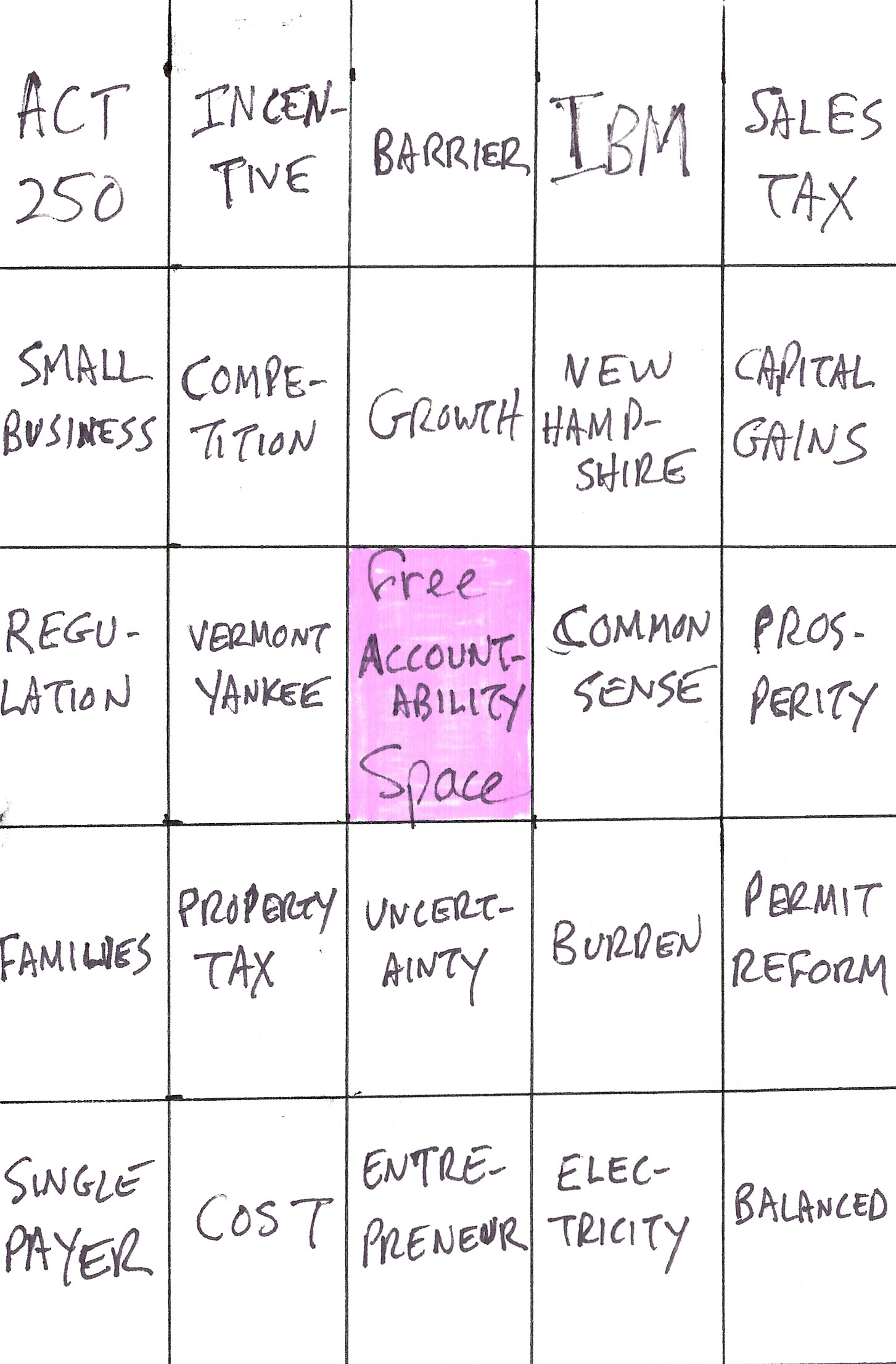
I call it Phil Scott’s Business Buzzword Bingo. Simply print out the image below, take it with you to the “pitch session,” and whenever you hear a buzzword, write an “X” over the corresponding square. When you get five in a row, across, down, or diagonally, shout “BINGO!” You win!

Ground rule: plural or alternative versions of a word are accepted as matches. For instance, “Costs” is a match for “Cost,” and “Entrepreneurial” is a match for “Entrepreneur.”

Come to think of it, you should print out a whole bunch of Business Buzzword Bingo cards, because I have a feeling we’ll get a BINGO every two minutes or so.

Here you go: your very own Phil Scott’s Business Buzzword Bingo playing card. Enjoy!


Phil Scott Bingo card

Bernie bullies the tycoons

Oh noes, the tender hearts of Wall Street have been bruised beyond healing. And the man responsible for this crime against humanity?

Bernie Sanders, of course.

Oil trading data that exposed the extensive positions speculators held in the run-up to record high prices in 2008 were intentionally leaked by a U.S. senator, sparking broader concern about industry confidentiality as Congress moves on Wall Street reform.

Senator Bernie Sanders, a staunch critic of oil speculators, leaked the information to a major newspaper in a move that has unsettled both regulators and Wall Street alike.

For those with short memories, the 2008 oil price spike immediately preceded the mortgage meltdown and near-implosion of the economy. In retrospect, the oil business may have gotten lost in the shuffle. But it was huge at the time; there were predictions that oil prices would shoot through the roof, sending many Vermonters scurrying to pre-buy their heating oil. At what turned out to be the very peak of the market.

The primary cause of that spike was not demand or global instability or exploration failures; it was the severe warping of the market at the hands of speculators. The notable non-Socialist Matt Cota of the Vermont Fuel Dealers Association put it this way in 2008:

The problem is that the trading of oil has been deregulated. And large financial players are dominating the market. A recent Washington Post article showed that 81 percent of future oil contracts are controlled by non-physical players — people who don’t own trucks, people who just trade paper.

…It’s provided volatility to a market that, frankly, is so vulnerable to volatility. We’re talking about a product that people need to get to work and to heat their homes. And for this to be used as a financial tool, so Wall Street traders can make billions, is shameful.

Shameful indeed. And now comes Bernie Sanders, revealing the extent of speculative perfidy:

“The [Commodity Futures Trading Commission] has kept this information hidden from the American public for nearly three years,” he said. “This is an outrage. The American people have a right to know exactly who caused gas prices to skyrocket in 2008.”

… The leaked data contains long and short positions held by oil traders in 2008, the same year that oil prices spiked to $147 a barrel. Critics at the time accused oil speculators of driving up prices, leading lawmakers to later insert a provision into the Dodd-Frank Wall Street overhaul law compelling the CFTC to place stricter limits on how many commodity contracts any one trader can control.

Sanders was perfectly within his rights to release the data. According to Reuters, the CFTC is legally barred from such releases, but it is bound to give information to members of Congress upon request. They are not constrained from releasing the information.

But regulators and Wall Street sharpies are worried that making the data public makes them look really bad might have “a chilling effect on derivatives trading,” according to John Damgard, the head of the Futures Industry Association.

Heavens to Betsy, I certainly hope so. Our economy would be a lot healthier and more stable if there was a lot less dicking around with futures and derivatives, and more focus on productive activity that makes stuff, creates jobs, and generates honest profits.

(Great line from Lewis Black: There should be a law that says if you have a company, and you can’t describe what it does in one simple sentence, it’s illegal.)

Sorry, Mr. Damgard. I ran a thorough self-diagnostic, and I found no trace of sympathy. Take your hurt fee-fees and go swim with the other sharks.

Phil Scott unsubtly launches Campaign 2016

So, whatcha gonna do to celebrate The New Biennium on January 7?

Well, if you’re Lt. Gov. Phil Scott, you’re going to do what no Lite-Guv has ever done and what he specifically has never come close to doing: you’re promoting your own policy agenda.

On the legislature’s Opening Day, when all eyes are on Montpelier, Scott is hosting a pitch session for, in the words of VTDigger’s Anne Galloway,

…business people of all stripes to pitch ideas about how to rejuvenate Vermont’s economy. Each person gets 5 minutes to tell lawmakers what they could do to help businesses thrive in Vermont.

The pitch session, billed as “Priority #1 on Day One,” will be from 4 p.m. to 5:30 p.m. at the Capitol Plaza Hotel in Montpelier and will be followed by a reception.

“A reception” at which, I’m sure, donations will be cheerfully accepted.

But beyond that, Scott is spotlighting his own prescription for what ails Vermont, and making an absolutely unapologetic pitch of his own — for the support of the state’s business community. He is positioning himself as the business community’s advocate in Montpelier.

Has he ever done anything like this before? Nope.

Is there any doubt that his decisive victory over Dean Corren and the scent of gubernatorial blood in the water has awakened Mr. Nice Guy’s inner predator? Nope.

And while “business people of all stripes” are invited (bring your checkbooks!), look at the list of business groups already lined up for five-minute pitches:

Vermont Chamber of Commerce

Lake Champlain Regional Chamber of Commerce

Vermont Technology Alliance

Vermont Retail and Grocers’ Association

Vermont Businesses for Social Responsibility

Associated Industries of Vermont

Vermont Association of Chamber of Commerce Executives

FreshTracks Capital

Vermont Sustainable Jobs Fund

Associated General Contractors

Vermont Ski Areas Association

Vermont Association of Realtors

That list includes a few good guys — VBSR, Sustainable Jobs Fund, Fresh Tracks — plus all the usual business-community power brokers. Gee, I wonder what they’ll say.

Also, there are strong signs that the “centrist” forces for growth and affordability are aligning themselves. First, although Phil Scott is the headliner, the event’s sponsor is Vision to Action Vermont, the pro-business advocacy group led by outgoing Rep. Paul Ralston (D-Middlebury) and continuing Rep. Heidi Scheuermann (R-Stowe).

(Whaddya think? Scott/Scheuermann 2016, anyone?)

The latter chimes in herself in the Comments section below Galloway’s story:

This is just the beginning, we hope, of a legislative session that will have, as its primary focus, the health of our state’s economy. …Frankly, we want all to become engaged and will provide many other opportunities to do so.

Ah. A series of dog-and-pony shows designed to highlight an alternative to the Democrats’ agenda. That’s smart politics. Much better than the formulaic naysaying of past years.

Aside from V2AVT’s sponsorship, there’s also the latest manifesto from ex-Wall Street panjandrum (and co-founder of Campaign for Vermont) Bruce Lisman, echoing the affordability call from Scott and V2AVT. In Lisman’s own self-congratulatory way.

Affordability is a renewed slogan that has recently found its way into the vocabulary of Gov. Shumlin and some members of the Legislature.

Finally, the Democrats are awakening to the wisdom of Bruce Lisman!

Uncle Brucie’s version of the affordability crisis focuses almost entirely on the perceived failings of state government. There’s some truth to that, but national factors play a much bigger role. Stuff like our putrid economic recovery, decades of stagnant purchasing power among the middle and working classes, the rapid accumulation of wealth in the top one percent.

But this post isn’t about the convenient blind spots of Bruce Lisman. It’s about the fact that the forces of “centrist” Republicanism are loudly singing the same tune: Affordability, defined primarily in terms of boosting business. Not defined in terms of using government to counteract the economic forces beating down average Vermonters and help them work their way through an economy that’s rigged against them.

One other thing: all this activity is taking place without mention of, or participation by, Scott Milne. He is, after all, still running for governor, and he technically has the support of Republican lawmakers. But as usual, when it comes to planning their agenda, Milne has no seat at the VTGOP table. He is nothing more than a convenient stick to beat the Democrats with, and he will be discarded as soon as he stops being a useful tool.

Our Proud Heritage of Shit-Dumping

If you happened to be hanging around Fort Cassin Point on Christmas Eve, perhaps you noticed an unusual smell. Perhaps not; but I sure hope you didn’t drink the water.

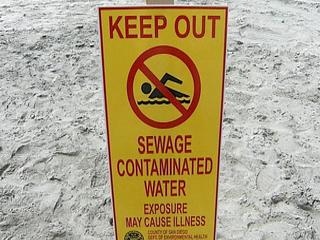
The State of Vermont legally permitted the City of Vergennes to dump 467,000 gallons of sewage and stormwater into Otter Creek and Lake Champlain on Christmas Eve. Ho ho ho.

That lovely tidbit from the Facebook page of our friends at Lake Champlain International. In case you have trouble visualizing 467,000 gallons of sewage and stormwater, LCI helpfully points out that it’s equivalent to “about 65 tractor-trailer milk tankers.”

Welcome to Vermont, kiddies!

Welcome to Vermont, kiddies!

Mmmm, good. I hope the critters at the Fort Cassin/Otter Creek Wildlife Management Area didn’t mind the state’s creative “Wildlife Management Through Sewage” technique. Or perhaps they’ve gotten used to shipments of Vergennes’ untreated crap, since state regulation of sewage and stormwater discharges is downright laughable — especially for a state with such a strong, and often unwarranted, reputation for environmental purity.

The comments on LCI’s post are often endearingly innocent: “How could this happen?” “How is this allowed?” Stuff like that.

Well, not only is it allowed, but it’s standard operating procedure in our Clean, Green state.

James Ehlers, executive director of Lake Champlain International, …says sewage spills and overflows from Vermont’s wastewater treatment systems are common occurrences.

But the public is only notified when they’re exceptionally large, as was the case in April 2005, when a Burlington sewer line ruptured, spewing millions of gallons of raw sewage in the Winooski River for days before it was repaired.

That, from a July 2013 piece by Seven Days’ Ken Picard, outlining the appalling sketchiness of state policy on releases of stormwater and sewage. By law, he writes, the state is required to post online any illegal discharge that “may pose a threat to human health or the environment” within 24 hours of learning about it — but it may take days or even weeks for the state to learn of a discharge from a municipal wastewater treatment operator.

And while the state is required to post the information online, just try to find it. I tried, and got thoroughly lost in a morass of bureaucratic jargon.

Now, if there’s a torrential downpour, just about any system will be overloaded. But many of Vermont’s municipal systems are outdated. We haven’t faced the issue because, well, we can’t afford to.

This is part of our decades of noncompliance with the Clean Water Act regarding Lake Champlain, and one reason why the EPA has had to step in and force Vermont to clean up its act.

It’s sad, if not surprising. Too often, Vermont fails to live up to its own self-image. We react with horror when new things seem to pose a threat, like ridgeline wind and the Vermont Gas pipeline. We’re much more passive about the bad things we’ve always done, like inadequate water treatment, unregulated junkyards, and the discharge of particulate matter from thousands of residential woodstoves. (The latter is largely responsible for our highest-in-the-nation rate of adult asthma. Not West Virginia or Texas; good old Vermont.)


My first six months (give or take)

This here blog has been around since June 12, 2014. It’s been a lot of fun, and rewarding to know that quite a lot of people follow it. Nowhere near Kardashian territory, but pretty good for a special-interest blog about Vermont politics.

The WordPress.com stats helper monkeys prepared a 2014 annual report for this blog, and I’m sharing it for anyone who might be interested. If not, well, click on.

Here’s an excerpt:

The concert hall at the Sydney Opera House holds 2,700 people. This blog was viewed about 49,000 times in 2014. If it were a concert at Sydney Opera House, it would take about 18 sold-out performances for that many people to see it.

Click here to see the complete report.