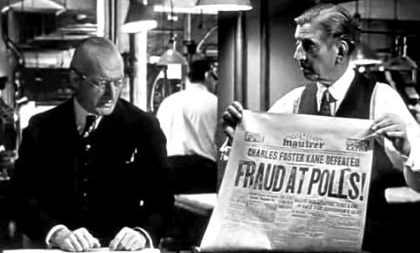

A very strange thing happened a couple weeks ago at VTDigger. It’s been on my backburner for a while, as other events have clamored for attention. But I didn’t want to let this pass into oblivion without comment.
Digger published a very important story by Ethan Weinstein about the Vermont Department of Corrections’ difficulties and frustrations in dealing with federal immigration authorities.
It was a terrific piece. But it was posted at 7:01 a.m. on Saturday, June 28. Saturday is the lowest day of the week for news consumption. When daily newspapers were actual dailies, the Saturday edition was always the scrawniest paper of the week. And it was the first to be jettisoned entirely when “dailies” became less than that. Weekend TV newscasts are long on canned features, weather and sports. Most of their field people don’t work weekends. They don’t waste their good stuff on Saturdays.
I’ve been in charge of news operations, and I know that all we did over the weekend was fill the space as painlessly as we could. In fact, much of the effort on Thursdays and Fridays was devoted to banking solid content for the following Monday, when the audience/readership starts paying attention again. Digger publishes very little content over the weekend, and what they do produce is generally soft feature material or shared content from other outlets.
This was a big story. The state’s relationship with ICE and the border patrol was a major issue before the Legislature this year. And the article was the product of a public records request — a vital journalistic tool that’s rarely employed these days because it requires a lot of work. Journalists write their PRR’s as broadly as possible so they don’t miss anything. As a result, they often get a ton of material to sort through. Weinstein did the scutwork and found a bunch of telling details that added up to a meaty scoop worthy of maximum attention.
So why the hell did Digger effectively bury it?
Now, I don;t know anything about how Digger’s editorial staff handled the story. But in floating it out there on Saturday morning, they (inadvertently or otherwise) did the Scott administration a favor. The story makes clear that the feds are a royal pain for DOC to deal with, not to mention the sheer inhumanity of Trump’s immigration regime. It would have been nice to know all of this during the session, when the Legislature was looking for ways to disengage with the feds and the administration was staunchly resisting new limits on state/federal cooperation, specifically on the housing of federal detainees in state prisons.
The documents obtained by Weinstein “reveal mounting frustration within Vermont’s corrections system as ICE and U.S. Customs and Border Protection have increasingly relied on the state’s prisons to warehouse detained immigrants. New demands, arrivals at all hours and a rare disease are just some of the challenges Vermont’s prisons have faced while working with federal immigration authorities.” Yikes.
The story is full of telling details harvested from Weinstein’s PRR. It deserved better than a quiet rollout at one of the worst possible moments for widespread readership. It might have just been a mistake; the story came in, it was ready to go, so somebody hit ‘SEND.” If so, it was editorial malfeasance. This story deserved to be spotlighted on a high-visibility day. Also, it shouldn’t have stood on its own; there were possible follow-ups, like for instance asking legislative leaders what they thought of the internal communications and seeking comment from administration officials including Governor Nice Guy. If you’re going to invest precious reportorial time into an effort like this and it pays off, then you want to get the most bang for your buck. You spin it into a series if you can, and you promote the hell out of it.
This is the kind of story that made VTDigger a force in Vermont journalism. It deserved better.
Especially since the PRR has become a forgotten tool in the journalistic toolbox. It does take planning and effort. It does take a ton of time going through email chains and official documents. And there’s no guarantee of any payoff at the end.
The diminishment of the PRR is not a good thing. You hear editors and publishers talk all the time about investigative reporting, but they rarely if ever devote any actual effort to the cause. Can you imagine anything happening today on the scale of Digger’s yearslong pursuit of the EB-5 scandal? I sure can’t. We are all the poorer for it, and openness in government has suffered greatly because of it.
I truly believe that one major factor in Phil Scott’s enduring popularity is that our shrunken news media simply isn’t up to the job of watchdogging public officials. They don’t have the resources. Just look at what Digger has become: it’s a news utility, spreading its efforts around the state as if its highest aspiration is to be a worthy successor to the Associated Press. There’s a need for that, but it shouldn’t be at the expense of the kind of rigorous coverage that built VTDigger from nothing to what it is now: a widely-praised model for the nonprofit journalism of the future.
Perhaps we can hang our hopes on Digger’s new editor in chief, who began work on July 1 — a mere three days after Weinstein’s scoop was dumped on Saturday morning. Geeta Anand is an experienced and skilled journalist who, frankly, seems overqualified for the job. She has worked at the New York Times, Boston Globe, and Wall Street Journal. She’s won a Pulitzer Prize for reporting on corporate corruption. She was dean of the Cal Berkeley Graduate School of Journalism, where she created a $25 million program that sent students across California to cover the news and build their skillsets. She wrote a nonfiction book that became a motion picture starring Harrison Bleeping Ford. She seems too good to be real.
In an interview with The Dartmouth (of course she’s a Dartmouth alum), she explained how she came to make the move. She heard from Digger while on leave from her academic job. She was open to a new opportunity — especially one located in Vermont. She started her career at the Rutland Herald, and her husband is a Vermont native. Whether or not she has a clear view of the challenges ahead is open to question, considering this quote:
I am excited that VTDigger has, at its heart, a focus on investigative reporting and also on explaining complex issues to the public. I love investigative reporting, and have focused on it for my whole career, but I have always believed that the best stories come out of a beat — out of knowing a community really well.
Yeah, well, not so much. Peak Digger was heavily invested in investigative journalism and explaining complex issues, but those days are in the rear view. As for “knowing a community really well,” Digger has a longstanding pattern of rapid turnover among reporters. They rarely stick around long enough to know a community really well, even after they became unionized and presumably have negotiated better pay and working conditions.
Digger is also, to be fair, dealing with significant financial challenges. It was hit as hard as any other news outlet by the Covid pandemic and its aftermath. Its reportorial staff is smaller than it was in, say, 2019. It’s still struggling to achieve true sustainability.
Anand faces a challenge to rival the Twelve Labors of Hercules. By all appearances, she may be the hero that Digger needs. I’m certainly rooting hard for her. Vermont needs a financially stable VTDigger with the resources to conduct major investigations and deep dives. It needs to live up to Anand’s hopeful description. Fingers crossed.
 The Vermont Political Observer.
Spot on, VPO. This was one of the best pieces that Digger has done in years. And Ethan Weinstein is perhaps their best reporter. I couldn’t agree more that this story begged for a follow up… if only to give the original story a chance to be seen by those that missed it the first time around!