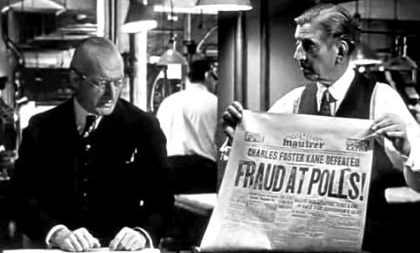

Well, that blew up in Senate leadership’s face, thoroughly and decisively.
As reported by Vermont Public’s Lola Duffort, the senior chamber’s version of H.454, the education reform bill, has been indefinitely sidelined due to an embarrassing lack of support. Specifically, support among the Democratic majority. President Pro Term (With Egg On Face) Phil Baruth:
“I made a promise to people in the caucus that I wouldn’t bring a bill that had a little bit of Democratic support and a lot of Republican support, and currently that’s the only way that H.454 would make it through the process.”
Pardon me if I fail to completely suppress a gleeful chuckle. Baruth and his colleagues put together a Senate Education Committee with three Democrats and three Republicans, including a Democratic chair with deep ties to the state’s approved independent schools, and they barfed out a bill that — surprise, surprise! — was too conservative to pass muster with the majority.
I’ve never led a legislative caucus, majority or otherwise, but this strikes me as a pretty clear case of leadership malpractice: Failing to keep tabs on one’s own caucus regarding the biggest issue of the year, leading to an embarrassing last-minute retreat. And Baruth seems to have no firm backup plan. He talked of possibly proceeding with the more public school-friendly House version of H.454 with maybe some amendments. But he also suggested that the Legislature could just go ahead and adjourn, as if to put him out of his misery.
Which maybe it will. But there’s Gov. Phil Scott threatening to call the Legislature right back into session until they manage to produce an education reform plan. Which he would probably then veto; he isn’t all that hot on the Senate version, and would certainly dislike a House-Senate compromise bill even more.
The way this whole thing has been mismanaged sets up a dynamic that sees the Democrats doing what they all too often do: Giving away some of their bargaining power for no good reason.
As it stands right now, there are three competing parties: the governor, the Senate, and the House. If the Senate majority had acted, well, like a majority and put together an Education Committee that didn’t lean center-right, then it probably would have produced a bill much closer to the House version. In which case legislative Democrats would have presented a united front against the governor and in favor of reform that wouldn’t shortchange the public schools. Maybe they can get back to that point, but the Senate sure took an unnecessary and damaging detour on the way there.
But let’s stop bashing Senate leadership and take a closer look at the governor’s role in all of this. In 2024, as you may recall, the Legislature set up a Commission on the Future of Public Education and gave it a year and a half to investigate all issues thoroughly and come up with the best possible reform package. But this year, Scott began furiously beating the drum for reform RIGHT NOW, no waiting allowed, let’s get moving and hope it’s in the right direction, I guess.
The first draft of his own plan — not a formal piece of legislation, just an outline — came out in early February, and was such an obvious pile of shit that it was never heard from again. Finally, near the end of the month, he unveiled an actual proposal in legislative language, with substantial changes from his earlier trial balloon. You know, the lead one.
Just think of it. He first delivered an actionable proposal when the legislative session was nearing its official halfway point. Consideration of this highly momentous issue would have to be crammed into the second half of an already-brief session. There was no good reason for him to have waited so goddamn long. His bill should have been put together last year, with input from educators and key lawmakers*, and unveiled as soon as his inaugural address was delivered in early January.
*I think the governor calls this “coming to the table.”
The House then crafted its own version that was much more public school-friendly and much less obsessed with cost-cutting, which seems to be Scott’s one and only priority when it comes to education reform.
The Senate Education Committee then did its work, producing a bill that most majority Democrats couldn’t bring themselves to vote for. Scott, meanwhile, was doing his best to create a crisis atmosphere, pressing constantly for the Legislature to get something done chop-chop. Something, need I remind you, with profound consequences for school funding, organization, and (ultimately) quality. These are the worst possible circumstances for fast-food lawmaking. The Legislature had the right idea in 2024: Get a bunch of smart people together, give them time to investigate all the issues, devise the best possible plan, and act on it promptly in 2026
But we can’t have that. We must have action RIGHT NOW, damn the torpedoes. If Scott doesn’t get it, he’s threatening to call the Legislature back into session, over and over again if need be, until they pass a plan acceptable to him. And any such plan would be even more of a rush job, patched together from spare parts like Frankenstein’s monster and probably functioning just as well.
You know the funny thing about all of this? Well, funny in a bitterly ironic way?
The number-one problem with the cost of public education isn’t greedy teachers or spendthrift administrators or overly generous Town Meeting Day electorates. It’s the cost of health insurance, which is skyrocketing much faster than property tax rates. We have a health care system that’s in a real, honest-to-God crisis, and it might get a lot worse if Congressional Republicans manage to take a big chunk out of Medicaid. But I don’t hear any concrete proposals from the governor on reining in health care costs. I don’t really know why; maybe it’s just too hard, maybe he’d have to publicly oppose his friends in the business community (which includes all the major insurance carriers), maybe he sees it as a political loser no matter what he says or does.
But he’s willing to go to the mat — by which I mean forcing underpaid lawmakers to work overtime until they approve a plan he can accept — for school reform. It’s almost as if what he really wants to do is hamstring the public education system to the point where it works less and less well, which turns up the heat for universal school choice, which is a terrific idea except that wherever it’s tried it doesn’t do a damn thing to improve the quality of education.
Huh, maybe improving the quality of education isn’t high on Phil Scott’s priority list. Not sayin’, just sayin’.
 The Vermont Political Observer.
None of this should come as a surprise. When Scott was first elected to Governor in ’16, one of his first official acts was to go around Vermont begging Vermonters to vote down their children’s school budgets.
That year Scott also set up a day long conference that brought together school board members, superintendents, principals, and many others with immediate connection to our state’s public schools. (I know this because I was there and already working on a Williamstown/Northfield SD merger.)
Apparently boss Scott didn’t like what he heard from those with tons of experience because what he didn’t hear was “Hey, let’s consolidate our schools and put them under direct Gubernatorial control.”
But that wasn’t strange either, because Scott’s predilection for top down control of our kids’ schooling was a long running dream of Senator Scott.
Perhaps if folks would cover history and keep running tabs on the historical contexts, we wouldn’t find ourselves repeating the same lame, ineffective bullshit over and over and over.
“Huh, maybe improving the quality of education isn’t high on Phil Scott’s priority list. Not sayin’, just sayin’.”
Although I have not followed this that closely, I’ve thought this all along, that improving our education and saving money is not the priority here. It’s the covers they are using for something else and I’ve wondered what is the priority or priorities. Is it to kneecap the public schools and lessen a dependable Democratic voting block — staff, school administrators, teachers, etc.? Is it to privatize public education so rich kids don’t have to mingle with the poor kids from the trailer parks? Is it to make it so that they only teach “reading, ‘riting, rithmatic,” so that we the public will learn to obey our elites and not question them? I wonder and am always amazed that the real cost problems, like health insurance costs, get off free-of-charge.