The good news first: Contrary to what I wrote in my last post, legislative leadership appears to be fully committed to approving PR.4 and giving it a spot on the statewide ballot this November. The measure would add an equal protection clause to the state constitution, mandating “equal treatment under the law” for nine protected classes, including race, sex, disability, gender identity and sexual orientation.
This is great news given efforts by the Heritage Foundation, the Trump administration, and red-state legislatures to make life as difficult as possible for transgender Americans. Vermont cannot depend on mere tradition to preserve trans rights within its borders. They must be enshrined in our constitution.
Now, I should explain how I came to write. incorrectly, that PR.4 seemed to be sinking without a trace this year after winning overwhelming approval in 2024.
Note: Important update posted a few paragraphs down. More to follow.
Well, they’re saying the quiet part out loud. This week Keith Roberts, the president of the Heritage Foundation, went on a conservative podcast and embraced the goal of outlawing all gender-affirming health care for everyone. Not just minors — everyone.
A reminder that the Heritage Foundation is the force behind Project 2025, the transformational playbook that Donald Trump disavowed when he was running for president but immediately began to implement upon taking office.
People like Roberts occupy the seats of power in the federal government. And the idea of banning gender-affirming care and kneecapping trans folk’s ability to live their lives is gradually taking hold in red states across the country. Roberts knows he can’t take such a radical step right now, but he wants to keep hammering away until trans people effectively lose the right to exist. He calls it “radical incrementalism,” and it’s happening all around us.
Meanwhile, here in exceptional little ol’ Vermont, a measure that would protect the rights of trans folk is apparently dying of neglect.
Update: Apparently it’s not. Scroll down to see a Comment posted by Sen. Nader Hashim, chair of the Senate Judiciary Committee. He says the measure moved out of his committee and is headed to the Senate floor. Good to hear. Why didn’t I find it? I searched for the bill and portions of its title on the Legislature’s website and found no trace of the bill whatsoever. It’s the first time the search function has failed to produce any sign of a bill.
Update. Within 24 hours of this post going live, the governor announced his first (and so far only) concrete response to the Trump presidency: an interagency task force to assess the potentiial impacts of Trump tariffs on goods imported from Canada and Mexico. Must have been a complete coincidence, right?
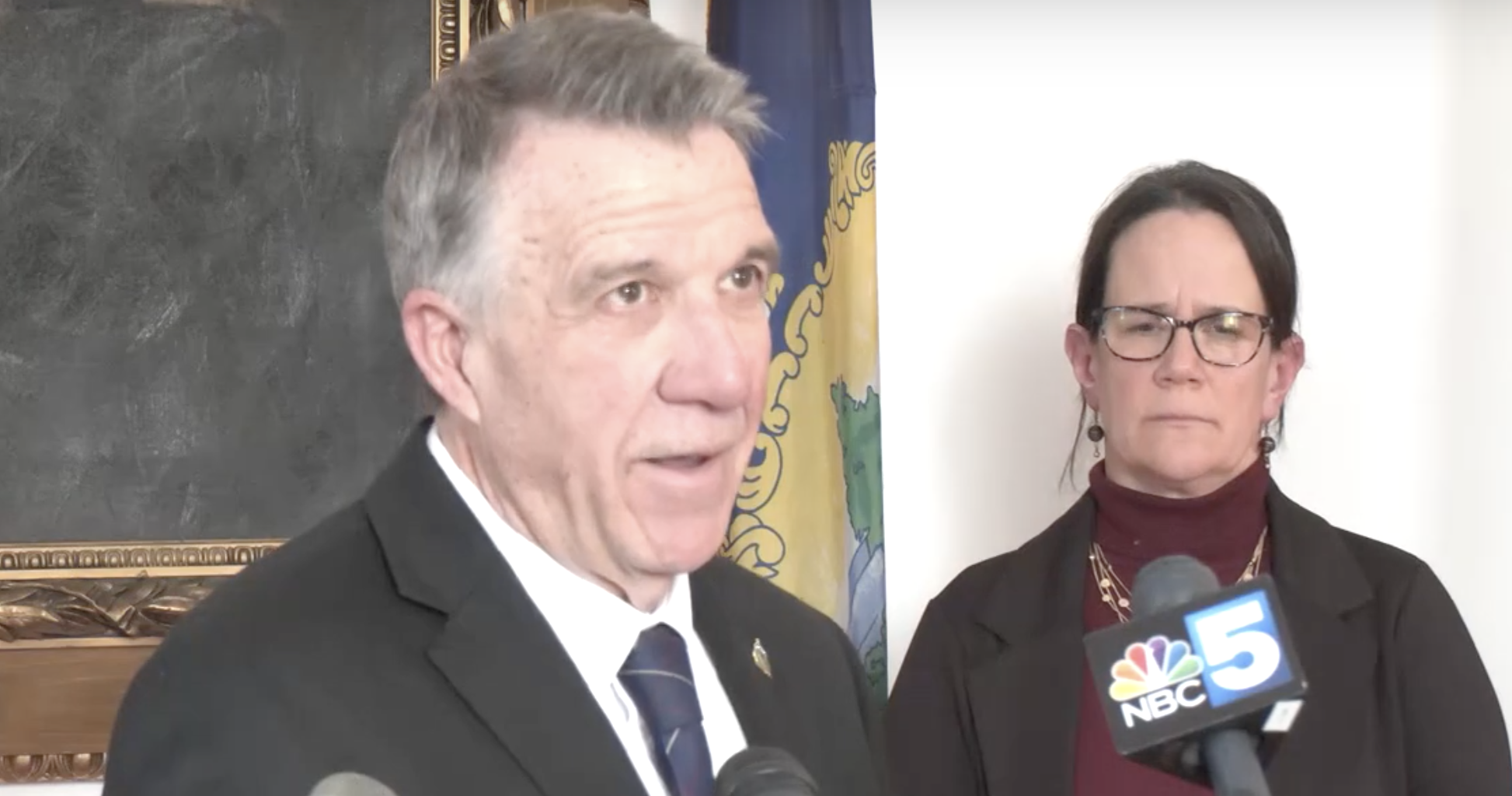
You might think that the deliberately shambolic start of the second Trump presidency would have been a major topic at Gov. Phil Scott’s January 30 press conference. After all, in a very short period of time Trump has issued a blizzard of executive orders, many of dubious legality and/or constitutionality, that are designed to radically recast or possibly euthanize the federal government. The one most directly pertinent to governing the state of Vermont was Trump’s since-withdrawn threat to put an immediate halt to a wide range of federal payments. (The threatened imposition of tariffs on Canadian imports would have had a profound effect on Vermont, but they hadn’t been bruited as of January 30 and have since been put on hold.)
You might think the specter of Trump would have dominated Scott’s presser, but you’d be wrong. The topic of the day was, shocker, “affordability,” especially with regard to Scott’s housing plan and his extremely modest tax reduction plan. Which, at $13.5 million, would average out to a scant $20 a year for every Vermonter.
(Of course, it wouldn’t be distributed evenly. The three elements of his plan are (1) an expansion of the Democrats’ child tax credit, (2) an end to state taxation of military pensions, and (3) an end to state taxation of Social Security benefits. The latter two, aimed largely at retirees, seems an odd way to address Vermont’s demographic challenges. Our biggest demographic shortfall is in mid-career adults, who are mainly too old to benefit from a tax credit on young children and not old enough to benefit from the other two provisions.)
Neither Scott nor his officials voluntarily addressed how Trump setting fire to the federal government might impact Vermont. None of the assembled reporters asked a single question about it until the 44-minute mark in a 47-minute presser. Almost an afterthought, then. But Scott’s response was highly informative — for what he didn’t say, more than for what he did.

 The Vermont Political Observer.