Category Archives: Vermont Democratic Party

Is this the end of Rico?

Well, if this isn’t the mother of all Friday newsdumps.

After 18 months of headaches caused by Vermont Health Connect, Gov. Peter Shumlin announced Friday that he’s prepared to replace the online health insurance marketplace if it fails to meet two new deadlines.

(Note: According to VTDigger, Shumlin first made his announcement on WDEV’s Mark Johnson Show. Credit where it’s due.)

Yeezus. I make a little day trip to New Hampshire, and this is what happens? I may never leave Vermont again.

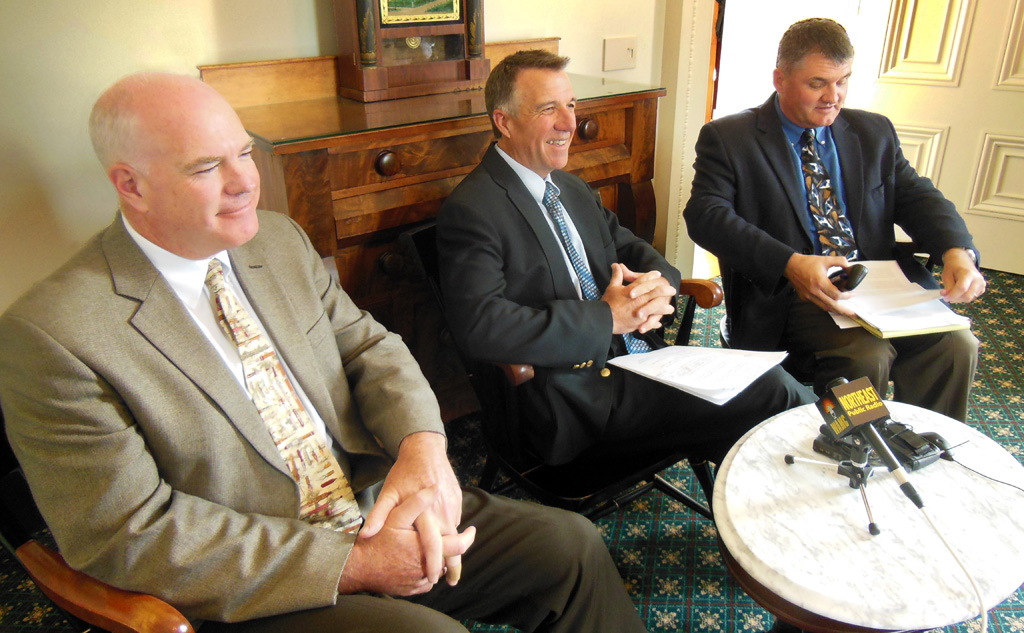
“This is not an attractive option,” Shumlin’s chief of health care reform, Lawrence Miller, said at the press conference.

Miller added that “bubonic plague can ruin your day, and zombies are bad news.”

In the past I have occasionally been guilty of hyperbole, so it’s understandable if you take this with a grain of salt, but…
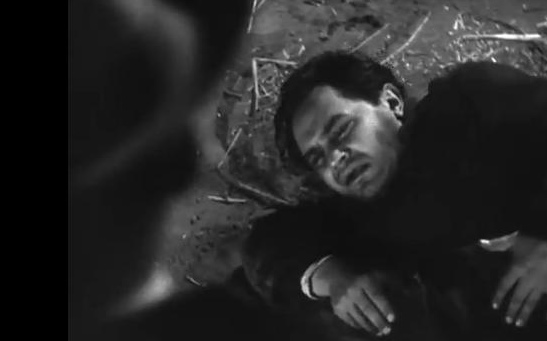
This doesn't end well.

This doesn’t end well.

If Vermont Health Connect fails, it is the end of Peter Shumlin’s political career.

It wouldn’t be the last act; he’d still remain governor for another year and a half. But the abandonment of VHC would be a death blow to whatever’s left of his reputation for managerial competence. And trustworthiness. He will have a simple, stark choice: Serve out his term as best he can, step aside with grace and dignity (and hopefully a big show of unity with a consensus candidate for the Democratic nomination)… or go down in a metaphorical burst of tommygun fire.

Mind, all this is contingent on the failure of VHC, which is far from a sure thing. But given its track record (and the Governor’s), today’s announcement has to send shivers down the spines of everyone who’s invested political capital in the Shumlin Growth Fund.

The song goes like this: assurances of success; bumps in the road; conditional assurances of success; postponements; failures; promises to learn lessons and do better; new plans with later deadlines; fresh assurances; lather, rinse, repeat.

We have just gone from “assurances of success” to “conditional assurances.”

The fallback plan, should VHC again fail to meet functionality targets, is a hybrid marketplace: federally supported but state-regulated. It’s not a terrible Plan B, but it would put the lie to every assurance Governor Shumlin has made about Vermont Health Connect since its launch. It would hand the Republicans a huge quantity of ammunition, and it would permanently sink Shumlin’s managerial reputation.

The Governor’s new timeline:

Shumlin said he would only deploy the contingency plan if Vermont Health Connect is unable to automatically process changes in account information by May or if it’s unable to smoothly reenroll users by October. Even then, the state would not adopt the new system until October 2016, in time for the 2017 open-enrollment period.

Oh great. So if VHC isn’t working by October, then we’ll be activating Plan B right in the middle of the next gubernatorial campaign.

And what if anything — at all — goes wrong? It drags on until after the election. If that happens, it may not matter who the Democrats nominate.

If all that happens, Peter Shumlin will not only go down in history as a failure. He’ll also be the guy who squandered a king’s ransom in political capital for his Democratic Party.
Choosing enemies

In case you were wondering which politicians are most feared by the other side, just check out recent press releases from the two major parties.

The Dems reacted swiftly, and harshly, to Lt. Gov. Phil Scott’s basket o’ chestnuts (issued, not through his own website, but through his government account, hmm) on the Plasan closing:

“Phil Scott should be ashamed of himself. Yesterday he sought to use news of job losses due to defense cuts and the winding down of wars throughout the world to advance his political career. These are real people’s lives, not poker chips in Lt. Gov. Scott’s political game. As the company itself said, the closure of the Plasan plant in Bennington has nothing to do with Vermont and everything to do with the fact that America is spending less on military contracts. But that didn’t stop Lt. Gov. Scott from trying to use these real individuals’ pain to try and tear down Vermont’s reputation for his own political gain. We’re better than that in Vermont.”

Ooh, harsh. You might think they’re worried about a Scott for Governor candidacy in 2016.

Well, that’s not a surprise. A little more unexpected was a recent series of releases from the VTGOP, little noticed nor long remembered, lambasting “the Shumlin-Shap Smith Economy.”

Gee, I hadn’t realized that Shap Smith had joined the Shumlin administration, or that he had any more responsibility for the economy than, say, anyone in the Cabinet. Or, for that matter, poor unfeared John Campbell.

I’m sure that Shap is duly flattered by the backhanded show of respect.

The Shumlin conundrum

(Say it five times fast.)

Governor Shumlin delivered brief remarks to the House and Senate Democratic caucuses on Saturday. His message, basically: we’ve got big problems to deal with and no money, so let’s dig in and get going!

I can imagine him in a past existence, being a life coach for Roman gladiators.

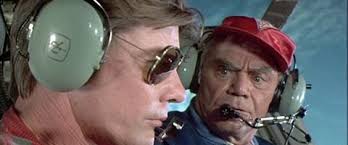
He appeared in his Airwolf jacket, fresh off a helicopter (or, as he put it, “chopper,” what a man) tour of storm-damaged Vermont. Which caused much speculation on Press Row about who paid for the overflight.

The Shumlin Tour. Not exactly as pictured.

The Shumlin Tour. Not exactly as pictured.

Said speculation didn’t make it to their reports, and the stunt had its desired effect: lots of coverage on the teevee news, with the governor looking both manly and concerned.

Naturally he didn’t have time to change out of his flight gear before the caucuses, hahaha. Really, anybody weighing less than four bills could change clothes in the back of that Yukon SUV he rides around in.

He did use his chopper tour to make a pitch for his renewable energy agenda — “we didn’t use to see storms like this,” but now we got global warming. And then he turned to a series of talking points we can expect to hear again and again in the new year, all designed to diminish expectations and/or dash hopes.

He didn’t use Phil Scott’s phrase “affordability agenda,” but the substance seemed awfully similar. Vermonters are frustrated that their purchasing power is stagnant while costs (and property taxes) are rising.  State spending has to be reined in.

When he took office, he said, economists were forecasting a post-Recession return to 5% annual growth in the Northeast. Turns out, it’s more like 3%, and is likely to stay there for quite some time. But state spending was built on that 5% projection, and that’s led us to our current fiscal mess.

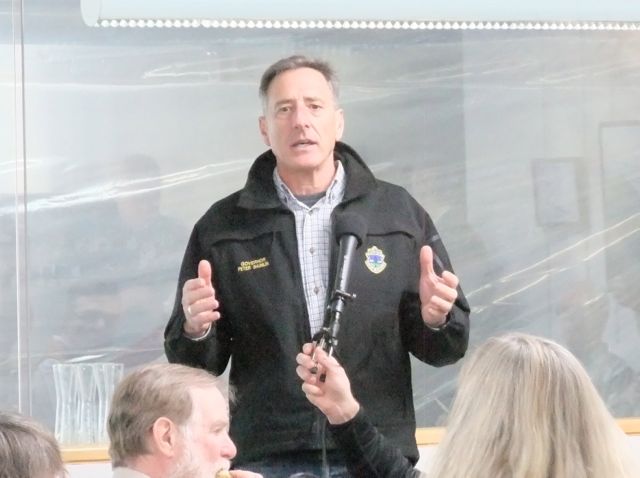
Stringfellow Hawke explains it all. (As the hand of VPR's Peter Hirschfeld gamely tries to keep a microphone within range.)

Stringfellow Hawke explains it all. (As the hand of VPR’s Peter Hirschfeld gamely tries to keep a microphone within range.)

The $100 million shortfall in next year’s budget, he said, is real. We’ve used up the federal recovery money and the one-time funds to balance past budgets. Now, “we’ve got to make tough choices.” We’ve got to bring down growth in state spending to match that seemingly endless 3% growth rate. Thus, he said, “anyone asking for more money had better think twice.”

He made a progressive plaint about the growing income gap between the very rich and the rest of us. He did not, however, connect the dots between that phenomenon and Vermont’s underperforming income tax revenues.

And he certainly did not connect the dots to a quirk in our current tax system that has an official top tax rate of 8.95%, which seems quite high — but the rate that top earners actually pay is not 8.95%, but 5.2%. Furthermore, if you add up all state and local taxes, it turns out that the top 20% pay a lower share of their income than the other 80%, and the top 1% pay the lowest share of them all. (Figures from the Institute for Taxation and Economic Policy.)

When I connect those dots, I think we ought to resurrect a bill that almost passed the House two years ago. It would have shifted more of the tax burden upward, and given modest tax cuts to middle and lower-tier working Vermonters. That bill died a sudden death because of Shumlin’s steadfast opposition.

So when he starts talking about income inequality, he needs to talk about our tax policy as well. Because these days, that’s where the money is. And our top earners are doing extremely well, thank you very much. They can pay their share.

Shumlin also rolled out his school funding argument: Our schools would perform better for less money if there was some kind of consolidation. Because studies show that very small class sizes are just as harmful to achievement as very large class sizes. So we’ve got to embiggen our schools, not to save money (although we would), but for the sake of the children.

Awww.

Surprisingly, there was no mention of single payer health care — or the slightly watered-down “universal health care” — except for a brief mention, in his Cavalcade of Calamities, of unacceptably fast-rising health care costs.

Okay, some realities of my own. I accept the notion that slow growth means an extremely tight state budget, and that we cannot tax our way out of it. We should tweak the tax system to make it more equitable, but that’s not going to bring in much money. We’ll need to make government more efficient if we want to preserve the level of services we’ve come to expect.

I believe that the number-one thing Governor Shumlin needs to do to restore his standing with voters is to re-establish his reputation for good governance. The policies, and I say this as a devout liberal with strong policy positions, are kind of secondary.

Shumlin gained a strong managerial reputation during the Irene recovery. He pretty much blew it in his second term, with the continuing difficulties of Vermont Health Connect, the problems in the Agency of Human Services, and all the budget shortfalls. If he can make state government work effectively, he’ll win back a lot of voters.

And this will be his biggest administrative challenge, not Irene. Authentic crises are difficult, but they get the adrenalin flowing, and everybody puts aside their differences and pitches in. Maintaining the day-to-day operation of a big bureaucracy is harder. It’s an unending slog. It challenges established procedures, and if there’s one thing we Vermonters love, it’s doing things the way we’ve always done them.

As a liberal, I expect to be disappointed repeatedly by Shumlin in the next two years. Clearly, between the realities of the fiscal situation and his own political instincts, there’s going to be a lot of governing from the center. Or even center-right. But if he can govern effectively… if he can actually create new efficiencies, saving money while maintaining services… he will restore his political reputation.

Is he up to that challenge? Two years ago I would have said a resounding “Yes.” Now, I’m not so sure. Flight jacket notwithstanding.

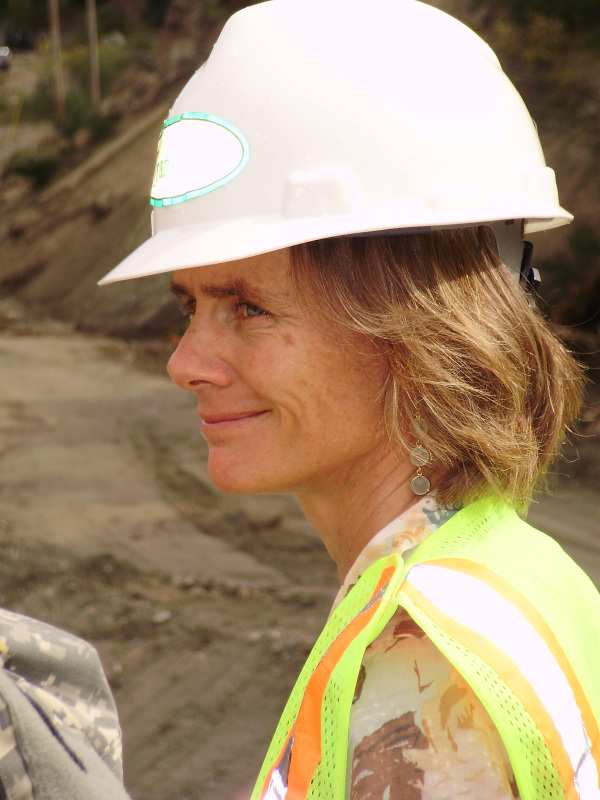
Sue Minter is building herself quite the resumé

Rockin' the hard hat.

Rockin’ the hard hat.

Deputy Transportation Secretary Sue Minter is usually the first female in otherwise male-dominated lists of Democratic politicos on the rise. (ANR Secretary Deb Markowitz, who finished a strong #3 in the 2010 gubernatorial primary, deserves mention as well; but the grapevine says she’s unlikely to make another run for elective office. That could change, of course.) She briefly broke through the GruberGruberGruber wall of news noise this week, with the announcement that AOT Secretary Brian Searles is retiring and Minter will take his place.

This is notable enough. But what I hadn’t realized until I read media accounts of her promotion is that she is building a very strong political resumé, putting her in a good position for a future run at statewide or Congressional office. Let’s look at some highlights, and my apologies if I missed anything:

— Four-term state representative who served on the Appropriations Committee as well as the Transportation Committee. Generally considered a key member of the Democratic caucus. That’s eight years of legislative experience.

— Named Deputy Transportation Secretary at the onset of the Shumlin Administration, so there’s four years of administrative experience in a big, sprawling, crucial agency. Plus, since a lot of transportation funds come from the feds, four years of experience dealing with our Congressional delegation and the D.C. crowd.

— Named Irene Recovery Officer in December 2011, replacing Neale Lunderville. Had to deal with the tough slog of rebuilding infrastructure — which also involved a lot of work (and facetime) in Washington, D.C.

— Member of the White House Task Force on Climate Preparedness and Resilience. More credibility and connections in Washington.

— Now being elevated to full Cabinet status, and a high-profile Cabinet post at that. Speaking purely politically, lots of opportunities for ribbon-cutting and other feel-good news, making connections with local officeholders, and looking tough and managerial when something bad happens. (AOT is much better for this kind of stuff than, say, Human Services.) Nothing like wearing a hard hat and reflective vest to counteract stereotypes about women in politics.

Transportation’s mission also enjoys broad tripartisan support: nobody’s against roads and bridges.

— Married to David Goodman, writer, broadcaster, and brother of progressive radio icon Amy Goodman. I’m not falling back on the tired trope of defining a powerful woman by her marriage; in this case there’s some relevance.

(Also, her teenage son Jasper is a sportswriter for the Times Argus and sportscaster for WDEV Radio. Good grief.)

That’s an extremely impressive list in a period of about ten years. It’s a crying shame there aren’t more Vermont women moving upward in liberal politics, but if we only get one, Sue Minter’s a damn good one.

The self-bigotry of low expectations

This should be a very good day for Vermont Republicans in legislative races. It won’t be, of course, and therein lies the rub.

Earlier in the campaign, Lt. Gov. Phil Scott talked about picking up double-digit seats in the Legislature, putting a perceptible dent in the Dems’ substantial majorities. But now?

“I will be happy if we gain one seat,” [Senate Minority Leader Joe] Benning said. “It means that the Republican Party is moving in the right direction.”

“If we pick up one seat we’re moving in the right direction,” said House Minority Leader Don Turner, R-Milton.

Joe, Phil and Don, smiling through their tears.

Joe, Phil and Don, smiling through their tears.

Gee, ya think they’re reading from the same script?

The above quotes are from a story by Neal Goswami, published in the Sunday Mitchell Family Organ and produced as a (shorter) radio piece by VPR. (VPR’s website has the full text of Goswami’s print article, available without paywall.)

The Republicans are hoping for more than two seats. But they’re clearly trying to set the bar as low as possible so they can claim some sort of victory no matter what happens.

Which means that in their minds, it’s quite possible that the VTGOP will do no better than a token advance. And that’s bad news for the Republicans’ future in Vermont, for two big reasons. First, from Senate Majority Leader Phil Baruth:

“Pickups, frankly, would be pretty tough,” Baruth said. “Last election we expanded pretty much to the limits of what we could reasonably hope for.”

So, if the Democrats are at the theoretical limits of their legislative hegemony, why can’t the Republicans make a significant comeback in 2014? Especially when this campaign represents “a perfect storm” of opportunity, according to Joe Benning himself.

The ingredients of that “perfect storm” include the continuing perils of Vermont Health Connect, fears about single-payer health care, widespread anger over rising property taxes, a sputtering economy, and early signs of Shumlin fatigue among voters.

On top of that, there’s no Presidential or U.S. Senate race to drive Democratic turnout; the races for Congress and Governor are uncompetitive; and Republicans have failed to mount credible races for the other four statewide offices. (Sorry, Shane-O-Mac.) Democratic voters have every excuse to sit this one out.

With all that going for them, the Republicans will be happy with a handful of gains. Leaving them, still, in a very weak minority position.

And that shows you how far away the VTGOP is from being truly competitive.  There are a whole lot of legislative seats that are simply uncompetitive. There are too many liberal and moderate voters who see nothing attractive in the Republican Party — even when they’re feeling dyspeptic about the Governor.

Plus, the Republicans are at a huge organizational disadvantage. The Dems have a well-organized, well-resourced ground game and world-class voter data. They were able to out-recruit the Republicans because of their organizational edge, so they have strong candidates in some vulnerable districts.

And they have poured their resources into the most competitive battlegrounds, like Rutland and Franklin Counties. Because the Republicans are uncompetitive in so many places, the Dems can, as the Governor would say, “focus like a laser” on the most crucial contests.

Which is why, even in a “perfect storm” of Republican opportunity, the Democrats are poised to hold onto virtually all of their vast legislative territory.

And that tells you all you need to know about the magnitude of the task facing Vermont Republicans.

A very coordinated campaign

The Vermont Democrats know what they’re doing.

Well, that’s not news. But when you look closely at scheduled activities for the last full week before Election Day, you realize how narrowly they’re targeting a handful of key races. And using their big guns to do so.

Is Bernie standing on a box?

Is Bernie standing on a box?

First, there was the weekend-long victory tour, headlined by Gov. Shumlin and Sen. Bernie Sanders, and also featuring Dean Corren. They stopped in Bristol, Proctor, Hinesburg, and St.Albans. Which, at first glance, might make you wonder why not Montpelier or Burlington.

Well, because they don’t need the votes there.

Bristol is the home district of two powerful state representatives: David Sharpe, ranking Democrat on the House Ways and Means Committee, and Mike Fisher, chair of the Health Care Committee, which is kind of important to the Governor’s single-payer agenda. Sharpe and Fisher face a well-funded Republican with a very familiar name: Valerie Mullin.

I don’t know if she’s related to Sen. Kevin Mullin, but a popular name is a significant advantage for a political newbie. And the Republicans are hoping she can knock out Fisher or Sharpe.

Then comes Proctor, in Rutland County — one of the key State Senate battlegrounds. Republicans are hoping that Brian Collamore can knock off appointed incumbent Eldred French and give the GOP all three Rutland County Senate seats. Democrats are hoping they can save French and get William Tracy Carris into the Senate. Or at least hold onto a seat, preventing a Republican pickup.

The third stop was in Hinesburg, which doesn’t seem like a terribly high priority. The town’s two House seats are safely Democratic. Hinesburg is part of the Chittenden County district in the Senate, with five Democratic incumbents and one Republican. The 5-1 split is likely to remain intact, although Democrat Dawn Ellis has run a spirited campaign, and Republican Joy Limoge has raised quite a bit of money. I don’t think the Dems are too worried about Limoge, but maybe they see an opening to knock off Republican Diane Snelling. Or maybe they just wanted to hold one rally within easy driving distance of the Burlington-based TV stations.

The final rally was in St. Albans, perhaps the most hotly contested community in all of Vermont. There are two Democratic incumbents in the House, Kathie Keenan and Mike McCarthy. The Republicans hope to win at least one of the seats.

And, of course, St. Albans is the population center of the Franklin County contest for two Senate seats, currently split between the parties. Republicans hope to grab both seats in November, while the Dems want to hold their ground or possibly even take both.

The point about Democratic targeting is reinforced by Gov. Shumlin’s schedule for this week. He walked in the Rutland Halloween parade Saturday night; on Monday he’s holding a press conference in Rutland and speaking to the local Rotary Club. And on Thursday, he’s holding a press conference in St. Albans.

Near the end of the week, he’s giving a pair of high-profile speeches in Burlington that should draw TV coverage: the annual meeting of the Vermont Economic Development Agency on Friday, and a fundraiser for Vermont Parks Forever on Saturday.

The Republicans, by contrast, seem to be completely uncoordinated. Not that they have anyone with the drawing power of Shumlin or (especially) Sanders; the closest thing they have to a political celebrity is Phil Scott. Not really in the same league, especially as an inspirational speaker.

And I haven’t seen any signs of any real coordination among Republicans. You’d think that Phil Scott, as the party’s top officeholder and most popular active figure, AND as the guy who wants to make the party more inclusive, would be actively engaged in some party-building and promotion of legislative candidates.

Maybe he has been; if so, it hasn’t exactly been high profile.

In any case, the main point is this: the Democrats are doing exactly what they should be doing in the final days of the campaign.

Big unity tour this weekend

Well, huzzah. Two of the state’s top politicos are joining together to make a weekend-long push for the Democratic ticket — including the unloved-in-some-quarters Prog/Dem candidate for Lt. Gov., Dean Corren.

The tour begins Saturday morning with a brunch and rally in Bristol, and a midafternoon gig in Proctor. On Sunday, there’s a morning event in Hinesburg, and a late afternoon affair in one of the state’s major battlegrounds, St. Albans. (Details can be found at the end of this post.)

Dean & Bernie. Not pictured: John Campbell, Dick Mazza, Ginny Lyons, Tim Ashe, Jeanette White, etc., etc., etc.

Dean & Bernie. Not pictured: John Campbell, Dick Mazza, Ginny Lyons, Tim Ashe, Jeanette White, etc., etc., etc.

The headliners: Gov. Peter Shumlin and Sen. Bernie Sanders. That ought to get the blood circulating. The Shumlin campaign’s news release says the two will appear with “local candidates at each event.”

Curiously, the Shumlin release doesn’t mention Corren or any other statewide candidates who might come along for the ride. The Corren news comes from an email to Vermont Democrats from party chair Dottie Deans, highlighting Corren’s presence in the events. And she’s making it clear that the party’s support of Corren is not at all begrudging:

Dean has openly shared his positions and ideas for stimulating the economy, enacting health care reform, supporting job growth and positioning Vermont to be a leader in taking on climate change. In addition, he has been enthusiastically endorsed by the Vermont Democratic Party’s State Committee and some of our most prominent leaders. I believe Dean would make an excellent Lt. Governor…

This week also brought an enthusiastic Corren endorsement by Sen. Pat Leahy. This is all a nice palliative to the rank stench of timidity wafting from the state senate.

Speaking of which, I wonder if any of those Senators who’ve voiced disdain for the idea of endorsing a Prog will be more than happy to share a stage with Bernie.

That’d be ironic, wouldn’t it now?

Saturday, October 25:

9:30 a.m. – Bristol Event – Free brunch @ 9:30 a.m., event @ 10:00 a.m – Holley Hall, 1 South St.

2:00 p.m. – Proctor Event – Coffee and desert @ 2:00 p.m. – Vermont Marble Museum, 52 Main St.

Sunday, October 26:

10:00 a.m. – Hinesburg Event – Free brunch @ 10:00 a.m., event @ 10:30 a.m. – Champlain Valley Union High School, 69 CVU Rd.

5:30 p.m. – St. Albans Event – Free dinner @ 5:30 p.m., event @ 6 p.m. – St. Albans Historical Museum, 9 Church St.

The absurd extremities of the public financing law

The Vermont Democratic Party, having lopsidedly endorsed Prog/Dem Dean Corren as its candidate for Lieutenant Governor, seems to be doing all it can to strip away any value from that endorsement.

The Vermont Democratic Party this week sent glossy color mailings to reliably Democratic voters, urging them to vote for its slate of statewide candidates. But Corren wasn’t mentioned.

Dean Corren at the Democratic State Committee meeting in September.

Dean Corren at the Democratic State Committee meeting in September. Photo courtesy of… well… me.

When the Democratic State Committee endorsed Corren, party officials made it clear that there were significant restrictions on their ability to offer him any tangible support — voter data, Coordinated Campaign, etc. — because by accepting public financing, Corren had to forswear all other fundraising avenues. Including in-kind support. Indeed, they said they would have adhered to the same limits if the Democratic hopeful, John Bauer, had qualified for public financing.

The Dems were advised by their lawyers to steer clear of anything that might run afoul of the law. Which allowed them to circumvent questions about the wisdom of sharing the party’s legendary database with a Progressive, who might then share it with his party. A valid concern, when the Progressive Party often runs candidates against Democrats.

But to exclude any mention of Dean Corren from mailings? To me, that seems an excess of caution. And a serious handicap for his campaign.

And while Corren was in full agreement with the Dems on their withholding of voter data and the Coordinated Campaign, he seems less satisfied with this move:

Corren said he’s prevailing upon Democratic officials to include him on the next round of mailings.

“The conversations go on,” Corren said. “We’re in the midst of conversations. So it’s not like it’s a one-shot deal.”

Corren has dutifully played nice, and I commend him for that. But excluding Corren from a mass mailing, to me, is stretching the legal point. It raises doubts about the Dems’ real motives.

I’ve been told that the Dems don’t want to turn “tangible assistance” into an issue for Phil Scott; but issues like that are inside baseball, and have little or no effect on voters. Maybe the risk is small enough to merit the potential reward.

At the very least, it points out a serious shortcoming with the public financing law. The qualification standards need to be loosened, so more candidates can qualify. And, apparently, there needs to be a better definition of “tangible assistance” so that parties don’t have to pretend that one of their own doesn’t exist, just because s/he qualified for public financing.

Dems endorse Corren, but their assistance will be limited

The Democratic Party State Committee, meeting today in Montpelier, formally endorsed Dean Corren, the Progressive Candidate for Lieutenant Governor, who had won the Democratic nomination in the August primary as a write-in candidate.

The vote was 31 for Corren and 4 against. I’d presume that most or all of the “no” votes concerned Corren’s strong support of ridgeline wind power. At his debate with incumbent Phil Scott, Corren referred dismissively to the “imagined horrors” of wind farms.

All those who spoke at the meeting were strongly supportive of Corren; Windham County chair John Wilmerding called him “a crucial addition to our slate” because of his advocacy of single-payer health care.

However, thanks to potential conflicts with campaign finance law, the Democrats will not share their database or voter lists with Corren, and he will not take part in the Dems’ Coordinated Campaign.

Some Dems had earlier voiced concern about sharing the party’s robust data with a longtime Progressive who might well pass it on to his fellow Progs. Democratic Party officials said there would be no sharing — but not because of concerns about sharing, but because of legal limits on tangible support to a candidate who has accepted public financing, which Corren has.

Under the law, a candidate who takes public financing cannot accept additional contributions. And because of “the proprietary nature” of the party’s data, said Executive Director Julia Barnes, sharing the information or adding him to the Coordinated Campaign would be considered a donation to the Corren campaign.

There was one hint of Dem/Prog friction. Former party staffer and candidate for Burlington City Council Ryan Emerson McLaren* noted Corren’s vocal support for Democratic candidates, and urged Corren to make the same plea to the Progressives in Burlington who, Emerson said, might nominate a candidate to oppose Burlington’s “fantastic mayor” Miro Weinberger. Emerson asked Corren to urge the city’s Progs to support Weinberger’s bid for a second term. At the meeting, Corren offered no immediate response; nor did he really have the opportunity to do so.

*Please note corrected error: it was not Ryan Emerson, but Ryan McLaren, who raised the Burlington issue. My mistake, and my apologies to Ryan Emerson. 

One other tidbit of news from the meeting: Three statewide Democratic officeholders who won their respective Republican nominations in the August primary because they finished first in write-in votes have all decided to decline the VTGOP nomination. Auditor Doug Hoffer had previously announced he would decline; Secretary of State Jim Condos and Treasurer Beth Pearce have now joined him.

Which means a bunch of big embarrassing vacancies on the Republican ballot this fall. Good times.

What the Governor needs to do

Finally, Governor Shumlin has begun campaigning for re-election. For those of us who’ve yearned for the relative brevity of a parliamentary-style campaign, the Governor has delivered the closest thing we’re going to get. 

Given the state of the opposition, this should be more victory lap than competitive contest. But still, there’s a lot he needs to accomplish in order to set the stage for a productive third term. Here’s my short (and probably incomplete) wish list. 

— If he really wants single-payer, this is a crucial election. He’ll need to show skeptical Democrats that he still enjoys broad public support. The bigger his margin of victory, the more agreeable the Legislature will be in 2015. 

— He also needs to stump hard in marginal constituencies and elect as many pro-reform lawmakers as possible. That includes money: he has more than enough, not only to fight this election but for a solid foundation for 2016. He should tell some of his deep-pocketed supporters to give to House and Senate campaigns. Or make some donations himself. 

— He should have a very clear explanation for the failures of Vermont Health Connect and the slowness of his Administration’s response. Honesty is better than defensiveness, even if it hurts. And as I’ve written earlier, he might need to fire some folks to show he’s unhappy with the results so far. 

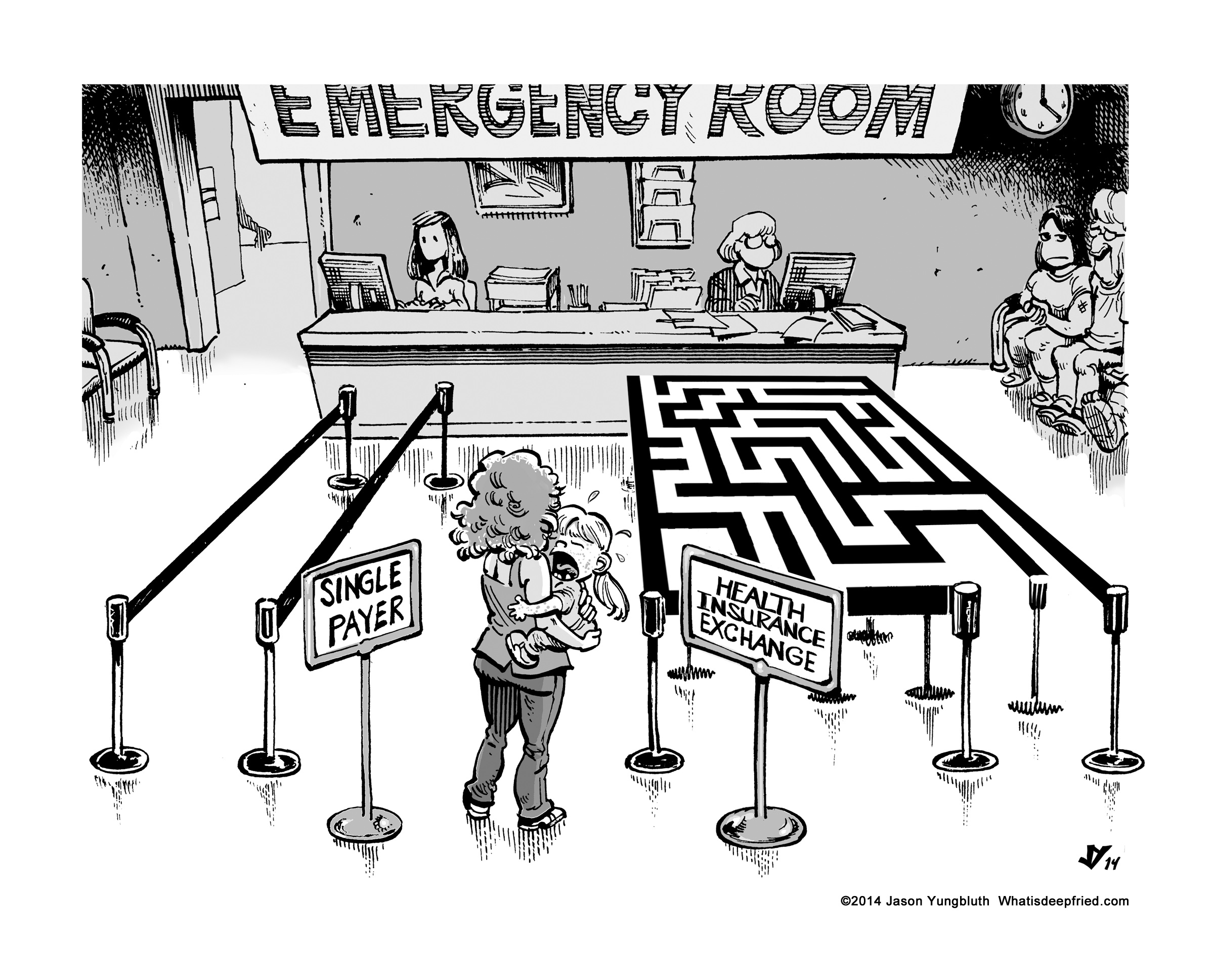
— He also needs to own up to other Administration failures and explain how things will be different next time around. Again, honesty and engagement are key.Maze_Finish

— He should present a convincing case that single-payer would be simpler than Obamacare, which was a cobbled-together compromise package. (Accompanying cartoon by Jason Yungbluth, provided to theVPO by the estimable Dr. Deb Richter.) 

— He should get strongly behind Dean Corren’s bid for Lieutenant Governort, including a lot of joint appearances. And he should urge the Democratic Party to do whatever it can to help Corren. A vote on single-payer in the Senate may well come down to a tiebreaking vote from the presiding officer. If you favor single-payer, do you want that vote cast by Phil Scott or Dean Corren?

— Turning, finally, from health care reform, the Governor needs to present ideas and show he has the energy to tackle other issues that are actually more pressing in the minds of voters: economic growth, school governance and taxation, and the general tax burden. 

— In gubernatorial debates, he needs to press Scott Milne (and Dan Feliciano, when he’s on hand) on the issues. He shouldn’t try to float above the fray, as if his opponents don’t matter. This is not so much for his own benefit, as for the cause of liberalism. He needs to remind people why they should vote for Democrats and Progressives. Too often, he has invoked conservative talking points to justify his moves to the center. He needs to cut that out. 

I think that covers it. I don’t want to see any prevent defense, and I don’t want even a hint of lofty entitlement. No taking the voters for granted. I want a strong, cogent, and relatable message that upholds the principles of modern liberalism and addresses the needs of Vermonters.