
I don’t usually bother writing about op-ed pieces or letters to the editor because (a) who reads them, anyway? and (b) that way lies madness. The temptation is ever present (take, for example, “Farmer” John Klar’s recent lament about grade inflation at Harvard, a topic of conservative whingeing since at least the 1970s), but I do try to avoid it.
And yet I’m making an exception for Lyman Orton’s recent letter to VTDigger because it just takes the cake. The noted art collector and second-generation owner of the Vermont Country Store appears to believe that Burr and Burton Academy is besieged by powerful enemies bent on its destruction.
Whaaaaaaaaaaat???!?
C’mon, Burr & Burton is one of the most coddled, protected, politically insulated institutions in the state of Vermont. I mean, we just went through an Act 73 process in which Democratic and Republican leaders stacked the deck in favor of B&B and the other private schools that receive taxpayer tuition dollars. The two most influential lawmakers in the entire process were Senate Education Committee chair Seth Bongartz, who spent nearly two decades on the B&B board, and Senate Minority Leader Scott Beck, a longtime faculty member at St. Johnsbury Academy. One of the highest priorities of the process was protecting the interests of the four big private schools that take public tuition dollars.
It’s not just the flagrant wrongness of Orton’s premise. It’s the quantity of inflammatory prose he packs into a few short paragraphs.
“The drumbeat against” Burr & Burton “is becoming more strident and punitive.” Actually, I’d say “the drumbeat” has been pretty consistent. If it’s getting louder, that’s because our entire public education reform process seems to prioritize B&B and its fellows over all else.
Orton complains that critics browbeat the storied academy “with fallacious charges” and demand “that the school become a public institution.” Nope, I’ve never heard that one. I have heard people say B&B shouldn’t be allowed to take public education dollars without being subject to the same rules as public schools.
Orton again: “There are yowls from the establishment that Burr & Burton costs more.” Again, nope. The “yowls” of reasoned criticism center on the taxpayer subsidy of the private academies. I don’t think anybody cares about the total tuition bill.
Orton then brags that “no taxes are levied for capital improvements” at B&B because its admirers “consistently contribute enough to cover them.” Well, yeah, private schools exist because they serve affluent families and wealthy benefactors able to pony up for expensive infrastructure schemes.
Orton closes by declaring B&B a “success… beloved by parents, students and residents.” And then he gives away the game in his conclusion: “It’s telling that those who can’t compete have set out to diminish Vermont’s premier secondary schools.”
And there it is: Competition.
See, the thing is, public education shouldn’t be a contest with winners and losers. A strong public school system is a public good of tremendous value to its communities, socially and economically. Every taxpayer has an interest in good public schools. Every taxpayer does not benefit from private schools.
Orton is sounding the alarm against an imaginary enemy. The bulk of “the establishment” is firmly in the private academies’ back pockets, sad to say. Our political “establishment,” both Democratic and Republican, supports the academies and enables their special status. The four major academies spend big on Statehouse lobbying, and it pays off in spades. Their critics have been marginalized throughout the decades-long school reform debate.
Sure, public educators advocate for the institutions they’ve devoted their lives to. Sure, there are liberal politicians who’d like to see a fairer playing field in public education. Sure, there’s an active campaign called “Same Dollars, Same Rules,” which asserts that if the private academies accept public dollars, they should abide by the same standards as public schools. But so far, none of those people have made significant headway against the influence of the extremely well-connected private academies.
And while those people disagree with Orton, he vastly overstates the nature of their criticisms and their truly modest goals. I have never heard, for example, a single person of any stature call for the academies to be forcibly turned into public schools.
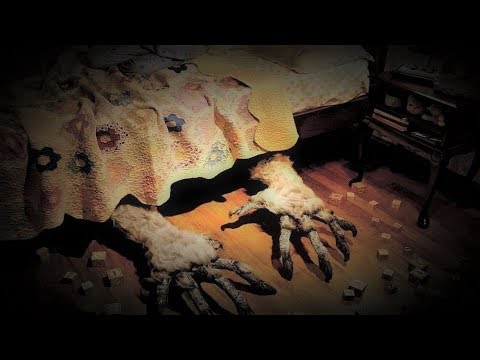
Like many a wealthy American, Lyman Orton sees Communism — or at minimum, socialism — when reasonable people call for reasonable reforms. There are a few dust balls under his bed, and he thinks they are monsters out to kill him.
 The Vermont Political Observer.
Hear, hear!
what are their arguments against making the academies public so their taxpayers can have more transparency and a say on who sits on their board?
“The “yowls” of reasoned criticism center on the taxpayer subsidy of the private academies.”
Yep, and we should keep yowling. No private school should get taxpayer subsidies. None. If they’re for the wealthy and the uber wealthy, let them pay for them, not the taxpayers.
Thanks for calling out Orton, John. You nailed it – of course!
Well done.
It is truly remarkable when the most privileged complain of being the victim of being privileged. DZ
Excellent!
Sandy Gilmour Woodstock
Two interesting views:
“It’s telling that those who can’t compete have set out to diminish Vermont’s premier secondary schools.” (Lyman Orton, 12/12/25, on the occasion of B&B having hijacked Act 73 & whatever real reform might have taken place thereby.)
“The Brigham Decision articulated the constitutional basis of equity in educational opportunity. The decision recognized the role of tax equity in achieving educational equity. Legislators had struggled with this for decades but the Brigham Decision made equity a constitutional imperative, not to be taken lightly.”
(Dick McCormack, 2/11/22, Senate Majority Leader at the time of Brigham.)