
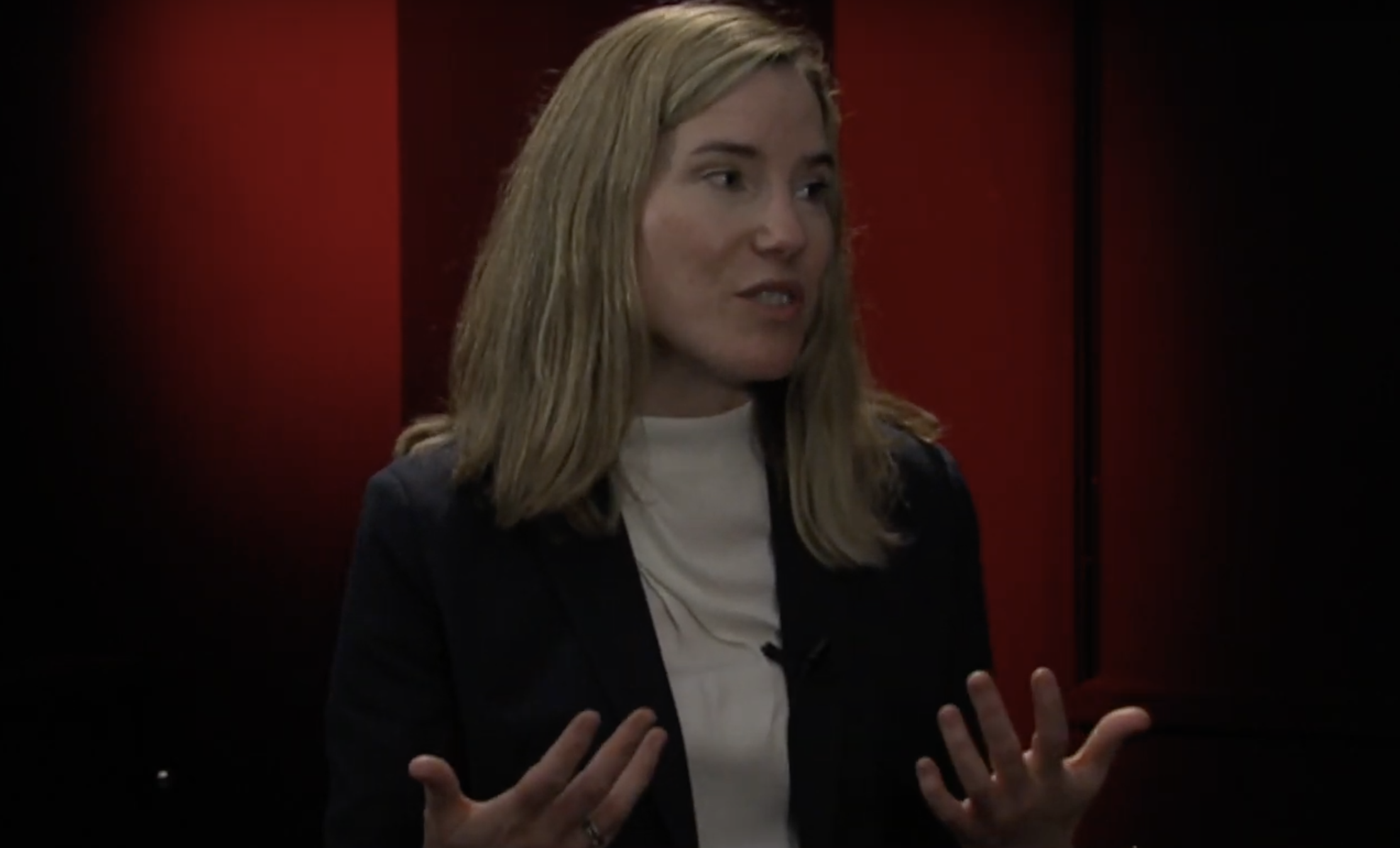
Charity Clark is in a unique position. At a time when our democracy and our system of government are under threat from The World’s Biggest Golf Cheat, she is Vermont’s chief legal advocate. More so than, say, our other Democratic statewides, she has the authority to take action. And the responsibility.
So far, she has followed the Bill Sorrell playbook: Signing on to 13 lawsuits against the Trump administration filed by coalitions of Democratic attorneys general. She also gave a nice speech at Saturday’s lawyers’ rally in Burlington. (In which she oddly referred to the rule of law and the separation of powers as “kind of one of our major brands” as if the Constitution is a consumer product.) That’s all fine, but it’s kind of the least she could do.
Stepping forward on her own would take some courage, but would also be the smartest political move she could make. Setting aside right and wrong for just a moment and focusing on the politics, which is after all the remit of this popstand, Clark is one of a number of top-tier Democrats presumed to be angling for higher office. But she appears to lag behind Treasurer Mike Pieciak (but then, don’t we all?) in terms of profile, connections, and fundraising prowess. If she wants to run for governor or the next Congressional opening, she’ll need to raise her public profile and differentiate herself from a potential swarm of primary candidates.
The best way for her to do that — and also, ahem, do the right thing — is to find ways to lead the fight against Trump. Even purely symbolic moves would help.
Before we get to specifics, a couple of caveats. I’m not a lawyer, nor do I play one on the teevee. I have checked in with people smarter in the law than I, so I hope that helps. Also, I may not be aware of everything the AGO is up to, so there’s a chance that some of this is already in progress. If so, I haven’t heard about it.
Let’s start here. How about being the legal backstop to any public entity in Vermont that’s dealing with Trump’s nonsense? Just as a for-instance, last week the Green Mountain Transit Authority was hit by Trump administration letters threatening a cutoff in federal funds if GMTA drivers didn’t cooperate with immigration enforcement. Did our AG offer any advice or assistance? If she did, she kept it quiet.
Another one: Back in February, the Vermont School Boards Association was thrown into a tizzy after Trump issued an executive order threatening to withdraw federal funding from any school that enacted DEI policies or allowed transgender athletes to participate in competitive sports. Clark didn’t offer any visible support or advice to the VSBA. Neither did the Scott administration’s Agency of Education, but we’re talking about the attorney general here.
What’s worse, in this case Clark joined onto a multi-state lawsuit over this executive order, but within our boundaries she has not been the kind of forceful advocate we need.
Generally, Clark could be proactively offering assistance to any entity targeted by Trump. Something along the lines of, “Don’t panic, don’t take any action. Give my office a call.” Trump’s strategy is to spread chaos and coerce public entities into taking actions they aren’t legally required to. Clark could be an invaluable ally, offering assurances and support as well as legal advice.
Clark could also make herself useful — and raise her political profile in the bargain — by advocating legislation that might help protect Vermont and Vermonters from the excesses of Trump. She could be advising relevant legislative committees and generally being the public face of the official resistance.
Specific case where she’s fallen short of being a loud, progressive voice in the Legislature. Trump’s immigration crackdown has put Vermont’s “fair and impartial policing” regimen to the test. Clark’s office has interpreted FIP narrowly in crucial respects. She could instead be a champion for protecting the rights of all Vermont residents, including immigrants and refugees, to the fullest possible extent. (Worth mentioning: The House and Senate Judiciary Committees held a joint hearing last week about FIP in the age of Trump. Was Clark on the witness list? No, she was not.)
Now, if she really wanted to go out on a limb, my semi-serious suggestion is to bring kidnapping charges against Immigration and Customs Enforcement for the baseless detention of Mohsen Mahdawi by masked agents in unmarked vehicles, and against the Border Patrol over the equally baseless detentions of eight farmworkers from Franklin County’s Pleasant Valley Farms. Sure, it’d be thrown out of court, but when has that ever stopped conservative prosecutors and attorneys general from taking action against their enemies? Do it for the pure publicity, as a blow of resistance against Trump’s unconstitutional crackdown.
That’s probably too much to expect, but the rest of this is absolutely within the authority of her office.
There are opportunities, I’m sure, to file amicus briefs in relevant cases. She has joined other Democratic AGs in joint “friend of the court” filings in lawsuits filed over the status of Haitian refugees and Trump’s “ideological deportation policy.” Nice phrase, that. Could be useful around these parts as well as in distant courtrooms.
A lot of this hinges on the dual — or should I say bipolar? — nature of the office, not to mention the tendency of Clark and her predecessors TJ Donovan and Bill Sorrell to err on the side of caution. The Vermont Attorney General is “the people’s lawyer” except when it comes to the state of Vermont itself. Our AG is legally bound to defend the interests of state government in court. For instance, she joined other state AGs in suing the Trump administration over climate policy — but if the state is sued under the Global Warming Solutions Act, she will have to represent the state against environmental advocates.
Also, the Attorney General is “the state’s top law enforcement officer,” the “Order” in “Law & Order.” She works hand-in-glove with law enforcement agencies, and must maintain good relations with them. This likely explains why she and her predecessors have a consistent record of refusing to file charges against officers in excessive use of force cases, and why her office has taken a narrow view of FIP when it comes to immigration enforcement.
All of this might be acceptable in normal times. But these times are, news flash, far from normal. If there was ever grounds for Vermont’s attorney general to step outside of the box and outside her comfort zone, the time is now.
And in case principle is not enough, there are the real and tangible political benefits. She plays her cards right, she earns a reputation as a forceful, principled leader. Which could vault her into front-runner status in a crowded future Democratic primary for higher office. Plus, added bonus, she’d be doing the right thing.
 The Vermont Political Observer.