
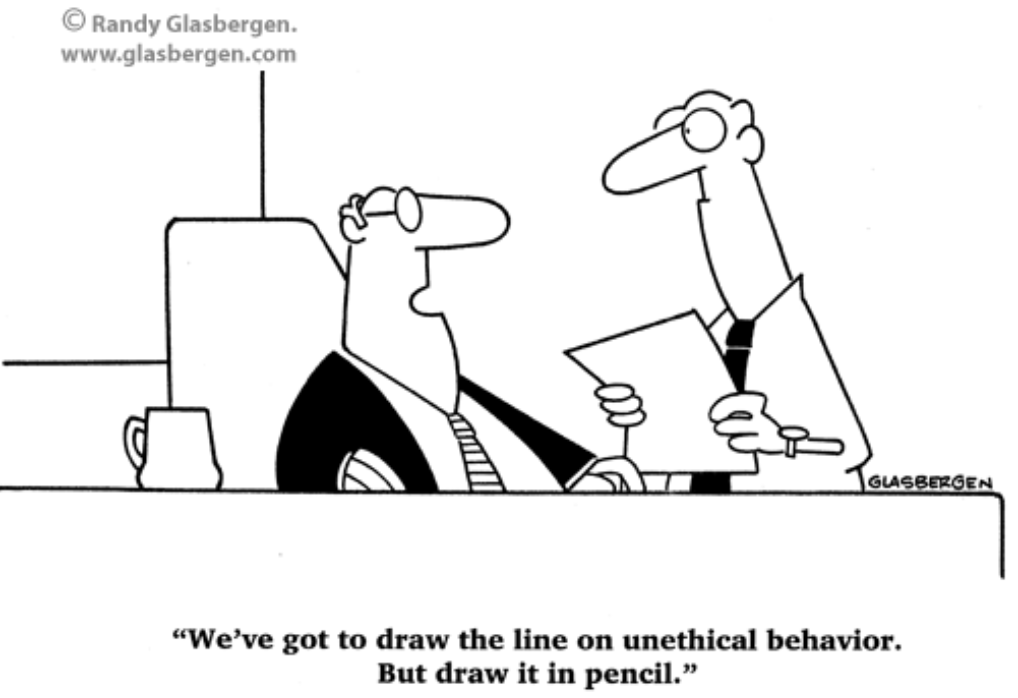
The Legislature never wanted to establish a process for governing official ethics. It took years for lawmakers to enact an embarrassingly threadbare State Ethics Commission, which has since improved somewhat but still conducts its business in secret. The House and Senate were essentially forced to create ethics panels of their own in the wake of the Norm McAllister scandal. Of course, they did the absolute minimum: The panels are black boxes, operating entirely out of public view — as I found out first-hand when I became the first person to file an ethics complaint. The House Ethics Panel considered my complaint behind closed doors and dismissed it. I never heard a peep until after the panel had completed its “work.”
When the House and Senate created the state commission and their respective panels, their first concern was avoiding embarrassment for officials. This remains the operative principle today, as we see in the case of Rep. Mary Morrissey repeatedly dumping cups of water into Rep. Jim Carroll’s tote bag — so repeatedly that it drove Carroll to distraction and affected his mental health.
This follows the pre-primary disclosure that Lt. Gov. David Zuckerman was the subject of an ethics process of sorts, over actions that caused discomfort among multiple female lawmakers. This happened a year and a half ago, and we would never have heard of it at all except that the lawmaker who filed an ethics complaint against Zuckerman, Rep. Heather Chase, went public with the matter shortly before the primary because she believed the voters ought to know before they cast their ballots.
If any of this serves the public interest, you’ll have to explain it to me. In their deliberations before creating the three ethics panels, lawmakers’ primary concern seemed to be avoiding disclosure. They worried about the possibility that false accusations would tarnish reputations, or that a public airing of dirty laundry would impugn the pure and blameless character of the Legislature, heh.
Says here we’d be better off knowing about the laundry and what’s being done to wash it clean or dispose of it. Hell, we deserve to know. These people are public servants, after all. And when scandals surface in spite of Our Betters’ efforts, it makes them look even worse than they would if they were open and forthright about officials’ inevitable human failings.
On Morrissey/Carroll, the House Ethics Panel addressed this in its characteristically opaque manner, holding a series of closed-door meetings throughout this summer, finally achieving a resolution of sorts that it didn’t even announce. Instead, it was left to Morrissey and Carroll to issue a joint press release announcing that the two had gone through some kind of “restorative justice process”. The five members of the Panel, it was reported, will have no comment. This is an abomination against good government.
The best write-up of this unsatisfying denouement was not posted by VTDigger or Seven Days, but by the Ancient Mariner of Vermont journalism, Mike Donoghue, via his one-man shop Vermont News First. Not sure how widely it was disseminated; I saw it on Guy Page’s Vermont Daily Chronicle, which is always on the lookout for free content.
Donoghue cut to the chase in his headline, which points out that the House Ethics Panel took “no public action” on the case. He also reports that while Carroll agreed to the restorative justice process, he is also “leaving his legal options open.” Hmm. Donoghue reached out to Morrissey, who refused comment citing the confidential nature of the process. Isn’t that convenient?
Morrissey is running for re-election. Do the voters of her district not deserve a full, open accounting of this affair? Do they not deserve to know as much as possible about the person who was representing them when she made an ass of herself and imperiled Carroll’s sanity? House leadership doesn’t think so.
Much remains to be said about the Zuckerman situation, which VTDigger reported when I was sidelined by a case of Covid. (Which lingers still, but at least I’m capable of functioning as a keyboard warrior.) I plan to address other aspects of the situation in a separate post, but for now I’ll concentrate on how it reflects — badly — on the state’s official ethics processes and lawmakers’ attitudes toward ethics enforcement.
Chase reported that she was “totally creeped out” during a private chat in Zuckerman’s office, which included an unprompted offer of menstrual supplies. Having heard similar accounts from “a number of individuals,” House Speaker Jill Krowinski issued verbal and written warnings to Zuckerman. Chase filed complaints with two House oversight panels and the State Ethics Commission; the House panels took no action because Zuckerman is a member of the executive branch and is not subject to House discipline. If the Commission took any action, it is safely filed away out of public view.
Which, again, fails the public interest. If Zuckerman is a creep (or he creeps some people out, anyway), the voters deserve to know about it — and they deserve a full account, not a single story published one week before primary day when many voters had already cast their ballots and there was no time for a full airing. The process, if you can call it that, did no one any favors.
House leadership’s actions, taken outside of any ethics process, show you just what leadership thinks of the process, which is nothing. They also reflect a devotion to omertà that would make a Mafia don blush. Our Betters have apparently learned nothing from the McAllister fiasco.
The second highest elective official — the guy who would become governor should something happen to Phil Scott — was accused of some serious misconduct. Serious enough that Krowinski recommended that Zuckerman “Consider meeting with House members in the company of others.”
Yikes.
That means the Speaker believes the lieutenant governor cannot be trusted to act appropriately in one-on-one meetings with women. Is that not remarkable?
Is that not worthy of full disclosure and discussion?
Leadership thinks not.
They are wrong.
Again.
 The Vermont Political Observer.
Pingback: Thanks for the good publicity, John Walters – but I need to make a correction - Vermont Daily Chronicle
Skip and his wife also suffered the death of their son Charlie from Covid, which spurred them to create a fund for research on long Covid in Charlie’s name. It’s been a tough few years for the Vallees. https://vtdigger.org/2022/11/21/soldier-on-the-death-of-an-intelligence-officer-from-vermont-leads-his-family-to-support-long-covid-research/