
A couple Sundays ago, the Doonesbury comic strip took us to an imaginary Florida high school classroom where a teacher was sharing some uncomfortable truths about the Civil War as some of her students pondered reporting her apostasy to the authorities.
The strip did not appear in Gannett newspapers across the country, including the Burlington Free Press. Which raised a kerfuffle about censorship: Did our biggest national newspaper chain remove the strip out of concern for the tender sensibilities of southern readers? Were Free Press editors on board with the decision or were they forced to go along with a corporate kill order?
Well, no. The truth is a lot less scandalous, and a lot more depressing about the fallen state of print journalism in general and the comics in particular.
Truth is, Gannett canceled a whole bunch of comics including Doonesbury six months ago, almost certainly for budgetary reasons. The Free Press hadn’t run Doonesbury since last September. Nobody noticed. And that’s just sad.
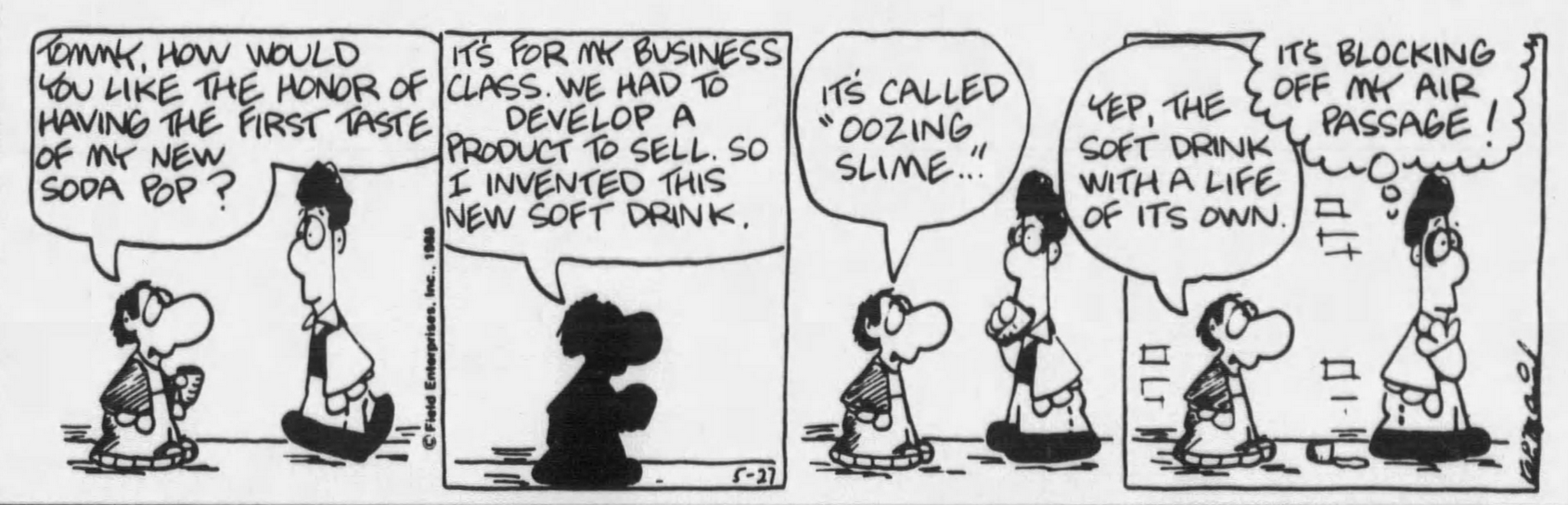
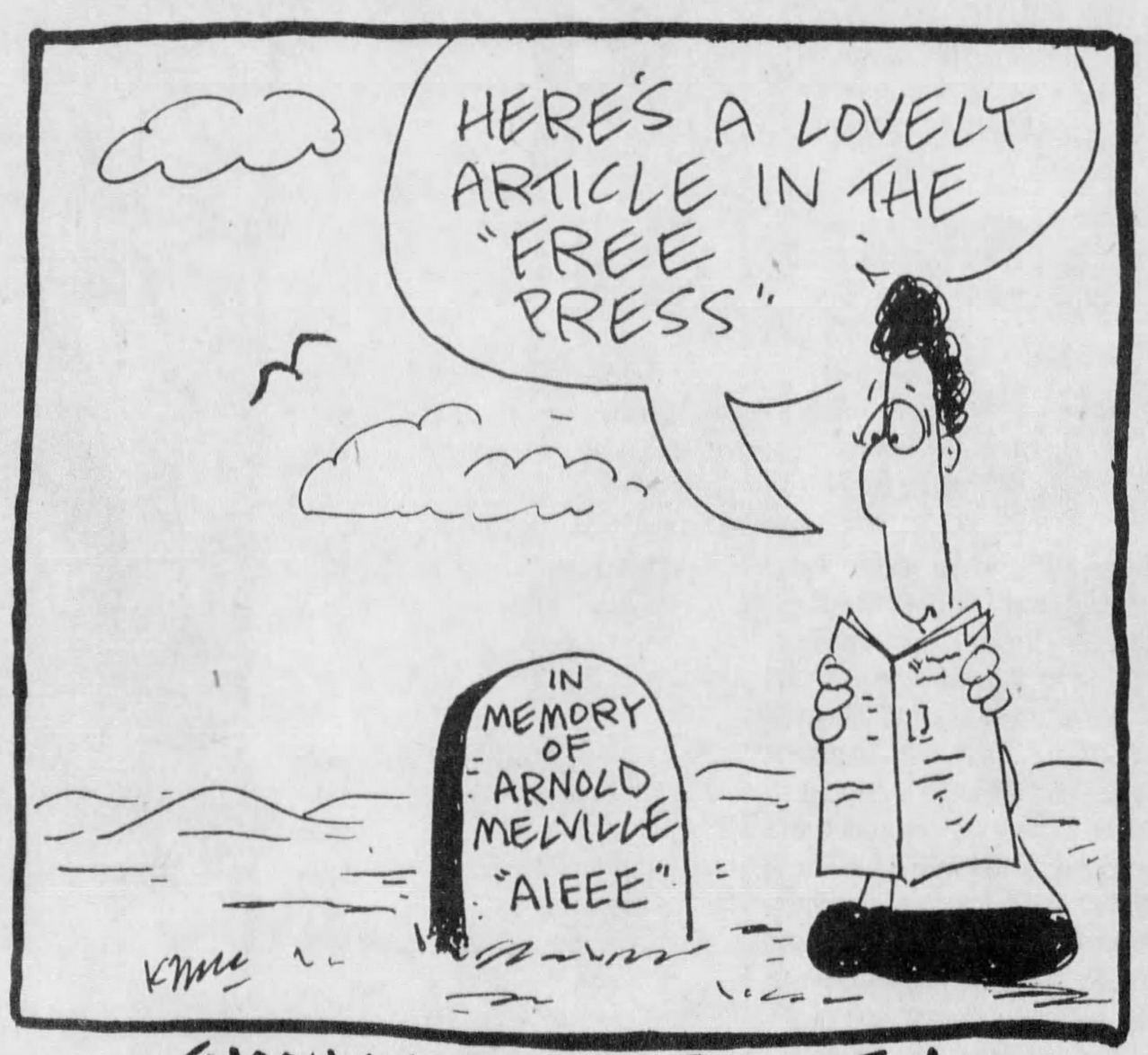
Traditionally, each newspaper controlled its own comics section. It had its own “features editor” who curated the strips, puzzles, and non-editorial columns. When I was young, my daily paper, the Detroit Free Press, had a robust comics section with many mainstream favorites and more than a few off-the-wall selections. It was one of a handful of American papers that carried Peter O’Donnell’s wonderful British adventure strip Modesty Blaise. It carried one of the most bizarre strips to ever grace a funny page, Kevin McCormick’s Arnold.
Anyway. Last September, Gannett put out a list of 34 approved strips. Each affiliated paper could run as many or as few of the 34 as it chose, but couldn’t run any others in its comics section. Presumably the move was budgetary in nature. Doonesbury was not included.
The papers were given until mid-January to make changes. The Burlington Free Press made them immediately and ran a very brief announcement that listed its new rundown but didn’t tell readers which strips had been axed. It framed the changes as “refreshing” the comics and boasted that its selection has “evolved to reflect the culture and tastes of the times.” But to look at the Gannett 34, you’d have to conclude that “the timers” are somewhere in the 1950s if not earlier. The list leans heavily on old standards. It includes two classic strips, Peanuts and For Better or for Worse, that aren’t being produced anymore. Many others, like Blondie, Beetle Bailey, Hi & Lois, B.C., Wizard of Id, Marmaduke, and Family Circus, are “zombie strips” — still being produced by successors to the dearly departed creators.
Not all the oldies made the cut; Rex Morgan, M.D., Snuffy Smith, and Shoe, are gone from Gannett. But the oldies dominate the list: there are only three strips dating from the 21st Century (or four, depending on whether you count the year 2000, when Baldo began).
The Gannett 34 also leans heavily toward white male cartoonists. The only woman-authored strip is For Better or For Worse, and Lynn Johnston stopped producing new strips in 2008, for Pete’s sake. By my count, only three of the 34 are by creators of color: Baldo, JumpStart, and Crabgrass.
Which is all kind of beside the point: One particular Doonesbury was not censored. The Burlington Free Press‘ comics have been slashed by corporate fiat. The comics are less diverse and less interesting as a result.
But the worst part of it is that the print edition is so seldom read, and the comics are so easily skipped over due to their zombification, that the absence of Doonesbury (and many others) went unnoticed for months! That would have been unthinkable in days of yore. But those days are dead and gone.
 The Vermont Political Observer.
“But the worst part of it is that the print edition is so seldom read, ”
I am one who never reads the Freeps anymore. I haven’t even looked at it since they went tabloid and axed the opinion sections.