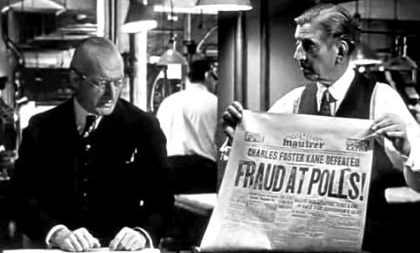

Can somebody do a wellness check on Bill Schubart, prominent denizen of Vermont’s shallow, brackish pool of “public intellectuals”? Because he just published an essay that brings to mind the toxic excesses of early 20th Century liberalism — you know, the fine folks who enthusiastically took up the eugenics movement.
No, he didn’t call for sterilization of the unfit. But he did advocate a return to the Good Old Days when there were asylums to warehouse the many, many types of people deemed “unfit” for proper society.
He did his level best to craft a frame of compassion around this appalling idea, but it didn’t work. When you start talking about removing certain people from society, you are headed down a dangerous road.
Schubart begins by chronicling some of the institutions that kept the “unfit” away from public view. The psychiatric hospital at Waterbury, the Weeks School for wayward youth, the Morristown “poor farm,” the Lund Home for young women who strayed from the path of purity. (He forgets to mention St. Joseph’s Catholic Orphanage for what seem to be obvious reasons.) He recalls how these establishments were used as “implied threats [that] played an important part in setting limits on our juvenile behavior” and asserts that “they were not all as bad as the visions they invoked.”
And then he rolls out nostalgic tales of the Vermont State Hospital, whose inmates happily tended gardens and found fulfillment in working at a local pig farm. Mind you, these memories didn’t come from ex-inmates; the pig farm thing was remembered by “a revered Waterbury friend” who was never himself forced into hard labor as part of his “treatment.”
At this point, one would hope that the editorial process at VTDigger would intervene, if not to protect its opinion section from stuff like this, then to save Bill Schubart from embarrassing himself. This is dire.
Having set the stage, Schubart now turns to his vision for putting a smiley face on his imagined Gulag of the Undesirables, “a new institution… that is a dignified but modest communal home for the many Vermonters struggling with mental illness, alcohol and drug addiction disorders, extreme poverty, or who are simply unhoused.”
See, you open the door to this kind of thing, and the list just keeps getting longer. First they came for those “struggling with mental illness,” and pretty soon the cops are rounding up jaywalkers.
Also, tell us, please, at what point does a miscreant’s doings become egregious enough to warrant suspension of their rights? Shall we convene a Council of Concerned Schubarts to make those calls?
From there, Schubart blunders through a series of rationalizations, trying to make this idea seem a bit less inhumane. We’ve got crime. We’ve got street behavior that makes Proper Vermonters feel uncomfortable. We’ve got people suffering through addiction, poverty, mental illness and more. Our health care system is overburdened. We’re spending a lot of money on welfare and incarceration. Plus, there’s big real estate opportunity given the decline of higher education and the emptying out of commercial space. And then comes The Big Pitch.
Were we to revert to the “asylum” system in the classic sense of the word — “a place of refuge” — might we not remove those in need from our downtowns and place them in dignified quarters where they could be housed, fed, counseled and treated in a way that enables them to return to family and society?
For the love of God, NO. Absolutely not.
The problem — aside from the fact that “return[ing] them to family and society” never happens in real life — is the fundamental “othering” of entire groups of people. Schubart tries to draw a line between the unfit and the rest of us — a line that dehumanizes those on the other side of it, and equally importantly, doesn’t actually exist.
There is no “us” and “them” here. Homelessness, addiction, mental illness, you name it, can happen to any of us. For many reasons. To any degree, from mild to severe. The solution is not a return to the days of rampant institutionalization, even if you try to dress it up in the language of compassionate concern. That’s how we arrived at eugenics, one well-intentioned step at a time.
 The Vermont Political Observer.
Thank Gawd you jumped on this. I was shocked to read Bill’s very-revealing opinions. A giant step backward to our dark side. Your response: right on it.
It’s a tough problem. Some sort of system needs to be put in place, particularly for for that very small percentage who are not capable of taking care of themselves or who represent a danger to the community. Regardless of how well it is done, it’s not going to represent a happy household and it will be expensive. I’ve got one half of a foot in Bill’s camp and the rest in yours. We certainly know more about mental illness now and can do better with screening.
I agree we need special accommodation for “that very small percentage.” There’s nothing in Schubart’s essay to suggest that that’s what he has in mind.
Once, when I was working at a school, a co-worker suggested bringing back Brandon Training School to combat the high cost of special education. This person had no authority to seriously make such a thing happen. Just pointing out the mindset.
While I get the castigation in the name of failed past efforts, I don’t actually hear an alternative. We have a huge growing homeless population which is mostly the visible reminder of the failed “deinstitutionalization” efforts of the 80s which got rid of the public hospitals. However the effort did not provide the level of community care needed in this rapidly fracturing world.
So really, what is the alternative as the floods have increased the demands on our failed housing system and those who might be care givers cannot earn enough to house themselves.
So you’re on board with exporting them to some unknown and out-of-sight location? Fine.
Amazing John, you assume what I am in favor of because I noted the rapid collapse of our housing system and our economy. So I reiterate, what is your offered plan? Or is continuing the current chaos with an increasing number of people without housing or a safe place to live. I was not saying get rid of them, but we don’t have any way of housing without draconian taking of housing etc. I think you are too focused on one issue rather than the larger collapse in the climate and the economy with will be driving this train for quite a while.
I’m not the governor nor any other duly elected policymaker, but I do know there were plans floated during the legislative session that would have provided a lot of housing for a reasonable price tag. Ideas are out there, but our leaders have chosen not to pursue them.
Watching Vermont liberals embrace fascism is a fascinating but harrowing thing. Weinberger’s Nixonian appeal to Law and Order in his last election campaign seemed to open the gate and let all the pigs out. Now there isn’t even the pretense of public interest, just blatant pandering to the comfort of the well-to-do and their minions. Schubart’s evocation of the joys of asylums reminds me of a recent slogan, Make America Great Again.
Unfair, John. We already “remove those in need from our downtowns” and
place them in jail. And even the incarceration industry has “half-way
houses” for newly liberated inmates — should we liken those to
“asylums”, too? The well-intentioned evacuation of mental institutions
like Willowbrook left millions of people in need of shelter and care, a
population inadequately served by “community residences”. Millions found
themselves abandoned on the street. The question is: How do we reverse
that abandonment? You’ve been a great advocate for affordable housing,
but even if new housing could absorb all those who are homeless by
mischance (the causes of which are social), there will remain those
whose homelessness is a symptom of urgent needs (endemic to the
individual) deeper than the economic. Dismissing Bill Schubart with an
off-the-shelf, slippery-slope slur about eugenics does not respond to
the questions he raises.
RD
“Now there isn’t even the pretense of public interest, just blatant pandering to the comfort of the well-to-do and their minions.”
This is the problem. While our leaders try to disguise it with clever phrases, the problem at the bottom of our decaying society is poverty, caused by the deliberate pandering to those few with the talents of raping us to get rich than the rest of us who they care about only when they want votes. No one, of course, wants to admit that.