

The Legislature’s veto override session convenes tomorrow. Multiple override attempts are likely, but the biggest deal is the FY2024 budget. With some Democrats and Progressives on record saying they won’t support a budget override without funding for the motel voucher program, leadership is putting together a plan to bring the dissidents back on board.
And in the process, rescue some actual living humans from the scrap heap we’ve consigned them to.
As best we know it, leadership’s plan would allow extended motel stays for the roughly 2,000 Vermonters scheduled to be unhoused in July. But it offers nothing to the hundreds who’ve already been evicted from motels — some on June 1, some last Friday.
These are people who can supposedly get by without state-funded shelter. But when you look at their circumstances, you realize two things: (1) These people are in desperate situations, often through no fault of their own, and (2) they have hopes, dreams, intelligence, and insights. They have value. They should not be discarded simply because it’s too hard to help them. When, in fact, it’s not too hard. Not at all.
The reality of the people we have chosen not to help has been chronicled by, you guessed it, housing advocate and 2022 Democratic gubernatorial candidate Brenda Siegel. She’s done the hard work of speaking with the folks we have abandoned, something the state hasn’t bothered to do. I’ll attach her findings to this post, and go over some key points after the jump.
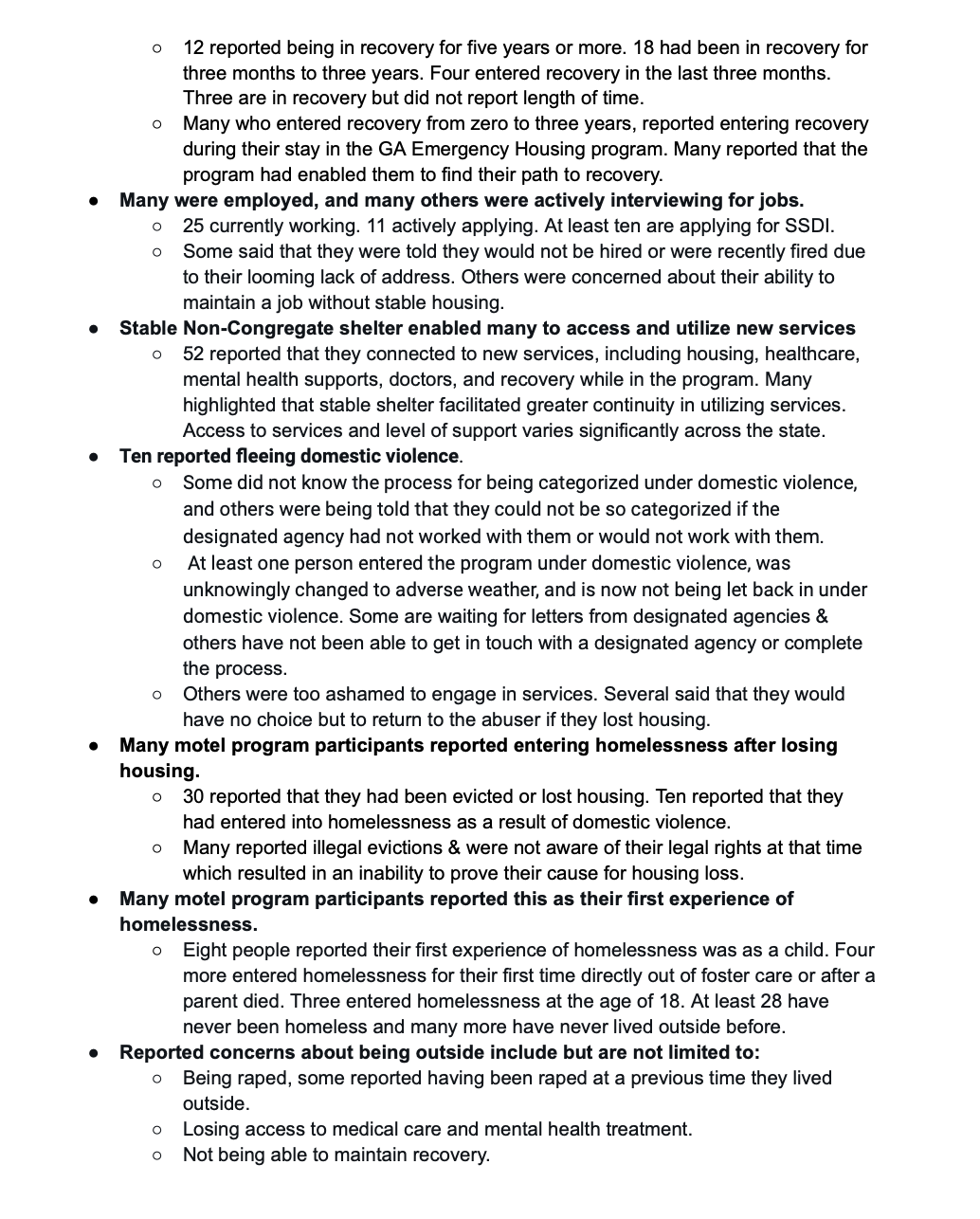
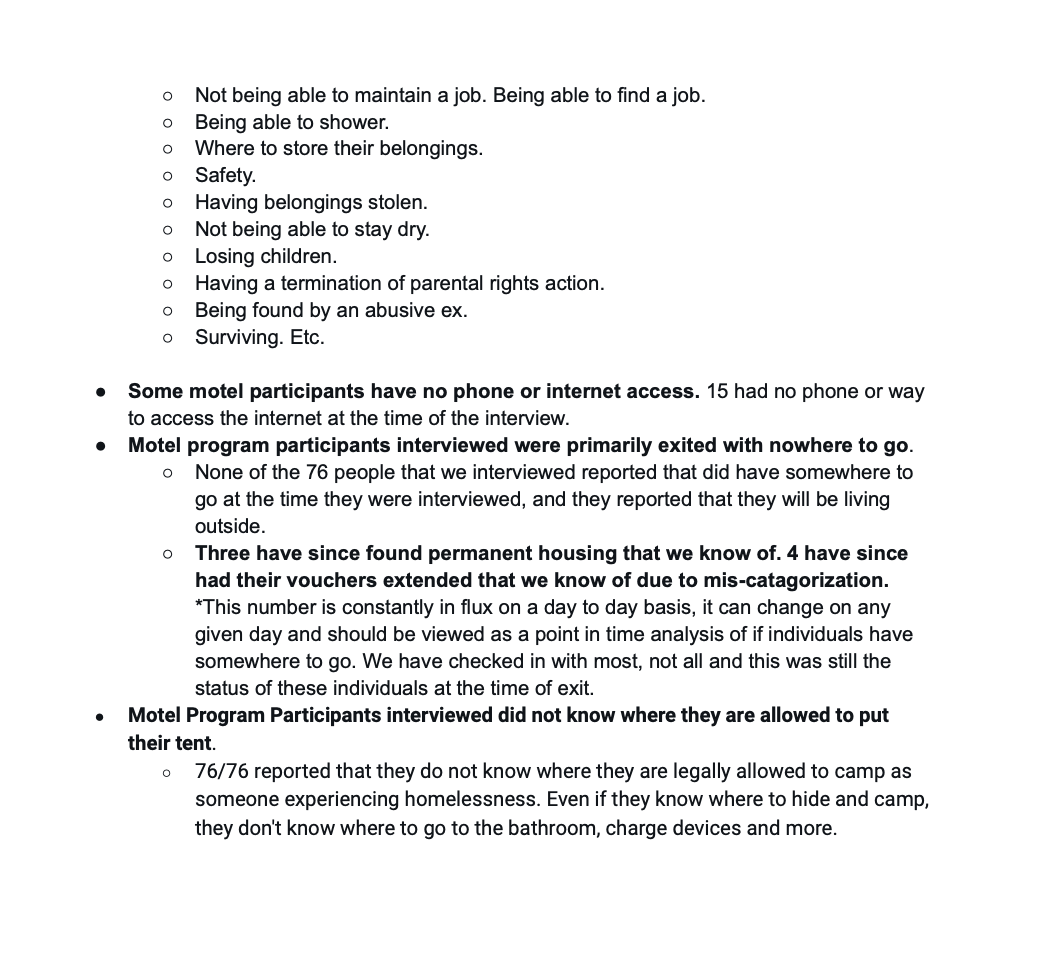
Neither the administration nor the Legislature has offered anything to the June evictees, presumably because they are at lower risk than the July cohorts. They have more available resources, they have less severe problems, stuff like that. Well, Siegel and her associates interviewed 76 of the 90 people who were scheduled for eviction on Friday, June 16, and let me tell you, these people need and deserve our help. Shame on our leaders if their dealmaking leaves these folks out in the cold.
The vast majority have medical conditions, and many are significantly compromised. Some depend on medical devices that require electricity or take medications that must be refrigerated. Some have asthma or diabetes. One has had a foot amputated and has an open wound. Siegel compiled a lengthy and daunting list of significant illnesses among the people we just unhoused.
Mental health concerns are common. PTSD, bipolar disorder, depressive disorder, panic, anxiety, agoraphobia, and more. (The latter three seem particularly inadvisable for those reduced to sleeping in tents or worse.) Many received mental health support during their motel stays, and others are on waiting lists.
Many are in recovery, and some found their way into recovery while in the voucher program. Nearly half are in some stage of recovery. Their odds of success are much lower if they lack shelter.
Many were employed or actively seeking jobs. Having no fixed address will make it much harder for them to obtain or hold employment.
Almost two-thirds connected to support services during their motel stays. This, despite Human Serviced Secretary Jenney Samuelson’s contention that the voucher program must end because there are no connections to support services.
Ten reported fleeing domestic violence. Some now face a choice between no shelter and returning to an abusive situation.
Despite the bland reassurances of state officials that many people would “self-resolve,” none had any idea where they would go. None of the 76 knew where they would stay at the time they were interviewed. All were planning to stay outside, and none had any idea where they could go to pitch a tent and meet basic needs.
These are the people who don’t meet Gov. Phil Scott’s definition of “our most vulnerable.” These are the people legislative leaders have excluded from their plan to extend the voucher program.
These are the people we have left exposed to weather, violence, crime, and exploitation.
These are the people who seek some measure of safety and dignity, a chance to survive their situations and move on to a better life.
The override session is going to be about deal-making, balancing interests and views, getting stuff done. Let’s hope they do all their work with an eye fixed on the real human beings whose lives are at stake. Let’s hope they don’t settle for mitigating the scope of the disaster when they have the means to avoid the disaster entirely.
It can be done. It’s not that hard, really. So far, leadership has not showed that they care — at least not enough to be truly inclusive. A deal extending the voucher program with a solid transition plan to better housing would be better than nothing, but that shouldn’t be the ceiling of our expectations. We have the means and the opportunity to help all the voucher clients. Let’s not settle for anything less.
Siegel’s full report:

 The Vermont Political Observer.
“our most vulnerable.”
Perhaps the meaning here is that the most vulnerable are the billionaires and millionaires who need yet more tax breaks.