
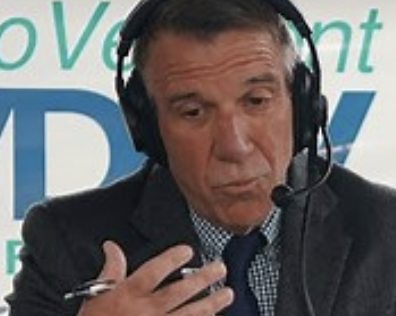
Renowned nice guy Gov. Phil Scott has made history — again — by vetoing yet another bill. According to the Vermont State Archives, Scott’s veto of the legislative pay raise bill was the 40th of his administration.
Scott is the first Vermont governor to reach 40, just as he was the first to reach 35, and 30, and 25, and 22. The previous record holder was Howard Dean, who vetoed 21 bills in his 12 years in office. Scott has nearly doubled that total in only seven legislative sessions. And he might rack up another one or two before the books close on the 2023 Legislature.
The State Archives list 184 veto messages by Vermont governors. The first one happened in 1839, when Gov. S.H. Jenison vetoed a bill to establish the Memphremagog Literary and Theological Seminary. Phil Scott is now responsible for 21.7% of all the vetoes in state history. He’s only occupied the office for 2.9% of the time that Vermont has had a governor.
The Scott apologists in the audience may be thinking “Well, of course he’s vetoed a lot of bills. He’s a Republican facing a Democratic Legislature.” Sure, but (a) he’s supposedly a moderate and (b) he’s an extreme outlier by any standard. Jim Douglas had a very contentious relationship with the Legislature, and yet he vetoed only 19 bills in his four full terms in office. He averaged less than two and a half vetoes per year. Scott is averaging almost eight.
Still, though, he does act as a brake on the Legislature’s liberal tendencies. Many of his vetoes reflect different world views. He has vetoed budgets and tax measures, climate change legislation, a paid family leave program, a raise in the minimum wage, and cannabis legalization. Fine. He’s a Republican.
But Scott has often wielded his veto pen (obligatory “veto pen” reference) for relatively minor issues where a compromise could have been reached. After such vetoes, legislative leaders have repeatedly bemoaned the lack of communication and sometimes have said outright that Scott could have been accommodated if only he’d made his position clear.
He has also struck down numerous bills for a perceived infringement on the authority of the executive branch. These vetoes have often left lawmakers scratching their heads. Their legal advisers saw no problem with the bills, and no issues came up during committee testimony. The objections appear to exist only in the mind of Scott and his legal counsel.
The real point is, Scott has vetoed an absurdly large number of bills — far more than any other governor in Vermont history. He will almost certainly double Howard Dean’s total, perhaps by the end of this month, and keep on building a record that may never be broken.
It is to be hoped so, anyway.
 The Vermont Political Observer.
How can we address the child care, climate change, and housing crises in this state without using government’s power to tax and regulate? The governor seems to obsess on only half of the equation. If you love the status quo and fear change, keep electing him.