Yearly Archives: 2016

We have displeased our benevolent overlords

Hey, remember when Vermont was ranked third in the nation by Politico magazine as a place to live?

Well, here comes the flip side, courtesy of none other than the American Legislative Exchange Council (ALEC), that overflowing cascade of Kochian “economic liberty” bushwa. It ranks Vermont #49 in “economic outlook,” which is a very interesting way to put it. Because what they are ranking is not actual, tangible economic health — it’s how the state is poised for intangible future prosperity. And it is measured in terms of taxation and regulation.

But wait, it gets better. The lead author of the ALEC report is none other than Arthur Laffer. Yep, the guy behind the Laffer Curve, the absolutely unproven bit of dogma that claims you’ll create more revenue by cutting taxes, because the tax cuts will stimulate a cornucopia of prosperity.

Well, not only is it absolutely unproven; when it’s been tried in the real world, the results have been dismal. The Laffer Curve isn’t a coherent, evidence-based economic practice; it’s the money shot in a right-wing porn flick.

In case you think I’m overstating my case, let’s look at a state deemed praiseworthy by ALEC.

Kansas.

Continue reading

Not looking good for legalized pot

A lot of lawmakers are throwing stones at the idea of legalizing marijuana in Vermont this year. A lot of influential lawmakers. The latest, and perhaps most dispiriting: the brontosaurus of the State Senate, “Democrat” Dick Mazza. He’s chair of the Senate Transportation Committee, which is one of the committees that would have to pass the bill, because reasons. In an interview to be broadcast this Sunday on WCAX-TV, he sent loud signals that he’s prepared to put the kibosh on the idea. Bottom line?

… I say let’s not hurry it. I don’t think a year or two will make a difference, but let’s answer all these questions with our eyes wide-open.”

In addition to that cheery comment, he also argued that public-safety funding needs a boost before making pot legal. His reasoning:

“Public safety always has some sort of shortfall. The reason they do is because we are asking public safety to do more, more and more. There are a lot more crimes in Vermont, so before you burden them with a service, let’s make sure that they are fully funded on their existing services that they are providing today.”

Not sure what he means by “burden them with a service.” I could infer that he expects more trouble for the police if marijuana is legal. This is a common sentiment among law enforcement types and lawmakers looking for reasons to vote “No,” but the evidence is decidedly mixed, where evidence exists at all.

Continue reading

Sorrell gets the wet noodle

Scoop of the week award goes to Neal Goswami of the Vermont Press Bureau, for snagging himself an advance copy of the independent investigator’s report on Attorney General Bill Sorrell.

The topline is that Sorrell was exonerated.

The reality is not nearly so simple.

There were six accusations against Sorrell. On two of them, investigator Tom Little found no evidence of wrongdoing. On two others, Little admonished Sorrell for coming uncomfortably close to “crossing the line.”

As for the final two, Little concluded that they were outside the scope of his investigation.

Whaaaaaaaat?

Tom Little was appointed on May 7, 2015. Today is January 22, 2016.

Eight and a half months.

Couldn’t he have told us a bit sooner that he wouldn’t be investigating two of the six counts?   When exactly did he reach that conclusion?

Also, who outlined the scope of Little’s investigation? Well, we know the answer to that: he was appointed by Governor Shumlin. But was it written in a way that excluded certain areas of inquiry?

We were promised a complete investigation of Bill Sorrell’s activities — and that’s not what we got. 

And I think Tom Little, whose investigation was taxpayer-funded, owes us an explanation.

Continue reading

Who speaks for renewables?

The anti- wind and -solar crowd had a big to-do at the Statehouse yesterday, wearing construction-type green vests and lugging all kinds of props as they pressed their case for the current iteration of anti-renewables legislation: a ban on ridgeline wind and “local control” over siting decisions.

This post is not about their arguments. This post is about the absence of response from those who supposedly favor renewable energy.

With the exception of VPIRG, our environmental groups have been curiously silent. On paper, they support renewables as part of a broad-based effort to combat climate change. But in practice, they stay off the battleground.

Disclaimer: I don’t have pipelines into their war rooms, and I don’t know the details of their lobbying efforts. I’m judging based on what I can see. And what I see is an extremely active anti-renewable movement and a distressingly quiescent response.

I’m talking VNRC, the Conservation Law Foundation, and the Sierra Club among others. They all pay lip service to renewables, but what do they actually do? Where is the pro-renewables gathering at the Statehouse?

Continue reading

Senate ethics discussion devolves into farce

Well, now we know why the Senate Rules Committee likes to meet behind closed doors. Because yesterday, with reporters in the room, things got so badly out of control that they had to abruptly pack up and leave. Fortunately, VTDigger’s Mark Johnson was on hand to chronicle the chaos. His report is a classic case of “this would be funny if it wasn’t so sad.”

Senate Rules, a committee designed to defend the status quo, has been forced by events to take up the issue of ethics regulation — the very idea of which seems to offend at least three of the panel’s five members.

The saddest thing? The shambolic performance didn’t even concern a really tough issue. To anyone hoping for genuine ethics reform — like, for example, a state Ethics Commission — yesterday’s meeting was a knife in the back. The five Senators couldn’t even handle the much less impactful idea of an in-house Ethics Panel using the House’s toothless joke of a watchdog as a model.

Instead, they got stuck in the weeds of disclosure requirements.

Continue reading

The unintended consequences of law

Conceptual rendering of the Act 46 debate. Dave Sharpe's in there somewhere.

Conceptual rendering of the Act 46 debate. Dave Sharpe’s in there somewhere.

This Act 46 thing is turning into a giant-sized tangle of no-win, isn’t it?

The House and Senate are at odds, with the Senate voting to repeal limits on school budgets and the House considering a range of tweaks. The Senate is also throwing the House under the bus, disavowing any responsibility for the spending limits. The Governor is hounding the Legislature to repeal without thinking about it too much. On top of all that, we discover that the Agency of Education misinterpreted a key passage of Act 46 in a way that changes the actual limits for many a district.

Meanwhile, the Republicans can just sit in the balcony, laughing and throwing Jujubes. As VTDigger’s Anne Galloway notes, unless the House gets buffaloed into changing course, the Republicans will get exactly what they want: the limits will remain in place and the Democrats will look like disorganized idiots who don’t care about rising property taxes. And if the limits are repealed, the Republicans will get something just about as juicy: the Democrats repealing a measure designed to provide some tax relief, and looking like idiots in the process.

Meanwhile, school districts are closing in on Town Meeting time with no idea how to plan their budgets.

Yeah, nice. This lame-duck session is off to a rip-roaring start.

Continue reading

The Apex of Entertainment Conservatism

In a perfectly awful way, today was the perfect day.

Donald Trump.

At the John Wayne Homestead Museum.

Being endorsed by John Wayne’s descendants.

And then collecting the support of Sarah Palin.

It was the ideal display of something that MSNBC contributor Joy Reid calls “Entertainment Conservatism.” When I heard her say that, a bell rang in my head and a light bulb lit up above me.

John Wayne, the man brilliantly described by T Bone Burnett as the impostor, the “cowboy with no cattle, warrior with no war.”

Sarah Palin, supposedly a real Tea Partier, until today a staunch backer of Ted Cruz, aligning herself with Donald Trump.

Of course. Because she is, at heart, not an archconservative — she is an Entertainment Conservative.

In a fundamental way, this is the real heart of the conservative movement.

Continue reading

Energize Vermont’s cockamamie political analysis

Here’s something I bet you didn’t know.

Widespread unrest over the state’s renewable energy policy was responsible for Governor Shumlin’s near-defeat in 2014.

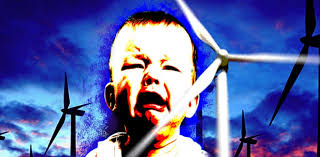
Actual piece of anti-wind propaganda from Ireland. I'm more afraid of Giant Baby than the turbines. But maybe the vibrations turned him into Babyzilla.

Actual piece of anti-wind propaganda from Ireland. Personally, I’m more afraid of Babyzilla than the turbines. But maybe the vibrations turned him into Babyzilla. Hmm.

Well, that’s the story being peddled by our buddies at Energize Vermont, an anti-renewable nonprofit whose funding sources are entirely opaque. They’re branding it as “The Vermont Energy Rebellion,” which allegedly poses an existential threat to the Democrats in 2016.

But let’s go back to 2014, the year that Scott Milne allegedly surfed the wave of anti-renewables anger to within an eyelash of the governorship. The fevered imagination of Energize Vermont focuses on the key constituency of Craftsbury, population 1,206.

Hey, you in the back: stop laughing!

Continue reading

Brian Dubie, serial propagandist

Our former Lieutenant Governor is continuing his all-out campaign against wind farms with his usual mix of overheated rhetoric and outright lies. As is customary with anti-wind activists, it’s a game of Whack-A-Mole: answer one argument, they quickly switch to another, and another, and another. No single argument survives scrutiny; they have to move the target and hope nobody notices. Dubie’s only been playing this game for a few months, but he’s already mastered the basics.

UFOTurbineHis latest foray was especially duplicitous: a claim that a proposed wind farm would be a hazard to aviation. Originally, he brandished a document from the Federal Aviation Administration that seemed to backstop his argument.  Turns out he was misrepresenting a routine FAA notice of interest in the project. The FAA has since ruled that the wind farm poses no risk to aviation.

That hasn’t stopped Dubie from pushing this discredited talking point, brandishing his “expertise” as a longtime airline pilot — which, I guess, makes him more of an expert than the Federal Aviation Administration.  Heh.

In a recent opinion piece, Dubie places the origin of his professional concern about wind turbines to an unspecified time during his tenure as Lieutenant Governor. Which looks like an attempt to rewrite history, since Dubie was a prominent advocate of wind energy — a position that put him at odds with Governor Jim Douglas, a wind-power skeptic. Dubie highlighted the need for more wind power as recently as January 2009, when he was being sworn in to his fourth term as Lite-Gov.

So when was his wind-power conversion? Apparently not during his government service. Indeed, he never raised a peep of concern about wind energy until last year, when he realized there was a plan to build a wind farm near his home.

Continue reading

How a movie reinforced my doubts about Bruce Lisman

I saw “The Big Short” last night. Great movie. Manages to be funny and dramatic while also explaining some very tricky financial concepts.

And there was one scene near the end that reminded me very much of The Man Who Would Be Governor, Bruce Lisman. He’s the native Vermonter who spent most of his adult life in the shadowy canyons of Wall Street, working his way up the ladder to the very top ranks of Bear Stearns.

Yes, the financial firm that went kerblooey in the great crash of 2008.

The story of “The Big Short” is that a few marginal investor-class weirdos were the only ones who saw how the mainstream investment community was vastly overextended in the housing market — to such an extent that a crash was inevitable. It also features various Wall Street “geniuses” who were clueless about the coming debacle.

Continue reading