Monthly Archives: September 2014

Fogler Departs, Crudification of Free Press To Accelerate

Big news in Vermont media: Jim Fogler is stepping down as president and publisher of the Burlington Free Press. And leaving the newspaper business entirely, for a rewarding and soul-enriching gig as a vice president at Party City, the national chain of party supply stores.

Those journalistic ethics should come in handy over there.

I have made my share of sport at Fogler’s expense in the past — if I recall correctly, I wrote that when Jim Fogler writes an optimistic column in the Freeploid, readers (and staff) run for cover. But if I were to guess, I’d say his departure is not good news for Vermont’s Largest Newspaper.

First, there are the circumstances. His resignation is announced on September 25, and his last day at the Freeploid will be October 1. That’s a nanosecond by the standards of executive turnover. I have no inside information whatsoever, but it does make me wonder if his departure was voluntary. Not that he was fired; but rather that they let him know that he’d be replaced, and gave him time to arrange a soft landing. He had spent 26 years with Gannett, after all, so perhaps a little consideration was in order.

The big change comes as Gannett’s newspapers are transitioning into a new era of newsroom organization. A few Gannett papers have already gotten the makeover, which has resulted in the following:

— More reporters, but fewer editors. A smaller newsroom staff overall. Get ready for an explosion in typos, bad writing, and bad grammar.

— Everyone has to reapply for newly redefined jobs. Presumably with lower pay and benefits.

— A dependence on “audience analytics,” i.e. covering stories because of reader interest (pageviews!) rather than importance.

— What appears to be a troubling degree of “synergy” between news and ad sales.

Expect Gannett to parachute in a corporate loyalist (after a, cough, “nationwide search”)  to institute the new regime at the Freeploid.

The boy in the bubble

Scott Milne is honestly convinced he’s got a chance to beat Governor Shumlin.

He thinks, in spite of all available evidence, that all he needs is for voters to believe, and the Evil Pirates of the media to stop insisting his candidacy is dead.

He do believe in fairies. He do. He do. 

He do believe in fairies. He do. He do.

So, how did a successful businessman, who must be keenly aware of the hard knocks of the real world, become so self-deluded?

Well, he’s living in a bubble. And he’s mistaken that bubble for reality.

He spends his time on the stump, interacting with people who hate Governor Shumlin and yearn for deliverance. They welcome his presence and cheer his words.

Everybody else, he never sees. He’s living among a small, self-selected, and heavily skewed sample of Vermonters.

This is his experience everywhere he goes. It’s intoxicating stuff for someone who’s never played at this level before.

On the other hand, he never holds news conferences, so he hasn’t experienced that ego-deflating fandango. From the looks of things, he has little contact with fellow Republicans who are now regretting the day they ceded their precious nomination to him. (Has he ever, even once, made a joint appearance with Phil Scott since the launch of his candidacy?) He’s got a small campaign staff who also have little experience, and are presumably loyal to their man.

Inside the Milne Bubble, there’s a broad groundswell across the state that will carry him to the governorship. Surely, he believes, stuffy old Eric Davis must be wrong; after all, our Pundit Laureate is up in his ivory tower all day, while Scott Milne travels among the Real People of Vermont. Surely Milne’s experiences are more significant than Davis’ private musings.

And when the fairy dies on Election Night, Scott Milne will know who to blame. Not himself, and not the people of Vermont. The real killers will be Eric Davis, Mark Johnson, Anne Galloway, Paul Heintz, and the rest of those damn pirates.

Weird Uncle Pete and the Fringe Brigade

Just about every family has that one relative. The one you try to stay away from. The one you never ever ever talk politics/religion/race with. The one who drinks too much, or gives creepily extended hugs. For our purposes, let’s call him Weird Uncle Pete.

Not Peter Diamondstone.

Not Peter Diamondstone.

As uncomfortable as Weird Uncle Pete makes everyone, he still gets invited to Thanksgiving dinner. Because he’s family.

But that doesn’t mean you have to invite him to a gubernatorial debate.

Well, it does, but only in Vermont. There, occupying the designated Fringe Candidate chair at Tuesday night’s debate, was Peter Diamondstone, perpetual candidate of the Liberty Union Party. (At the first debate, it was Hempily Peyton.)

And I have to say, as admirable our attention to inclusion may appear, people like Weird Uncle Pete add absolutely nothing to a high-stakes political debate. They occupy space, they take up time, and they limit the opportunity for real interaction between the candidates who have a prayer of actually being elected. Their inclusion is a disservice to the voting public.

Now, I don’t mind if Peyton and Diamondstone get one round. But I sure as hell hope I don’t have to hear either one of them again this year.

This ain’t the Special Olympics, folks. Everyone doesn’t get a ribbon for participation. I don’t mind that Vermont’s ballot access law is extremely lenient, but you don’t deserve a place on center stage or 20+ minutes of my time just because you got your name on the ballot.

Emily Peyton got on the ballot by collecting 500 signatures. Diamondstone got on the ballot because in 2012, the Republicans and Progressives didn’t run a candidate for Secretary of State, which left the Liberty Union candidate alone against Jim Condos. And of course, she got enough votes to guarantee her party ballot access for 2014. Diamondstone didn’t do a damn thing to “merit” a seat at the debate.

You may think me undemocratic, but I ask you: what is the purpose of these debates? I argue that they exist to serve the voting public. And the voting public is best served by an uncluttered presentation by candidates who, again, actually have a prayer of becoming Governor. Debates are designed to help the undecided make up their minds. The vast majority of those undecideds are never, in a million years, going to even consider voting for the likes of Weird Uncle Pete and Aunt Hempily.

We only get four gubernatorial debates this year. We can’t afford to hand them out like participation ribbons.

The Good Ship Milne runs aground

Oh dear. Oh wow. That debate last night. (The gubernatorial debate on VPR featuring Governor Shumlin, Republican Scott Milne, Libertarian Dan Feliciano, and the Liberty Union’s Peter Diamondstone.)

Lots to talk about, but the main takeaway is this: Scott Milne is losing it. His performance was so bad that, I hear, it sparked some back-channel sentiment among Republicans to get him out of the race and leave it to Dan Feliciano.

I don’t think that sentiment will turn into action, because in the long run it’d be more embarrassing to have no Republican candidate than to have a really bad one. But still, it shows you how bad it was.

How bad was it? The Freeploid’s Nancy Remsen, in referring to a question Milne asked of Governor Shumlin, characterized it as a “strange question.”

And she was right.

It’d be fun to provide a tally of how many times Milne said that an issue was “complicated” or that he was “running a campaign of ideas” without providing any ideas. But a couple of excerpts will, I think, give a more complete sense of the debacle.

After a couple of opening-round questions, the candidates were given the opportunity to ask a question of one of their fellows. Milne made a complete botch of it:

Milne: I’ve heard from four different people that therte was an emergency sort of last-minute called meeting Saturday night after that debate with Democratic leaders in Windsor County that you attended. I’m just curious, at that meeting, how many folks that were there to sort of help you regroup after that debate worked for the state directly or worked for nonprofits or advocacy groups that are funded by state dollars prinarily?

This is the question Remsen called “strange,” and she was dead-on. Shumlin’s response?

Shumlin: Scott, I’m totally unaware of what you’re talking about. I can tell you what I did after the Tunbridge Fair, I went up and spoke with state employees, the VSEA, in Killington, I made one other campaign stop, and I went to the Windsor County Democratic dinner in Hartland. It was a very good event, and I went home. So the meeting you’re referring to did not happen.

Milne: Okay, my bad. Thank you.

Moderator Bob Kinzel: No follow-up question for that?

Milne: Nope.

Do I have to explain how awful that was? In a four-way debate, Milne would get few opportunities for a direct interaction with the Governor. He took is best chance and blew it on a hot rumor he’d heard about an alleged event that didn’t happen, and even if it did, what the hell difference would it make? The best he could have hoped for was that Shumlin would decompensate and admit he’d had a secret powwow to strategize a counterattack against the Milne Menace with a roomful of state employees. And then what would Milne have? A “gotcha” moment that would do nothing to illustrate policy differences between the two.

As it was, he looked like a fool.

Next, Shumlin asked MIlne a question. He noted that Milne repeatedly calls Shumlin “radical and progressive.” He then ticked off several of his initiatives — universal pre-K, college tuition, downtown revitalization, fighting opiate addiction, and the GMO bill, among others — and asked Milne which ones he disagreed with.

And here, in all its incoherent glory, is Milne’s response.

Milne: Since you used all my time asking questions, I’ll try to be brief. I also want to give a shout out to Peter Diamondstone, just so the listeners know, Peter and I are doing this without notes. Dan’s reading questions from a paper, as is Governor Shumlin, so I’m happy to answer questions with my brain, not with what I wrote down ahead of time to bring into the test.

I think the GMO labeling bill is a good example of the radical, progressive management of a bill by your administration.

Shumlin: Would you repeal it?

Milne: I didn’t say I’d repeal it. I’m not entirely positive I would have vetoed it if I was in your shoes.

Shumlin: So you’re against it but you’re for it?

(I have to pause here and just say I really hope, purely for the entertainment value, that there’s a one-on-one debate between Milne and Shumlin sometime during the campaign. It’d truly be a Bambi vs. Godzilla moment.)

Milne: No, no. Um, I could do the flip-flop thing on you. I’m running a debate on ideas, I’m running a campaign of ideas, I’m not doing the sound bite flip-flop stuff. You flip-flopped on, you know, you’re totally doubling down on single-payer on Tuesday when you’re with your Democratic announcement, then you’re on a statewide radio program three days later, and you’re not going to go forward with it unless it’s goig to be good for the economy, so if you want to do the sound bite kind of campaign, we can do that.

What I said very clearly is, you managed that bill in a radical, progressive way. We could have gotten the same results in a much more business-friendly way that would have done great things to contributing to a business-friendly environment in Vermont which would be good for business, which would be good for government, because government is funded by business.

Yyyyyyyeah.

All I can say is, if you can listen to that mess and conclude that Scott Milne is your man for Governor, then I’ve got no words.

Hey look everybody! Scott Milne has a plan! …oh wait, never mind.

A moment of excitement on my Twitter feed today, courtesy of cigar-smoking VTGOP “Victory Coordinator” Jeff Bartley:

Screen Shot 2014-09-23 at 2.59.30 PM

I could hardly believe my eyes. And I couldn’t wait to click on the link, to a story by WCAX’s Kyle Midura.

After weeks of alluding to his campaign of ideas, Milne provided more details Thursday about his call for a two-year cap on the state property tax.

Well, huzzah. The cap idea has been criticized, by me and many others, as imposing a hard spending cap on local schools. Governor Shumlin said it would erode local control. Midura says that Milne offered a rejoinder to this criticism:

Milne says the cost would shift to other taxes unless schools cut spending. The income tax is most likely — a legislative proposal to move all school costs to that source stalled before lawmakers left Montpelier last May.

It would “shift to other taxes” because the state is legally bound to provide funding to the schools, and if the property tax doesn’t cover it, then it’ll have to come from somewhere. That’s an obvious statement of fact, Mr. Milne. What else you got?

Milne says he would leave how to fill the gap his proposal would create up to legislators.

He is not sharing cost-cutting plans, at least not yet.

“We’ll be talking about our strategies for lowering school costs clearly over the next few weeks,” Milne said.

Awwwww, god DAMN.

A more accurate headline would read, “GOP candidate Milne provides no details of property tax plan.”

The excitement deflates. The Scott Milne Policy Watch continues.

In which I dip my toe into Jim Douglas’ Well of Lost Dreams

A friend in the media loaned me a review copy of ex-Governor Douglas’ memoir, “The Vermont Way.”  And I’ve started working my way through it.

It’ll definitely be “work,” too. I could tell from the first page that, leaving aside my opinion of Jim Douglas, this book is badly written. It’s flat, wooden, and wordy. This sentence, referring to Springfield, Massachusetts, says it all:

It was the county seat, the city where I was born and a municipality adjacent to the suburb, East Longmeadow, in which my family lived.

Boy howdy. Hemingway couldn’t have said it better.

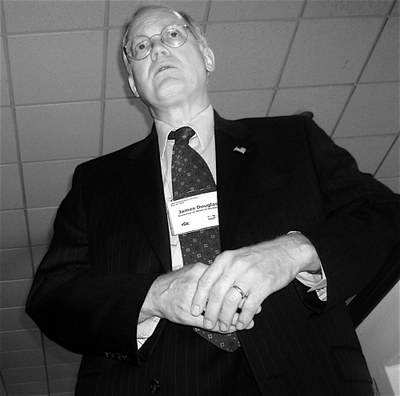
(Photo by the late great Peter Freyne.)

(Photo by the late great Peter Freyne.)

If that was an outlier, Douglas (and his publisher) could be forgiven for a lapse in copy editing. But there’s more. Oh, so much more. Here’s a passage where he might have offered something fresh about Deane Davis, the Republican Governor when Douglas was launching his political career. Instead, he gives us a dry recitation of Davis’ resume:

He was two days away from turning sixty-eight and had completed a successful career as a lawyer, judge, and chief executive officer of the National Life Insurance Company. He had served as president of the American Morgan Horse Association and led Vermont’s Little Hoover Commission, the group that recommended reorganization of state government in the late ’50s.

Morgan Horse Association? What the frack?

If a high school student had written this, he would have gotten dinged for padding the word count. When it comes from Jim Douglas, not only is it lousy writing, but it fails to deliver the kind of insight I’d expect.

Here’s a dinner winner from what should have been a fraught passage — the announcement of the draft lottery during his college years, which would send some of his classmates off to Vietnam. And instead of some hint of emotion or empathy, we get another sentence unworthy of a high school essay:

These days, of course, military service is voluntary, but there have been times in our nation’s history when compulsory induction has been necessary to adequately staff our armed forces.

And by “adequately staff,” he means “replenish our battle-ravaged troops.”

The sentence adds nothing whatsoever to the narrative. Every page has examples of pointless padding, of layer upon layer of verbiage meant to insulate Jim Douglas from betraying actual human feeling or revealing unique insight into his life and career.

Chapter One ends with a passage concerning Douglas’ alleged curiosity about the world outside Vermont. He had studied Russian at Middlebury College; primarily, he says, because it was “the height of the Cold War,” which he defined in a manner, once again, unworthy of a high school essay:

Soviet Premier Nikita Khruschev had proclaimed to the United States and other Western democracies, “We will bury you!” and later, for emphasis, banged his shoe on a desk at the United Nations.

These aren’t the words I’d expect from someone who grew up in the Cold War, with the Cuba missile crisis and air-raid drills and bomb shelters full of rations and bottled water. These are words I’d expect from a youngster who looked up “Cold War” on Wikipedia.

He goes on to talk about this curiosity regarding “other cultures” that “never abated,” and was fulfilled to some degree by his gubernatorial travels. The first “other culture” he mentions is Canada, that strange and distant land and “our largest trading partner.” He then rattles off the other stickers on his gubernatorial steamer trunk: Vietnam (where “the people are very friendly”) and 13 other countries listed in alphabetical order — the most unimaginative rendering possible.

There are no revealing anecdotes, no indication of what he learned or where his alleged curiosity took him. I suspect it mostly took him to official meetings and staged VIP tours. Either way, we get no hint that his journeys gave him any insight. After this perfunctory paragraph, “China,” “Vietnam,” and “Korea” only appear once in the book’s index. All three are mentioned on the same page, in a tossed-off recap of a trip “with business leaders” that “generated a large number of investors and inquiries.”

This is supposedly one area of human experience that really engages Jim Douglas’ intellect, and it’s reduced to a dry, soulless recitation of facts.

I’m only through part of chapter three, but one thing I can tell you:  Whatever you think of Jim Douglas as a politician or leader, this book has to be a disappointment. It is so much less than it could have been.

VHC and the NFL

The National Football League, the unstoppable beast of modern sports, is having a bad time of it. Commissioner Roger Goodell, team owners, and players are under scrutiny for what appears to be an epidemic of bad behavior toward women and children, and a casual attitude toward violent offenders.

In actual fact, there are no more or fewer incidents than there have ever been. The problem is the league’s hypocrisy, backtracking, dishonesty, and double-dealing. Or, as we learned from the Watergate scandal — well, we should have learned it — it’s not the crime that gets you, it’s the cover-up. If the NFL had gotten out in front and taken plausibly strong action, its current PR crisis would never have happened.

Which brings me to Vermont Health Connect, our long-troubled and (temporarily?) sidelined health care exchange. And particularly the need for a heavy dose of the best disinfectant: sunshine.

To begin with the takeaway: Please, let there be no more surprises. If there are unrevealed problems, call a news conference ASAP and get all the bad stuff out in the open at once. No more dribs and drabs, no more Friday afternoon newsdumps; just a public accounting for everything. Take heed of the NFL’s tribulations, made worse every time new information comes out or a prominent figure sticks his foot in his mouth.

Maybe there’s no bad news left. Maybe we know it all. That would be great, if true. But the Administration’s recent track record doesn’t fill me with confidence.

Go back, first of all, to the Friday afternoon newsdump to end all Friday afternoon newsdumps: the release of the Optum report detailing serious problems with the state’s oversight of the VHC website’s construction. Not problems with the technology or software; but serious management shortcomings by Shumlin Administration officials. The report was released the Friday before Labor Day, so maybe you missed it.

At the time, the words of responsible officials were not reassuring. Health care reform chief Lawurence Miller said the Optum report would help chart “the best way forward,” which seemed to preclude any accounting for past maladministration. And Health Access Commissioner Mark Larson, who has since been sidelined from VHC oversight, allowed as to how his takeaway from the report was that “we have worked hard with our vendor partners.”

Well, yeah, hard. But not effectively.

On September 15 came the temporary VHC shutdown. It was first announced as a way to streamline repairs and upgrades in advance of the next open enrollment period. It made sense, and I praised it at the time: stop futzing around, get it fixed, and set the stage for the single-payer debate.

Since then, a couple things have happened that cast doubt on my sunny interpretation. A few days later, VTDigger’s Morgan True reported that the VHC shutdown had as much to do with a site-security crisis as with a sudden onset of managerial diligence.

Over the summer the federal government provided a timeline for reducing security risks, which expired 10 days ago…

Miller and Harry Chen, the secretary of the Agency of Human Services, decided to take down the website last weekend because the state was unable to meet a Sept. 8 federal deadline for security controls; the determination was not the result of a security breach or a specific threat.

“Rather than asking for more time, we decided to disconnect from the federal hub,” Miller said.

Miller could not rule out the possibility that the feds might have ordered a VHC shutdown if the state had failed to act.

Which puts quite a different complexion on the shutdown. And Miller didn’t reassure much when, speaking about security issues, he had trouble with verb tenses:

… it needs to be a high priority; it needed to be a higher priority than it was.

A curiously passive tone, methinks.

The very next day, we learned that top state lawmakers were displeased that they learned of the VHC shutdown through the media. Sen. Ginny Lyons, chair of the Senate Health Care Oversight Committee, said “We’re legislators, so we need to know.” Miller’s response? Officials kept it quiet for security reasons.

“The nature of the announcement was also an abundance of caution. Security advisers say when you’re going to do something for security reasons you do not telegraph that ahead of time.”

Uh, sorry, but no.

The federal government has crafted ways to share top-secret information about things like war, terrorism, and intelligence with appropriate members of Congress. I think Shumlin’s people could have passed a quiet word to, say, legislative leadership and the chairs of the health care committees. I think those people could have been trusted to keep a secret, for a couple of days, for good reason.

Miller’s explanation, of course, implies that lawmakers cannot be trusted. I think if I were Ginny Lyons or Mike Fisher, I’d be insulted by that.

And next winter, when Shumlin starts the push for single-payer, he’s going to need the support, good will, and trust of those leaders. Well, Miller as much as said he didn’t trust them.

I sincerely hope we’ve emptied out the Pandora’s Box of VHC. If there are still some dark, unexamined corners and crevices, then I implore the Administration to throw open the lid and let the sun shine in.

Meet the new bird, not the same as the old bird

Oh, goodie.

[Vermont’s state bird, the] hermit thrush is just one of half of Vermont’s more than 200 nesting bird species threatened by rising temperatures that are reducing the breeding range of flyers that prefer cooler climates, according to a new National Audubon Society study.

“Every year migrating birds tell us that the seasons are changing,” says Jim Shallow, Audubon Vermont’s conservation and policy director.

… “The potential is there for about 50 percent of our birds in Vermont to see big shifts in their ranges,” Shallow says.

If we’re taking nominees for a replacement State Bird, how ’bout the flamingo?

Seriously, though. One of the arguments from the anti-renewables crowd is that we need to preserve Vermont as it is. Only problem is, that Vermont is under assault from climate change. If you think a few ridgeline wind farms will fundamentally change the character of Vermont, just wait till global warming starts kicking our ecological ass. If you don’t want to see any turbines in your viewing space, just wait till we lose all the maple trees and snow cover.

And then there’s the follow-on argument: We can’t affect the course of climate change because of China or tar sands or Al Gore’s travel schedule or NASCAR or Shumlin’s SUV, so why should we even try?

To which I say: (1) we have a moral obligation to do our best, (2) if we all think that way we’ll never get anything done, and (3) as with health care, Vermont can serve as a model for others to follow.

If we’re ever going to get a handle on carbon emissions, it’ll be through creating a fundamentally different system for energy generation and distribution — a smaller-scale, more broadly distributed system where the environmental footprint is much lighter because it’s spread evenly. That’ll require, among other things, a goodly helping of wind, solar, and hydro power — the resources Vermont can tap in abundance.

It might not be enough to save the hermit thrush, but it might help prevent its replacement by a bright pink bird that likes to stand on one foot.

Beware the fast-talking gentlemen bearing snake oil

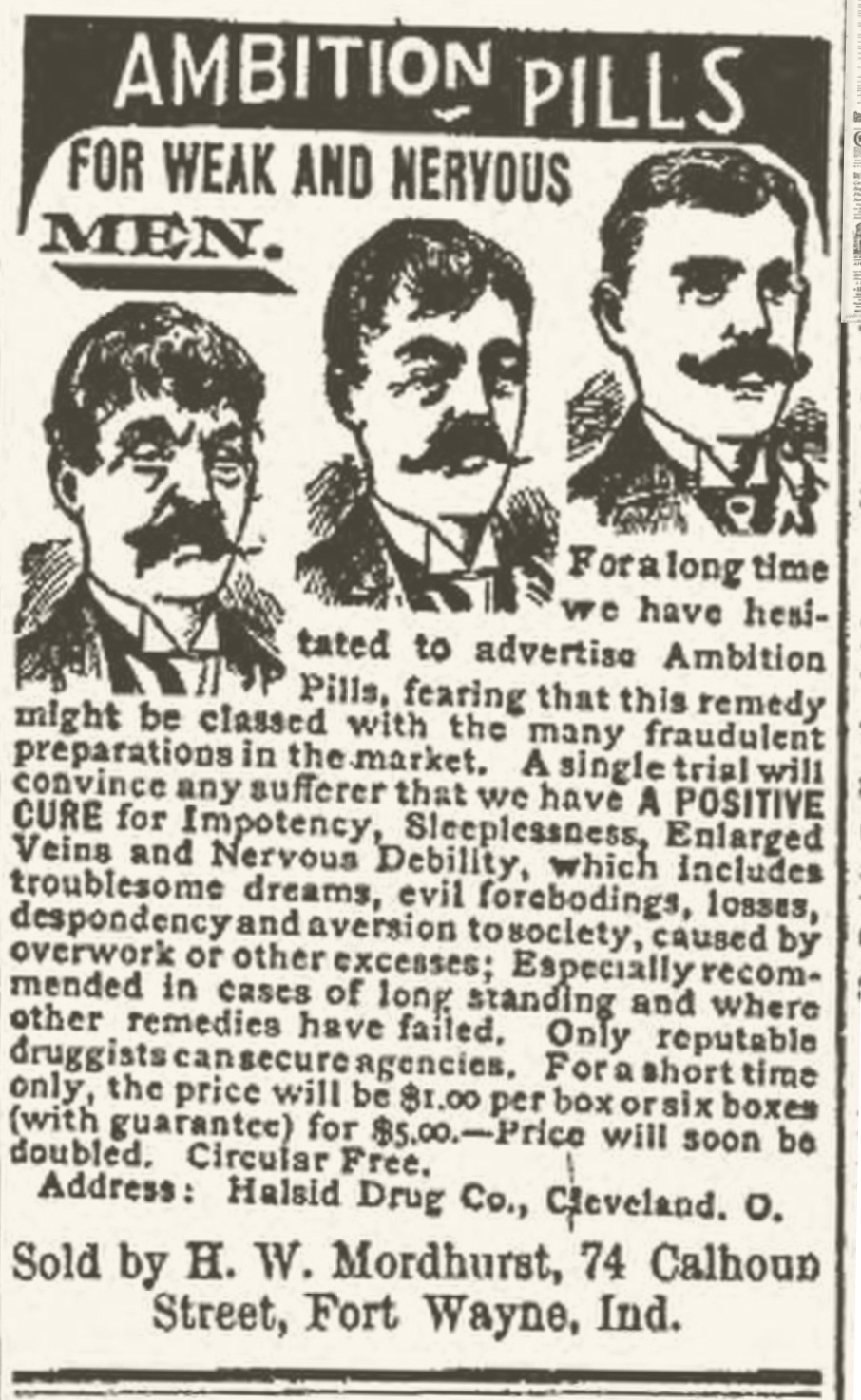
Must be fall. Traditional time for fairs and festivals around our state. And one of the traditional accompaniments to these events is the patent-medicine man, selling his Secret Natural Herbal Remedies, good for whatever ailments may befall Man, Woman, Child, Horse, and Dog.

And hightailing it to the next town before too many locals get sick from the dubious contents of those thick, opaque bottles.

Well, here come our snake-oil salesmen of politics, hawking their Foolproof Solutions To Our School Funding Ills. Just a tablespoon of my tincture, they cry, and all your problems are solved.

ambition-pillsOn the back of one horse-drawn cart we find a tall slender redhead brandishing a bottle of Olde Mahatma’s Secret Curative, a formula crafted by the Wise Men of the Far East (a.k.a. Pomfret), a stern purgative guaranteed to cleanse the system of blockages, growths, tumors and humors of all sorts, paving the way for a fresh start in a bright new tomorrow.

Behind all the label’s mumbo-jumbo, Olde Mahatma’s Curative is a simple solution with only one active ingredient: a two-year freeze on property taxes. This seemingly harsh treatment pays no heed to complications or practicalities; it just reams out the entire waterworks.

Over here, across the town square, is a dark-haired figure of serious mien offering Doc Feliciano’s Ache-Be-Gone, an elixir which, taken internally or applied externally*, is strong enough to banish every trace of pain from any cause, including lumbago, neuralgia, ague, impetigo, quinsy, and The Screws. Doc F has used all his extensive scientific training to fashion a singular combination of analgesics, potions, and elixirs, including some that have been foolishly prohibited by unimaginative authorities.

*You choose the method and dosage, for each man is the best judge of his own medicinal needs. 

Doc Feliciano promises to banish all pain and discomfort from the unrelenting pressure of property taxes through the indubitable mechanisms of the Free Market. His solution for a public school system with too few students and rising costs? A whole lot more schools! Free Choice For All! Which will, somehow, magically, bring down the cost of the system.

My friends, you would be wise to eschew the easy blandishments of the political snake-oil salesman. Complicated problems require time and care, and nuanced approaches by learned practitioners. You will not find the answers to your educational troubles at the bottom of a murky brown bottle! Keep your hard-earned money in your pocket, and let the peddlers be on their way.

Janssen Willhoit: a correction and amplification

In my previous post, I reported the criminal past of Janssen Willhoit, Republican candidate for the legislature in St. Johnsbury. He served time in a Kentucky prison for running an investment scam, and failing to make restitution to his victims.

In my post, I wrote the following:

… he has not revealed his troubles; his campaign bio carefully omits any hint of his criminal offense and incarceration, even as it trumpets his advocacy for inmates’ rights.

My conclusion: His offense doesn’t disqualify him from public service, but the voters deserve to know and have the opportunity to make their own judgments. It appears to me that the candidate could tell a powerful and believable story of redemption. But he needs to explain why he deserves the public’s trust.

I’ve been informed by a keen observer in St. J that this is not true: he has been openly speaking of his experiences. From the May 14 Caledonian-Record:

… His path to St. Johnsbury includes being a financial broker, an independent investment advisor, going to prison, and being raped in prison. Being raped earned him time in the “hole” which meant he missed his parole hearing. During his time in prison Janssen committed himself to helping people in need. He started by helping prisoners learn to read, while he was still in prison, and being sent back to the hole for starting a “reading gang.”

Janssen eventually received an executive pardon from the Kentucky governor, and then became instrumental in getting many changes to the Kentucky prison system — including making same-sex rapes a crime. There is a connection between Kentucky and Vermont — Vermont houses inmates in Kentucky and Janssen learned of Vermont’s work with prisoner rights.

Unfortunately for me and for the truth, the Caledonian-Record’s content is behind a paywall, and is not referenced on Internet search engines.

In my searches about Willhoit, I could find no hint that he had revealed his past. His website contains no clue of it. I tried to be thorough, I tried to be factual, and I tried to be fair.

And I failed. For that, I apologize to Mr. Willhoit.

At the end of my post, I wrote the following:

… the people of St. Johnsbury should know about it, and he should fully explain the circumstances of his offense, whether he has repaid his victims, and if not, why not. After that, the voters can make an informed choice.

In fact, he had already done that. He has been forthcoming about his past, and the voters can make an informed choice.

Which leaves me with one unanswered question: did the person who gave me the tip about Willhoit know that he’d been honest about his past? If not, then no harm, no foul. If so, then I’ve been the victim of a dirty political trick. In the future, I’ll try to be more careful about such things.