Tag Archives: Middlebury College

Jim Douglas Manfully Bears the White Man’s Burden

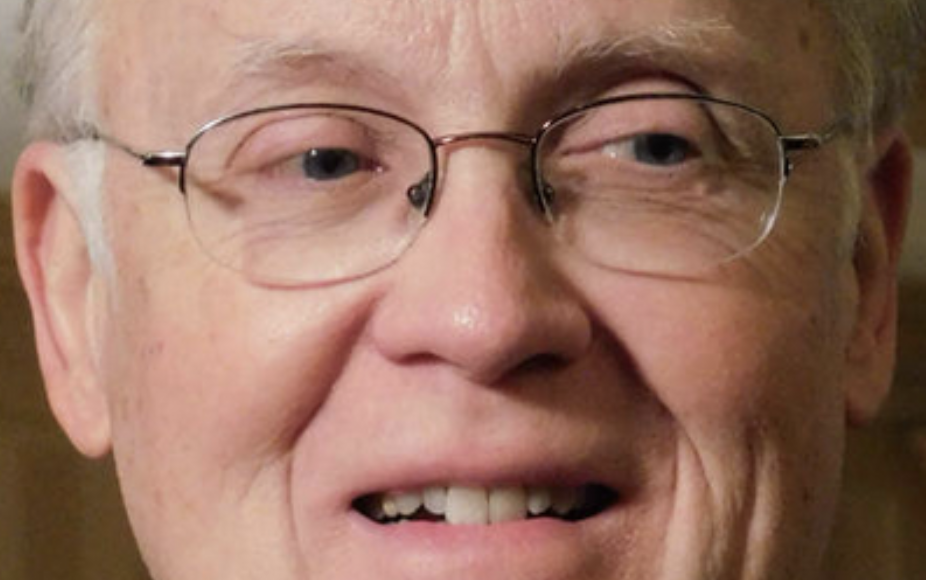
I came onto the scene a bit too late to get the full Jim Douglas Experience. Moved to Vermont in 2006 (which, yes, still a flatlander, I know, should I really be allowed to vote?) and didn’t pay much attention to #vtpoli until the 2010 campaign, when Dead-Eyed Jim was on his way out the door and into a fairly inert retirement. I have to admit, I see photos of this guy with his characteristically vacant non-smile, and I just don’t get the appeal. Like, this picture on the cover of his terrible memoir (see below), presumably chosen or approved by the subject, makes him look like he’s contemplating a bit of cannibalism.

But I will say this. If Douglas wanted to find a cause celebre to occupy his Golden Years, it’d be tough to find anything more apropros than defending the good name of a long-dead governor from the merry days of Kipling-style white supremacy. If any modern-day figure seems made to carry the threadbare mantle of those unenlightened times, it’s Jim Douglas. And here he is, spending years and clogging up the courts in his defense of former governor John Mead, whose most infamous contribution to our civic life was his enthusiastic advocacy for eugenics.

Douglas took one for the team last week when a judge issued a decidedly unfriendly ruling in his lawsuit over Middlebury College’s decision to take Mead’s name off the college chapel, the most prominent building on campus. It’s one of those rare stories in our perilous times that made me chuckle over my corn flakes.

Continue reading

You’d Think Maybe a Writers’ Conference Would Put Writers First

Well, the Bread Loaf Writers’ Conference is now over, but the consequences of an uncontrolled Covid-19 outbreak may continue for quite some time.

When last we left the situation, more than 10% of conference participants had become ill. Leadership responded by continuing activities as scheduled, including a dance, with masking suggested but not required. The infected attendees were sent home — or should I say were ousted from the conference. The departees, including some who had written about their experiences on Twitter, were not offered refunds or any help with unexpected travel costs.

Sometime during the day Friday, after several writers took to Twitter and I wrote about the situation in this space (and the paywalled Publishers Marketplace also covered the outbreak), leadership changed its stance. According to former participant and now Covid patient Caitlin Eichorn, Bread Loaf reached out to infected participants with an offer of prorated refunds for tuition, room and board — but only after, as Eichorn noted, “the bad publicity” around the Bread Loaf outbreak had begun to spread.

Better late than never, but it would have been preferable if leadership had acted on principle instead of damage control.

Continue reading

Covid Outbreak at Bread Loaf

Middlebury College’s renowned Bread Loaf Writers’ Conference has been struck by the Covid-19 virus. According to email communications with participants, conference officials had confirmed 26 cases as of yesterday afternoon. That is, according to one source, about 10% of all participants. There have been no reports of serious illness. So far.

This year’s Bread Loaf Conference began on August 16 and is scheduled to conclude on Saturday. The official response seems more focused on continuing to the finish than on containing the outbreak.

Bread Loaf attendee Caitlin Eichorn has been chronicling the experience on Twitter, which I still refuse to call X. Her Twitter feed is the source of many of the quotations included in this post.

At first, according to Eichorn, there were daily email updates on the number of cases. That practice ended after conference leaders had “conversations with Middlebury’s trusted medical advisors,” according to a message sent to attendees. The counsel from those advisors was to “turn the emphasis away from reporting the number of the cases, which health departments stopped counting awhile ago, focusing instead on hospitalizations which provide a better estimate of how COVID-19 is impacting the community.”

So far this summer, there have generally been fewer hospitalizations than in previous Augusts. That’s nice, but no guarantee. Plus, avoiding immediate hospitalization doesn’t mean you won’t get some variety of long Covid down the road.

I’d prefer not to get sick in the first place. “Trusted medical advisors” notwithstanding, if I were a Bread Loaf participant, I’d want to know what the hell is going on in every detail. And I’d want strict measures taken to limit the spread, if indeed you want to press on with the conference, including limiting the number of indoor events and requiring the use of masks throughout.

Continue reading

Jim Douglas Is a Pud (And Other Observations)

Oh, boy. Former governor Jim Douglas is at it again, enthusiastically destroying what’s left of his reputation as a Nice Guy and a moderate Republican. He’s had a bee in his bonnet since 2021 about Middlebury College’s decision to remove the name “Mead” from what is now known as the Middlebury Chapel, the most prominent building on campus.

Douglas started complaining about this as soon as the name was changed in September 2021. In May 2022, he proclaimed loudly — in an essay not published in the Addy Indy or Rutland Herald or VTDigger but in the New York Sun, a conservative outlet that’s been described as having “a modest online presence” largely featuring opinion pieces — that he would not attend his 50th class reunion, so upset was he at the deMeadification of the chapel. At the time I called bullshit because…

Douglas may have skipped his class reunion, but he gave no indication that he would give up the “Executive in Residence” title he’s enjoyed at Middlebury since 2011, or that he would cease his part-time teaching role.

He still hasn’t given up his honorary or teaching roles, nor has he otherwise absented himself from campus activities, but now he’s filed suit against his employer and alma mater over the unMeading. Given the fact that he’s doing his best to turn Middlebury into a right-wing punching bag for its alleged embrace of “cancel culture,” it might just be time for the college to initiate a full separation on its own.

Obligatory First Amendment debunking. If Douglas did get canned, Middlebury would not be guilty of violating his free speech rights or “canceling” him. Douglas has every right to speak his mind. He does not have the right to avoid the consequences of his speech. I say this as someone who was once fired for using the word “dick” on Twitter.

Continue reading

Turns Out, Jim Douglas’ Anger Was Entirely Performative. Shocking, I know.

In my previous post, I expressed a bit of puzzlement about why former governor Jim Douglas chose the New York Sun as the place to express his sudden disdain for Middlebury College. Well, now I know why: Because any Vermont publication would have asked embarrassing questions.

Douglas, for those just tuning in, is upset over the college’s decision to take former governor John Mead’s name off a chapel building because Mead was a fervent and influential proponent of eugenics. In his essay, Douglas said he was staying away from his 50th class reunion because of the anesthetic-free Meadectomy.

I’ll miss seeing my classmates and reminiscing about our college days. My regret would be greater, however, if I were to pretend that I was happy to be there, in the shadow of Mead Chapel, the scene of the College’s expunction of the Governor’s legacy.

Time to call bullshit.

Douglas may have skipped his class reunion, but he gave no indication that he would give up the “Executive in Residence” title he’s enjoyed at Middlebury since 2011, or that he would cease his part-time teaching role. Apparently he’s not too upset about being “in the shadow of Mead Chapel” to completely absent himself from campus.

Continue reading

Finally, Jim Douglas Has Found Something to be Mad About

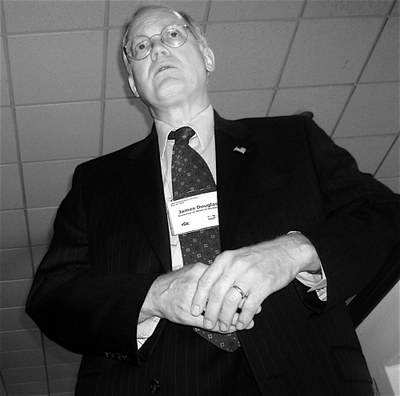
Ever notice how almost every photograph of former Vermont governor Jim Douglas looks the same? The not-quite-convincing smile, the middle-disance stare, the resolutely dead eyes? It’s almost as if he’s thinking to himself, “I wonder what puppy tastes like.”

Well, something has finally shattered that phlegmatic exterior. What, might you ask, is capable of piercing Douglas’ impregnable fortress of blanditude?

An alleged insult against a dead white guy.

Douglas, who could have had his pick of Vermont media outlets to carry his thoughts, took to the digital-only pages of the New York Sun, a conservative outlet that has nothing to do with the original city paper, to post his screed about why he’d decided to boycott his 50th class reunion at Middlebury College.

He did so because the college had the temerity to rename the Mead Memorial Chapel. It had borne the name of former Vermont governor John Mead, but the college took down his name because, uhh, Mead had been a proponent of eugenics.

Pish tush, says Douglas. A lot of people were pro-eugenics in the early 20th Century. And aside from that little flaw, Douglas says, Mead was “a decent man, as well as a generous benefactor” and a veteran of the Civil War to boot.

Problem is, John Mead wasn’t just some random dude who thought the gene pool needed a little purification. He used his platform as governor to call for an official policy of eugenics in Vermont, which led to one of the darkest periods in our history.

[In 1912,] Mead gave a farewell address to the Vermont Legislature in which he advocated for the use of eugenic theory in creating legislation and policy. His comments in that speech about marriage restrictions, segregation and sterilization inspired the research behind the Eugenics Survey of Vermont and led to the legalization of voluntary eugenical sterilization two decades later.

Continue reading

Large Scale Wind Is Dead in Vermont. Is Solar Following the Same Path?

Not Exactly As Illustrated.

The Public Utility Commission is scheduled to hear a case on Friday that could tighten the screws on large-scale solar energy in Vermont, a process that’s sneakily been underway for a while. And to judge by the record to date, its decision seems unlikely to be solar-friendly.

South Street Solar is seeking commission approval for a 30-acre solar array on farmland owned by Middlebury College, which would provide almost one-third of the college’s electricity and help reach its goal of using 100% renewable energy by the year 2028. The project sparked some local opposition because Vermont, but it passed muster with the town planning commission and selectboard.

If the PUC rejects the request or puts significant obstacles in the way, it will underscore a growing problem with solar siting in Vermont: Almost every potential site, even the seemingly ideal, is unacceptable to some.

Everyone is okay with rooftop solar, but there’s simply not enough rooftop acreage to make a real contribution to our renewable energy goals. So where else can it go? We don’t want to clear forest land, we don’t want to impact wetlands or waterways, we don’t want to clutter scenic areas, we don’t want it too close to where we live, and sometimes we don’t even want it on not-at-all-scenic, unused property.

The latter problem killed a solar proposal in Bradford. You know the site if you’ve taken Exit 16 off I-91 or gone shopping at Farm-Way. It’s a large parcel on the outskirts of town within sight of the freeway. There is some commercial development (an auto parts store and a supermarket), but there’s still plenty of vacant land. The site has, I think it’s safe to say, no esthetic appeal whatsoever.

But it didn’t happen because the regional planning commission decided that the land should be reserved for potential development. This site should have been an idea spot for a solar array.

Now, back to Middlebury.

Continue reading

Is Adam Silverman an obnoxious little jerk, or does he just work for an obnoxious little newspaper?

Great Moments In Journalism, courtesy of the Great Journalist who recently Tweetblocked me. This is the first sentence — the first sentence, I kid you not — of an article posted on the Freeploid’s website.

The Burlington Free Press was first to report about the Dec. 10, 1971, disappearance of Lynne Schulze, an 18-year-old freshman at Middlebury College whose case recently has been linked to Robert Durst.

Jesus Christ on a cracker. Joseph Pulitzer spins in his grave. A.J. Liebling farts in your general direction. Charles Foster Kane gives a sly nod of approval.

If that isn’t the most shameless, blatant, tone-deaf example of self-promotion I’ve ever seen, I don’t know what is.

According to Silverman, the number-one fact you need to know isn’t the 44-year-old unsolved murder or the new revelations about the case. It’s the fact that the freakin’ Burlington Free Press “was first to report” Schulze’s disappearance, and God damn it, we deserve the credit!

On the other hand… the fact that the Addison Independent was the first to report the possible link between Schulze and Durst?

No, the Free Press doesn’t mention that.

Assholes.

Our finer educational institutions engage in some unproductive ass-covering

Thank goodness for the Clery Act, the federal law that forces educational institutions to track and report sex crimes on campus. It’s blown some fresh air into some very stuffy corridors. And compelled us all to take a hard look at what actually goes on in our supposedly safe, high-toned precincts.

The latest, as reported by VPR, is that reports of sexual assaults “saw dramatic increases” in 2013 at Dartmouth and Middlebury Colleges.

Said institutions reacted, sadly, by blaming the messenger. Middlebury:

“While these numbers are a source of real concern, and we will remain vigilant in enforcing our policies, it is also possible that these numbers reflect a greater willingness among individuals to report violations,” said Shirley M. Collado, dean of the College.

And even worse, from Dartmouth:

We believe that the increase in the number of reports is a result of Dartmouth’s efforts to strengthen a climate of reporting rather than an increase in the actual incidence of sex offenses.

“It is possible.” “We believe.” No evidence offered, just a very convenient belief.

Now, I’m sure they’re right, at least in part. But it’s still a disappointing reaction. Especially from Dartmouth, which has much to atone for in these areas.

A little free PR advice. Here’s what you SHOULD have said.

We view this news with dismay. We believe that the increase may be caused, in part, by an improved climate of reporting; but any incidence of sexual assault on our campus is unacceptable.

We have tried to create an atmosphere in which our students learn that sexual assault is unacceptable, and in which they feel absolutely free to report any assaults. Clearly, we have more work to do.

There. Was that so hard?


In which I dip my toe into Jim Douglas’ Well of Lost Dreams

A friend in the media loaned me a review copy of ex-Governor Douglas’ memoir, “The Vermont Way.”  And I’ve started working my way through it.

It’ll definitely be “work,” too. I could tell from the first page that, leaving aside my opinion of Jim Douglas, this book is badly written. It’s flat, wooden, and wordy. This sentence, referring to Springfield, Massachusetts, says it all:

It was the county seat, the city where I was born and a municipality adjacent to the suburb, East Longmeadow, in which my family lived.

Boy howdy. Hemingway couldn’t have said it better.
(Photo by the late great Peter Freyne.)

(Photo by the late great Peter Freyne.)

If that was an outlier, Douglas (and his publisher) could be forgiven for a lapse in copy editing. But there’s more. Oh, so much more. Here’s a passage where he might have offered something fresh about Deane Davis, the Republican Governor when Douglas was launching his political career. Instead, he gives us a dry recitation of Davis’ resume:

He was two days away from turning sixty-eight and had completed a successful career as a lawyer, judge, and chief executive officer of the National Life Insurance Company. He had served as president of the American Morgan Horse Association and led Vermont’s Little Hoover Commission, the group that recommended reorganization of state government in the late ’50s.

Morgan Horse Association? What the frack?

If a high school student had written this, he would have gotten dinged for padding the word count. When it comes from Jim Douglas, not only is it lousy writing, but it fails to deliver the kind of insight I’d expect.

Here’s a dinner winner from what should have been a fraught passage — the announcement of the draft lottery during his college years, which would send some of his classmates off to Vietnam. And instead of some hint of emotion or empathy, we get another sentence unworthy of a high school essay:

These days, of course, military service is voluntary, but there have been times in our nation’s history when compulsory induction has been necessary to adequately staff our armed forces.

And by “adequately staff,” he means “replenish our battle-ravaged troops.”

The sentence adds nothing whatsoever to the narrative. Every page has examples of pointless padding, of layer upon layer of verbiage meant to insulate Jim Douglas from betraying actual human feeling or revealing unique insight into his life and career.

Chapter One ends with a passage concerning Douglas’ alleged curiosity about the world outside Vermont. He had studied Russian at Middlebury College; primarily, he says, because it was “the height of the Cold War,” which he defined in a manner, once again, unworthy of a high school essay:

Soviet Premier Nikita Khruschev had proclaimed to the United States and other Western democracies, “We will bury you!” and later, for emphasis, banged his shoe on a desk at the United Nations.

These aren’t the words I’d expect from someone who grew up in the Cold War, with the Cuba missile crisis and air-raid drills and bomb shelters full of rations and bottled water. These are words I’d expect from a youngster who looked up “Cold War” on Wikipedia.

He goes on to talk about this curiosity regarding “other cultures” that “never abated,” and was fulfilled to some degree by his gubernatorial travels. The first “other culture” he mentions is Canada, that strange and distant land and “our largest trading partner.” He then rattles off the other stickers on his gubernatorial steamer trunk: Vietnam (where “the people are very friendly”) and 13 other countries listed in alphabetical order — the most unimaginative rendering possible.

There are no revealing anecdotes, no indication of what he learned or where his alleged curiosity took him. I suspect it mostly took him to official meetings and staged VIP tours. Either way, we get no hint that his journeys gave him any insight. After this perfunctory paragraph, “China,” “Vietnam,” and “Korea” only appear once in the book’s index. All three are mentioned on the same page, in a tossed-off recap of a trip “with business leaders” that “generated a large number of investors and inquiries.”

This is supposedly one area of human experience that really engages Jim Douglas’ intellect, and it’s reduced to a dry, soulless recitation of facts.

I’m only through part of chapter three, but one thing I can tell you:  Whatever you think of Jim Douglas as a politician or leader, this book has to be a disappointment. It is so much less than it could have been.