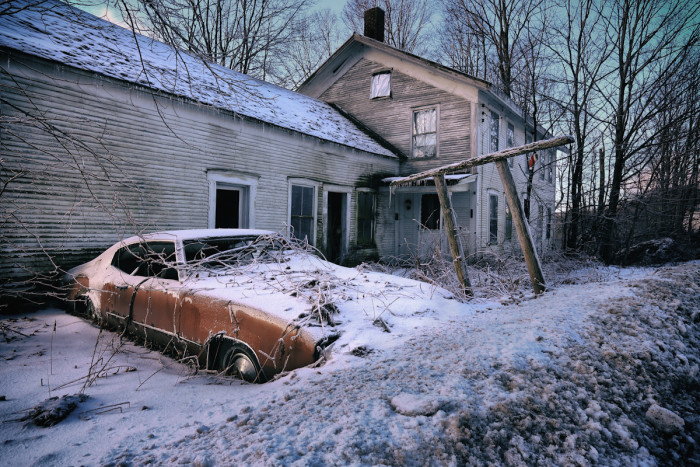
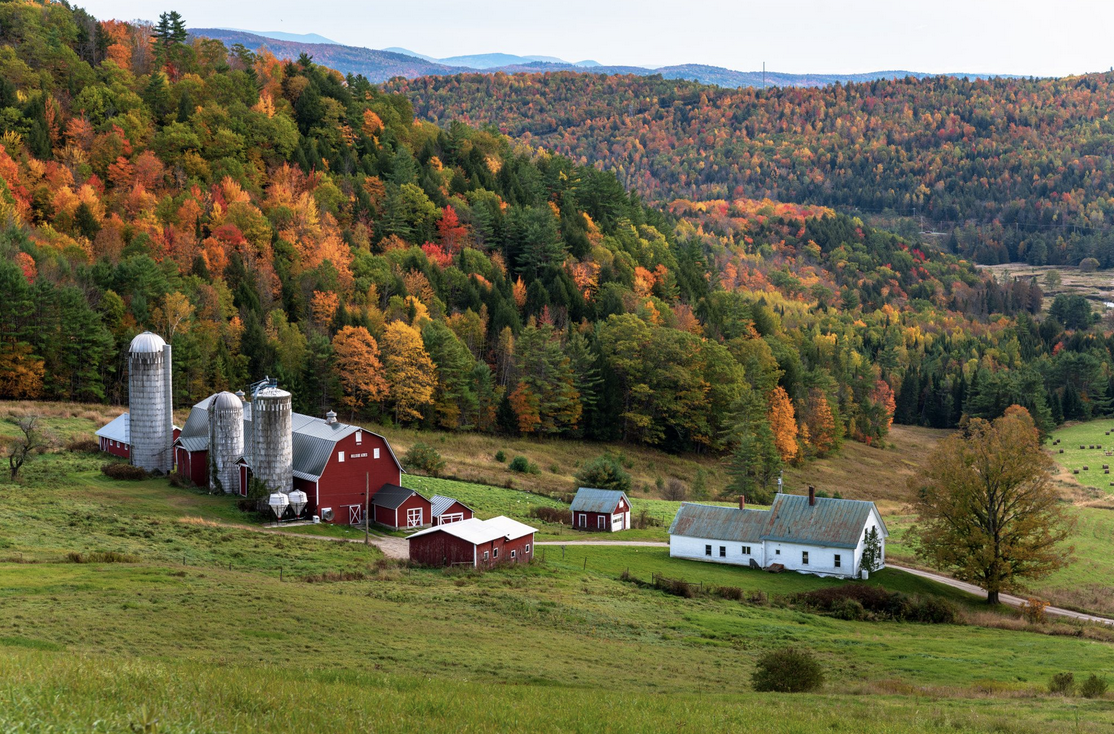
Since October 5, there have been seveneight suspicious deaths in rural Vermont. Yes, that’s a lot. But it’s not so far out of character as we’d like to believe for our oft-celebrated countryside. Which in our mind’s eye looks less like the above and more like the below:
There is, in truth, plenty of both in rural Vermont. On balance, though, probably more of the former than the latter. Rural Vermont, like rural America, can be beautiful and ghastly, peaceful and dangerous, prosperous and abandoned.
It would behoove us to hold both pictures in mind. It might help break down the imaginary barriers between our suspect cities, full of drugs, crime, and recent arrivals, and our countryside, a paradise of scenic beauty and hardworking people. You know, the “real Vermonters” living in the “real Vermont.”
Not to overstate the case, but this is one of the most important Vermont history books ever written. Vermont for the Vermonters by Mercedes de Guardiola tells a sweeping tale of eugenics in our state, and makes it clear that the story is much longer and deeper than we’d like to think. She also reveals that much of the story has yet to be told and may never be, thanks to poor record keeping and lax oversight. (The newly established Truth and Reconciliation Commission has a hell of a job on its hands.)
The back cover blurb refers to eugenics as “one of Vermont’s darkest chapters.” That’s a massive undersell of the book. We might like to think of it as a single chapter at some remove from the rest of our history, but it’s more like the dark underbelly of Vermont’s character, always lurking about and always influencing our politics and policies.
Two big takeaways from the book. One, we have always “othered” the less fortunate, portraying them as somehow alien to solid, hardworking “real Vermonters.” Two, we have a long and horrible history of failing the people we’ve chosen to institutionalize. Both points were true long before Gov. John Mead brought eugenics into the center of Vermont politics or Henry Perkins became head of the Eugenics Survey, and both still resonate in the present day. (On the former, see our reaction to homelessness and substance use. On the second, see Joe Sexton’s exposé of abuses at the laughably named and now mercifully defunct Woodside Juvenile Rehabilitation Facility.)
Oh, boy. Former governor Jim Douglas is at it again, enthusiastically destroying what’s left of his reputation as a Nice Guy and a moderate Republican. He’s had a bee in his bonnet since 2021 about Middlebury College’s decision to remove the name “Mead” from what is now known as the Middlebury Chapel, the most prominent building on campus.
Douglas started complaining about this as soon as the name was changed in September 2021. In May 2022, he proclaimed loudly — in an essay not published in the Addy Indy or Rutland Herald or VTDigger but in the New York Sun, a conservative outlet that’s been described as having “a modest online presence” largely featuring opinion pieces — that he would not attend his 50th class reunion, so upset was he at the deMeadification of the chapel. At the time I called bullshit because…
Douglas may have skipped his class reunion, but he gave no indication that he would give up the “Executive in Residence” title he’s enjoyed at Middlebury since 2011, or that he would cease his part-time teaching role.
He still hasn’t given up his honorary or teaching roles, nor has he otherwise absented himself from campus activities, but now he’s filed suit against his employer and alma mater over the unMeading. Given the fact that he’s doing his best to turn Middlebury into a right-wing punching bag for its alleged embrace of “cancel culture,” it might just be time for the college to initiate a full separation on its own.
Obligatory First Amendment debunking. If Douglas did get canned, Middlebury would not be guilty of violating his free speech rights or “canceling” him. Douglas has every right to speak his mind. He does not have the right to avoid the consequences of his speech. I say this as someone who was once fired for using the word “dick” on Twitter.


 The Vermont Political Observer.