Tag Archives: Angela Kubicke

…et puer parvulus minabit eos.

(If you have any issues with the Latin above, take it up with Google Translate.) 

At the risk of losing my street cred, I have to admit being edified and inspired by an event at the Statehouse today.

The occasion: The Senate Government Operations Committee taking up a bill to establish Stella Quarta Decima Fulgeat as an alternate motto for the state of Vermont.

This proposal has famously been the target of unedifying and uninspiring commentary, mistakenly conflating Latin with Latino, criticizing it as a waste of time, and wrongly complaining that the new motto would supplant “Freedom and Unity.”

Angela Kubicke and the motto bill's sponsor Sen. Joe Benning, with the broad shoulders and flowing mane of Seven Days' Paul "Party in the Back" Heintz in the middle.

Angela Kubicke and the motto bill’s sponsor Sen. Joe Benning, with the broad shoulders and flowing mane of Seven Days’ Paul “Party in the Back” Heintz in the middle.

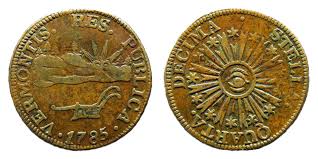
The hearing was attended by roughly five dozen middle- and high-school students of Latin, along with teachers, parents, and three Classicists from the University of Vermont. The hearing’s central figure was 15-year-old Angela Kubicke, who had the original idea for the Latin motto and, with her teacher and others, came up with the exact wording. The first three words, translated as “The Fourteenth Star,” appeared on the first coin minted in the 1780s by the then-independent Vermont. “Fulgeat,” the verb, completes the sentence “May the fourteenth star shine brightly.” Kubicke and her teacher, Ray Starling, gave a thorough account of the historical rationale for their proposal.

One of the other witnesses almost stole the show. If you were casting the part of a tenured professor of classical languages, you might just see Robert Rodgers as a gift of the gods. Slightly tousled gray hair, well-trimmed gray beard, glasses, precise in speech to the point of pedantry, his testimony was perched delicately on the border between entertaining and aggravating. As committee chair Jeanette White admitted afterward, “I forgot that professors are used to talking in 45-minute increments.” Professor Rodgers went nowhere near that long, but with the chair’s forbearance he blithely ignored the two-minute time limit per speaker. It was a rare opportunity for a Classicist to speak to a lay audience on a subject dear to his heart, and he was (in his own reserved way) happy as a pig in slop.

Still, he was an effective if nerdy (and wordy) witness, praising “Fulgeat” as “a felicitous choice for a verb,” parsing its contextual meanings and citing its use by the Roman poet Virgil.

Three students from Lamoille Union High School also spoke to the committee, defending Latin as a foundation of modern science, architecture, music, and Western languages. At the end, committee member Chris Bray commended Kubicke and her fellow speakers for the “depth of thought” behind the motto.

And then came the vote: FIve in favor, zero opposed. The bill goes on to the full Senate on Friday.

For the many who complained about the bill being a “waste of time,” you should have been there. Everyone — Senators, professors, teachers, and students — were fully engaged in the process and the issue. It took less than an hour all told, and it was a great learning experience for all. I’ve got nothing cynical to say about it in the least.
More on the motto: true to Vermont’s heritage

(Note: See also this follow-up post on the motto’s approval by a Senate committee.)

Of all the stuff I’ve written about Vermont politics and policy on this blog and earlier on Green Mountain Daily, the single-most-read piece I’ve ever posted was last week’s post about the proposed addition of a Latin state motto. So I thought I’d add some historical information for those still skeptical about the idea.

For those just joining us, Sen. Joe Benning has sponsored a bill designating a new Latin motto — not to displace “Freedom and Unity,” but to exist side-by-side. He did so at the behest of Angela Kubicke, a ninth-grade student at The Riverside School in Lyndonville*, who is apparently way smarter than I was in the ninth grade. Or certainly more dedicated and focused.

*Correction: Kubicke was an eighth-grader at Riverside when she first approached Sen. Benning; she is now a first-year student at St. Johnsbury Academy, and is also a member of the Latin Club at the Lyndon Institute. Credit where credit’s due. 

The motto, Stella Quarta Decima Fulgeat, is translated as “May the Fourteenth Star Shine Bright.” It’s a nod to Vermont’s status as the 14th state to join the Union — hence, the 14th star on the flag. My original post had to do with ignorant Facebook commenters who confused Latin with Latin America — basically telling Joe and Angela to take their motto and go back to Mexico.

There were also plenty of comments accusing the Senator of wasting time on such nonsense — when, in fact, bills like this take up very little of anyone’s time. In the opening weeks of the session, most of the work takes place in committees; and while other committees are debating taxes, budget, education, environment, etc., one single committee will spend probably a few minutes on this issue. The entire Senate does not grind to a halt over stuff like this.

There was also a third class of ignorant comments, saying we should stick with our heritage and not drag in some newfangled foreign motto.

StellaQuartaDecimaBut in fact, Stella Quarta Decima Fulgeat is a direct tribute to Vermont’s early status as an independent republic. During that time, it was pretty clear that Vermont would eventually join the United States, and the monicker “14th Star” was commonly used. In 1786, the government authorized the minting of Vermont coins; the phrase Stella Quarta Decima was included on the “tails” side of Vermont’s first coin.

So the motto is not new at all; it’s a reflection of Vermont’s early history. As is the use of Latin.

The next step in the odyssey of Stella Quarta Decima Fulgeat will take place at 2 pm on Wednesday, February 11, when Angela Kubicke will testify before the Senate Government Operations Committee.  “I suspect she will make a very good impression,” said Sen. Benning in a comment to my previous posting. “I am also willing to lay odds that the tripartisan membership of that committee will vote unanimously in support of the bill, if for no other reason than to demonstrate that legislators still care about the Classics and Vermont’s heritage.”

What started out as a small civics lesson for a single student may well become a big lesson in history — and open-mindedness — for all of us.