Category Archives: Taxation

The One Percenters aren’t discouraged by our tax system

Every time someone suggests raising taxes on the wealthy, there’s an immediate outcry that we can’t risk driving them out of Vermont. The most frequent crier is Governor Shumlin himself, who insists that wealthy Vermonters are already fleeing the state in droves. He’s got no evidence, and studies have shown little to no out-migration by the rich after state tax increases.

Plus, there’s the well-documented fact that top earners get the best deal of anyone under Vermont’s current tax system. And now comes Lisa McCormack of the Stowe Reporter with a story crossposted on VTDigger:

LUXURY HOUSING MARKET IS BRISK IN STOWE

Yeah, turns out that while property taxes are hurting the middle class, the wealthy are undeterred from buying top-shelf second homes. The numbers:

2014 was “the strongest year in the luxury market since 2009.” Overall sales of residential units in Stowe were up by nine percent, the “average sales price was $598,870, up 10 percent compared to 2013.” And…

The median price — the point at which half of homes sold for more, and half for less — rose 30 percent to $485,000.

The market shows no sign of slowing down, according to area Realtors.

One broker describes “a really strong and stable market… [that] is showing potential for long-term growth.”

The majority of residential sales in Stowe are to second-home buyers, “looking for investment properties.” Especially at the upper end of the market. So not only are they undeterred from buying — they believe that Vermont vacation homes will continue to rise in value. Which wouldn’t be the case if the One Percent were abandoning Vermont.

Meanwhile, the rest of Lamoille County is lagging. Residential sales were up, but the median sale price actually decreased by three percent. The wealth gap widens.

This isn’t decisive proof that there’s more room to tax the rich. But it’s further evidence against the fearmongering of Shumlin and his fellow-travelers.

How to get those ski leases reopened

Last Tuesday, State Auditor Doug Hoffer issued a report on Vermont’s leases with ski resorts. The leases, he said, were outdated and were not bringing a fair return for the resorts’ highly profitable use of public lands.

At the time, you may recall, the state Parks and Rec Commissioner Michael Snyder basically threw up his hands and said there was nothing the state could do until the leases expire — decades from now.

Well, I’ve been reminded by someone more aware of state finances than I (which probably includes a substantial percentage of my readership) that the state does, indeed, have a hammer it could hold over the resorts’ heads.

It’s a tax exemption, granted in 2002, on ski lifts and snowmaking equipment. This exemption cost taxpayers $1.42 million in foregone revenue in fiscal year 2012.

It’s been suggested that this is basically a giveaway to a lucrative industry. Sen. Tim Ashe, chair of the the Senate Finance Committee, has called for a cleanup of Vermont’s cluttered, nonsensical “tax expenditure” system, and cited the ski equipment exemption as a clear example of the problem. As he put it, “every time they pay less, we all pay more.”

Well, hey. Why not dangle that juicy tax break in front of resort owners, and say something along the lines of “Gee, it looks like you’re getting a sweetheart deal on your leases AND a questionable tax exemption. Tell you what, we’re feeling generous; you can have one or the other, but not both.”

Makes all kinds of sense, at a time when the Governor and lawmakers are scrambling to find revenue and/or cut the budget. Problem is, the underlying reality hasn’t changed since I last wrote about this. Resort owners are politically connected (how many trips has Gov. Shumlin made with Bill Stenger?), and generous with campaign contributions. It would be difficult, if not impossible, to take either of their windfalls away.

Need proof? How about the sound of silence from the Statehouse in the aftermath of Hoffer’s report? Nobody wants to touch this one. It’s a shame. I expect better from my Democratic majority.

Kill the Task Force

Vermont politicians are addicted to studies. At the drop of a hat, or a tough issue at least, they’ll seek the shelter of the nearest consultant or think tank, or assemble their own commission, committee, task force, or (the Nuclear Option of Political Procrastination) Blue Ribbon Panel.

All of ’em, I say, should be dubbed “Hogans” in honor of Vermont’s Greatest Living Centrist, Con Hogan, who could always be counted on to provide a nice bipartisan sheen to any study effort.

The appointed experts scurry away to do their work, and then return with the fruits of their labors.

Which are immediately shoved in a desk drawer, never to be seen again.

Can you think of a single time when a Hogan actually moved the needle on an issue? In rare cases, a Hogan confirms conventional wisdom and prudent politics; then it can get a little traction. This may turn out to be the case with the RAND study on legalizing marijuana: it promises a rich revenue stream that may prove irresistible to lawmakers.

But if a Hogan’s conclusions are inconvenient or flout conventional wisdom, fugeddaboudit.

The most recent case in point: There were not one, not two, but three separate studies of the Department for Children and Families last year. All three came to very similar conclusions: In order to beef up child protection, DCF needs “better training, more social workers, more transparency and a stronger focus on opiate addiction’s impact on family dynamics.”

The legislature, not content with three studies, appointed its own special committee. Its highest-profile proposals: hang the threat of felony conviction and prison time over the heads of social workers.

That muffled “thud” you hear? Those three studies landing in the nearest recycle bin.

There are many examples; here’s a classic. One of the highest-profile Hogans of recent years was the Blue Ribbon Tax Structure Commission, whose recommendations would have created a fairer tax system, mainly by changing the rules on taxable income in a way that would have raised the effective tax rate for top earners. Who, I remind you, pay far less than their fair share.

But its findings would have ruffled innumerable feathers. So, as VTDigger’s Anne Galloway reported in early 2011:

…state leaders have relegated the Commission’s report to the back burner. The commission’s 18 months of research, efforts to gather a full range of testimony and public debates on policy options didn’t warrant a footnote in the governor’s budget address.

That would be newly-elected Governor Peter Shumlin, who placed a higher priority on not raising [certain] taxes than on creating a fairer system.

Not that I place all the blame on him; it seemed like everyone in the legislature treated the Commission’s report like a snake in the underwear drawer.

Oh well, it wasn’t their 18 months of hard work being flushed down the drain.

Sadly, this outcome is the rule, not the exception. Most of the time, a Hogan is nothing more than a way to kick the can down the road while looking sober and responsible: “We need more information before we can decide this contentious issue.”

Trouble is, the more contentious the issue, the less likely it is that a Hogan Report will actually change anyone’s mind. People like their preconceived notions, and are loath to abandon them just because of some ivory tower “evidence.”

But perhaps my thoughts are themselves too contentious to address head-on. Perhaps what we need is a Hogan Commission — a Blue Ribbon Task Force on Blue Ribbon Task Forces, to determine the efficacy of Hogans once and for all. Only then can we make an informed decision on whether to abandon or constrain the creation of future Hogans.

If the Governor is worried about the wealth gap, he could maybe do something about it

Gov. Shumlin’s budget address began with a bit of boilerplate that’s been a recurring feature in his recent public remarks: bemoaning the wealth gap in America.

At a time when the wealth gap between the people at the top and everyone else is more extreme than since before the Great Depression, Vermonters hear about the recovery both in Vermont and nationally; they hear about our state’s low unemployment numbers; and they wonder: Why aren’t I seeing it? Why is my family being held back?

The bemoaning is appreciated, but when he does so little about the wealth gap, it comes across as an empty rhetorical gesture — the last ghostly trace of a progressive agenda.

Okay, I don’t expect Peter Shumlin to single-handedly fix our profoundly unbalanced economy. But there’s one big thing staring him in the face that would help the middle class and help close the state’s budget gap.

Raise the effective tax rate on top earners. Not the actual rate, but the effective rate.

Yes, I’ve said this before; and yes, Shumlin blocked a House proposal to do just that a couple years ago. But our tax system has gotten worse since then, and our budget shortfall has grown.

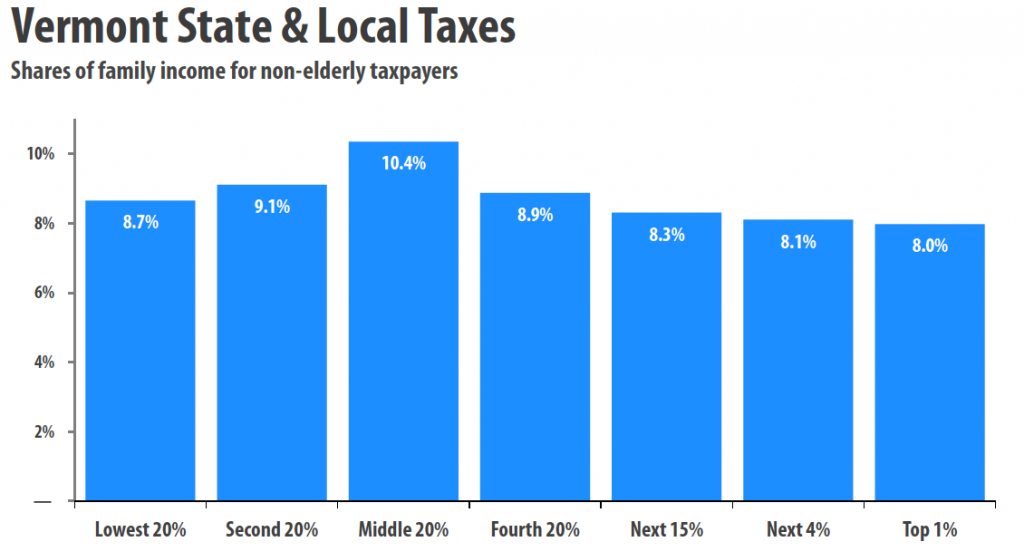
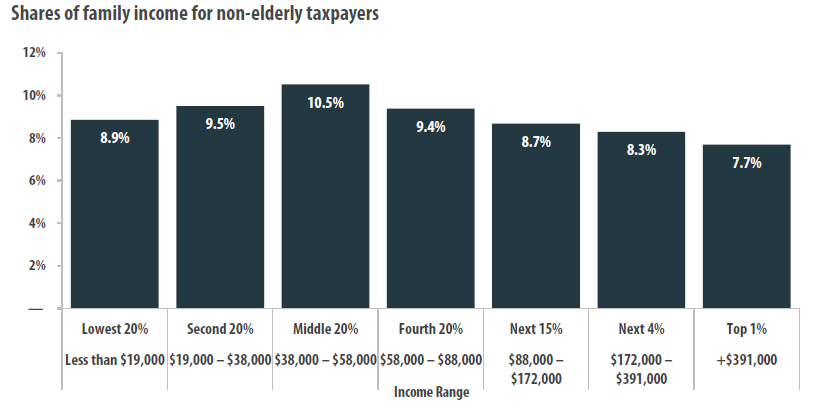
Just look at this chart.

ITEP 2014 tax chart

Sorry, I should have warned you: seeing that chart may result in nausea and vomiting.

According to figures released this week by the Institute on Taxation and Economic Policy (ITEP), Vermont’s tax system hits the working and middle classes the hardest, while top earners pay the least of all (as a percentage of their incomes).

In the past, the Governor has praised the fairness of our tax system. He should never, ever do that again until he fixes it.

Not only has he failed to do so… not only has he blocked efforts to do so… but during the last two years, Vermont’s tax system has actually gotten worse. Here’s the ITEP chart from two years ago.

ITEP 2012 tax chart

Compare the two charts: Higher shares of family income for the bottom 60%, and lower shares for the very top. No relief for the middle class, despite the Governor’s rhetoric.

In many ways, our state tax system is relatively progressive, but there are problems. The sales tax is extremely regressive; the property tax hits the working and middle classes the hardest. And as Paul Cillo of the Public Assets Institute points out: 

“The regressive property tax is Vermont’s largest single revenue source supporting state and local public services, and the Legislature has been shifting more and more public costs onto the property tax.”

And while income tax rates are very progressive, the actual taxes paid are much less so. Vermont’s tax rate for top earners is 8.95% — but because of generous rules on taxable income and deductions, those top earners pay an effective rate of only 5.1%. 

In addition to the fairness issue, the disparity puts pressure on Vermont’s budget, as PAI points out:

If the nation fails to address its growing income inequality problem, states will have difficulty raising the revenue they need over time. The more income that goes to the wealthy (and the lower a state’s tax rate on the wealthy), the slower a state’s revenue grows over time.

What have we seen throughout the past several months? Income tax receipts coming in lower than expected, forcing cuts in the budget. Hmmm.

There was one modestly progressive tax proposal in the Governor’s speech: he wants to end a tax deduction for state and local taxes paid in the preceding year, a tax break that mostly benefits upper tiers.

Otherwise, he left our unfair, broken, and inadequate tax system untouched.

Just about every time he opens his mouth, he talks about how Vermonters are taxed to the limit of their ability to pay. This is clearly true for most Vermonters, but clearly untrue for the most fortunate among us.

There is a glimmer of hope. Shumlin yesterday took a tiny step away from his past opposition to raising income, sales, or rooms and meals taxes:

You have heard many times over the past four years my opposition to raising income, sales, and rooms & meals tax rates to fund state government.

When he delivered this line, he gave the word “rates” some extra oomph. And making the income tax fairer wouldn’t require a change in rates; it’d just mean closing loopholes and limiting deductions.

Reasonably. I’m not calling for confiscatory taxes on the rich; I’m just calling for them to pay their fair share in an economy that has bestowed most of its benefits on them.

How about it, Shap?

Lock up the wimminfolk — the gunslingers are comin’ to town.

Wild BunchTalk about your Statehouse security risks.

Anytime now, you should expect an invasion by “the most sought-after Guns for Hire,” flooding the Statehouse hallways and your TV screens with an all-out barrage of propaganda issue advocacy.

The approaching marauders hale from a D.C. PR firm with the faintly unbelievable name “Goddard Gunster.” On its home page it proudly boasts of being “the most sought-after Guns for Hire,” as Business Week once called them.

GG will work for anyone who can pay its exorbitant bills, but a frequent customer is the American Beverage Association and its fellow peddlers of sugary drinks. They’ve turned to GG whenever a beverage tax or bottle bill or ban on SuperSizing rears its ugly head — from San Francisco to Telluride to New York City to Massachusetts.

And now, after an unsuccessful effort in 2013, we’re about to see another drive for a sugared-beverage tax* in Vermont. Which means, sure as the sun comes up in the east, Goddard Gunster will be ridin’ into town, guns a-blazin’.

*Popularly called “soda tax,” but would apply to any beverage with added sugar.

In 2013, an SBT bill won approval in the House Health Care Committee, which saw it more as a public health measure than a revenue enhancer; but it failed on a 6-5 vote in the Ways and Means Committee. During the three months between the bill’s introduction and its death, Big Sugar and its retail allies spent more than $600,000 fighting the bill. That’s an astounding figure in Vermont terms.

If you don’t believe me, maybe you’ll believe black-hat lobbyist Andrew McLean, who spearheaded Big Sugar’s anti-tax efforts under the Golden Dome:

MacLean concedes his clients spent “a lot of money” on a “very aggressive campaign” to halt the tax.

“I have not been involved in a campaign that’s that expensive,” he says.

This, from a guy who reps many of the biggest business and industry clients in Vermont.

And it’s sure to be even more expensive this year, because the SBT may have a better chance of passing. The reason? Vermont’s massive budget deficit, most recently estimated at $94 million.

There will be cuts to be sure; but cutting all the way to $94 million would be incredibly painful. It would, of necessity, focus primarily on the Agency of Human Services, which consumes the lion’s share of the General Fund budget. That’d be unpalatable to most lawmakers and to a liberal base already put off by Gov. Shumlin’s abandonment of single-payer health care.

So lawmakers will be looking for relatively painless ways to raise revenue. And that could carry the day for the SBT, which would raise about $35 million per year. That’s more than one-third of the budget gap taken care of right there.

The SBT does face a long uphill battle. Gov. Shumlin opposes it, although his stridency appears to be dwindling a bit. House and Senate leadership are cool to the idea, but advocates are hoping they will warm up as the budget pressure increases.

And sure as shootin’, “the most sought-after Guns for Hire” will be ready to ride into town, tossing money around like bullets in a spaghetti Western. The TV ads will be ubiquitous, touting “consumer choice” and featuring Mom ‘n Pop types worried about the tax’s impact on their little corner store. They’ll also be prominently featured in anti-SBT testimony in the Legislature — even though the big money behind the campaign will come from the beverage industry and big retail chains.

If they spent $600,000 two years ago to kill a longshot SBT bill, how much will they spend this year? Your guesses should start at a million bucks. Two mill would not surprise me.

Just think: more money than any political campaign in Vermont history, spent in a few short months over a soda tax.

This may be our first real taste of the post-Citizens United, Wild West world of unfettered money in politics.

The Shumlin conundrum

(Say it five times fast.)

Governor Shumlin delivered brief remarks to the House and Senate Democratic caucuses on Saturday. His message, basically: we’ve got big problems to deal with and no money, so let’s dig in and get going!

I can imagine him in a past existence, being a life coach for Roman gladiators.

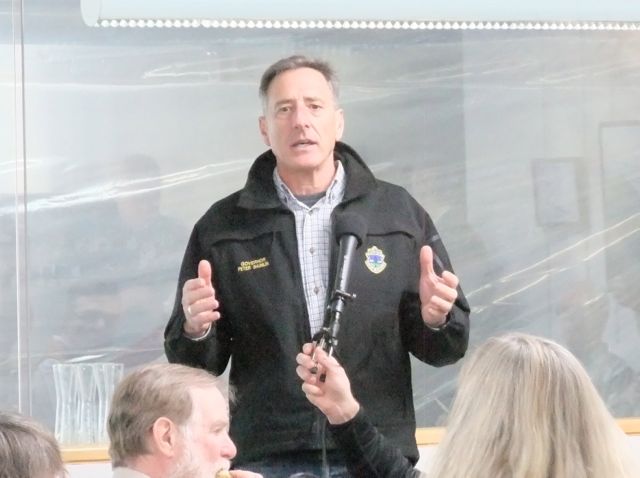
He appeared in his Airwolf jacket, fresh off a helicopter (or, as he put it, “chopper,” what a man) tour of storm-damaged Vermont. Which caused much speculation on Press Row about who paid for the overflight.
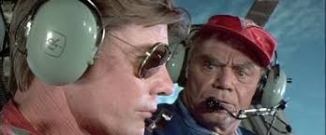
The Shumlin Tour. Not exactly as pictured.

The Shumlin Tour. Not exactly as pictured.

Said speculation didn’t make it to their reports, and the stunt had its desired effect: lots of coverage on the teevee news, with the governor looking both manly and concerned.

Naturally he didn’t have time to change out of his flight gear before the caucuses, hahaha. Really, anybody weighing less than four bills could change clothes in the back of that Yukon SUV he rides around in.

He did use his chopper tour to make a pitch for his renewable energy agenda — “we didn’t use to see storms like this,” but now we got global warming. And then he turned to a series of talking points we can expect to hear again and again in the new year, all designed to diminish expectations and/or dash hopes.

He didn’t use Phil Scott’s phrase “affordability agenda,” but the substance seemed awfully similar. Vermonters are frustrated that their purchasing power is stagnant while costs (and property taxes) are rising.  State spending has to be reined in.

When he took office, he said, economists were forecasting a post-Recession return to 5% annual growth in the Northeast. Turns out, it’s more like 3%, and is likely to stay there for quite some time. But state spending was built on that 5% projection, and that’s led us to our current fiscal mess.

Stringfellow Hawke explains it all. (As the hand of VPR's Peter Hirschfeld gamely tries to keep a microphone within range.)

Stringfellow Hawke explains it all. (As the hand of VPR’s Peter Hirschfeld gamely tries to keep a microphone within range.)

The $100 million shortfall in next year’s budget, he said, is real. We’ve used up the federal recovery money and the one-time funds to balance past budgets. Now, “we’ve got to make tough choices.” We’ve got to bring down growth in state spending to match that seemingly endless 3% growth rate. Thus, he said, “anyone asking for more money had better think twice.”

He made a progressive plaint about the growing income gap between the very rich and the rest of us. He did not, however, connect the dots between that phenomenon and Vermont’s underperforming income tax revenues.

And he certainly did not connect the dots to a quirk in our current tax system that has an official top tax rate of 8.95%, which seems quite high — but the rate that top earners actually pay is not 8.95%, but 5.2%. Furthermore, if you add up all state and local taxes, it turns out that the top 20% pay a lower share of their income than the other 80%, and the top 1% pay the lowest share of them all. (Figures from the Institute for Taxation and Economic Policy.)

When I connect those dots, I think we ought to resurrect a bill that almost passed the House two years ago. It would have shifted more of the tax burden upward, and given modest tax cuts to middle and lower-tier working Vermonters. That bill died a sudden death because of Shumlin’s steadfast opposition.

So when he starts talking about income inequality, he needs to talk about our tax policy as well. Because these days, that’s where the money is. And our top earners are doing extremely well, thank you very much. They can pay their share.

Shumlin also rolled out his school funding argument: Our schools would perform better for less money if there was some kind of consolidation. Because studies show that very small class sizes are just as harmful to achievement as very large class sizes. So we’ve got to embiggen our schools, not to save money (although we would), but for the sake of the children.

Awww.

Surprisingly, there was no mention of single payer health care — or the slightly watered-down “universal health care” — except for a brief mention, in his Cavalcade of Calamities, of unacceptably fast-rising health care costs.

Okay, some realities of my own. I accept the notion that slow growth means an extremely tight state budget, and that we cannot tax our way out of it. We should tweak the tax system to make it more equitable, but that’s not going to bring in much money. We’ll need to make government more efficient if we want to preserve the level of services we’ve come to expect.

I believe that the number-one thing Governor Shumlin needs to do to restore his standing with voters is to re-establish his reputation for good governance. The policies, and I say this as a devout liberal with strong policy positions, are kind of secondary.

Shumlin gained a strong managerial reputation during the Irene recovery. He pretty much blew it in his second term, with the continuing difficulties of Vermont Health Connect, the problems in the Agency of Human Services, and all the budget shortfalls. If he can make state government work effectively, he’ll win back a lot of voters.

And this will be his biggest administrative challenge, not Irene. Authentic crises are difficult, but they get the adrenalin flowing, and everybody puts aside their differences and pitches in. Maintaining the day-to-day operation of a big bureaucracy is harder. It’s an unending slog. It challenges established procedures, and if there’s one thing we Vermonters love, it’s doing things the way we’ve always done them.

As a liberal, I expect to be disappointed repeatedly by Shumlin in the next two years. Clearly, between the realities of the fiscal situation and his own political instincts, there’s going to be a lot of governing from the center. Or even center-right. But if he can govern effectively… if he can actually create new efficiencies, saving money while maintaining services… he will restore his political reputation.

Is he up to that challenge? Two years ago I would have said a resounding “Yes.” Now, I’m not so sure. Flight jacket notwithstanding.

Neale Lunderville, the shiniest bauble on the public policy tree

Oh, those darn Democrats. They just can’t seem to resist the dubious charms of former Douglas Administration functionary (and campaign hatchet-man, lest we forget, and I bet Doug Racine hasn’t) Neale Lunderville.

Mmmm, what should I take over next?

Mmmm, what should I take over next?

Back in 2011-12, Lunderville started his run as the Dems’ unlikely go-to guy when he served as Governor Shumlin’s Irene Recovery Czar. This summer, he added another layer of plausible nonpartisanship as Burlington Mayor Miro Weinberger’s choice to be interim head of the Burlington Electric Department, tasked with undertaking a “strategic review” of the organization.

Well, unbeknownst to almost everyone outside of the State House inner circle, Lunderville had already scored a public-policy bingo with his appointment to a not-quite-secret committee tasked with nothing less than crafting an overhaul of Vermont’s public education system. VPR’s Peter Hirschfeld got the goods:

The group isn’t a legislative committee per se – not too many people even know it exists. But members of Smith’s education reform group have been getting together since after the close of the 2014 legislative session. And by year’s end, Smith says he hopes they’ll deliver the policy recommendations that will serve as the basis for an overhaul of the state’s education system.

… He says the advance work being done by the group will give lawmakers the early start they need to get a meaningful bill across the finish line.

The committee is dominated by current and former state lawmakers, most of them Democrats, but also including a couple of Republicans, one former Republican turned independent (Oliver Olsen), one Progressive, and Our Man Neale.

Which makes me again raise the question, Can’t the Democrats find anybody else to take on tough policy challenges? Why do they have to depend on a guy who cut his teeth running the dark side of Jim Douglas’ political operation?

And, especially, why in the Blue Hell do they insist on burnishing the credentials of a guy who might very well be the Republican candidate for Governor in 2016 or 2018?

Ulp. Pardon me for a moment…

Screen Shot 2014-10-27 at 9.10.59 AM

Whew. That’s better. Now, where was i?

Oh yes. Aside from Lunderville’s presence, the committee’s almost total secrecy has to be a concern.

The group’s meetings aren’t warned or open to the public, and minutes aren’t recorded. Smith says the off-the-books arrangement is needed to help members of the group feel more “free” to brainstorm different approaches.

So I guess the fact that this isn’t an official committee exempts it from open-meetings and public-records laws — kinda like Dick Cheney’s infamous energy policy committee. But if the group manages to complete its task, it might well be the most powerful committee in the legislature (even if it no longer exists when the legislature comes back to work). It’ll effectively set the school-reform agenda for the lawmakers who actually have to do their business, inconveniently enough, under the public eye.

Three other things you should know:

— According to one member, the committee is focusing on student-to-teacher ratio. Which might mean mandatory minimum class sizes, or even forced school consolidation.

— Lunderville seems to favor centralizing budgetary authority, which he advocates under the guise of allowing local officials to “devote attention where it belongs: student learning.” Their ability to do anything about student learning without the power of the purse would be sharply constrained, of course. Lunderville would like to “go to more of a model like the state has, where there’s one agency, one department on a regional or state level handling those.” Which would be kind of a radical move.

— Finally, as Hirschfeld reports at the top of his story, “public education – not single-payer health care – will be top of mind for House lawmakers.” Not good news for Governor Shumlin, who continues to insist that single-payer is Job One in the new biennium.

Shocker: Realtor-commissioned survey finds property taxes too high

In the category of Not At All Motivated By Self-Interest, No Sirree, comes an opinion poll from Vermont Realtors on the subject of property taxes.

Surprise: they’re too high.

According to the survey, 76 percent of respondents say that property taxes are too high. The poll also demonstrates that this is a non-partisan issue, with two-thirds of Democrats, 78 percent of independents and 85 percent of Republicans sharing the belief that property taxes are too high.

The first thought with stuff like this is: Well, of course. It fits the Realtors’ preconceived political narrative. But the methodology — fully explained in the news release, thank you — is reasonably solid. And there’s no doubt that a lot of Vermonters think the property tax system is out of whack.

But let’s look a bit deeper. The key question in the survey was “Do you believe property taxes are too high, too low, or about right for the services you receive?”

When you start out asking taxpayers if their taxes are too high, you’ve invited a positive response. How many people are going to volunteer that their taxes are too low?

And the consensus rapidly dissolves when people were asked what to do about it.

 According to the poll, 49 percent of respondents say there is a great need [to reform the way public schools are funded], while 26 percent believe that there is “some” need. Just nine percent say there is little need and only eight percent see no need.

To which VR President Donna Cusson noted, “The intensity on the need for change is striking.”

Actually, I kinda thought the opposite. 76% say their property taxes are too high, but only 49% say there is a “great need” for change. That’s a lot of people complaining about property taxes but lukewarm on change. Probably because, as everybody knows, the devil is in the details. And, as everybody knows, it we lessen the property tax burden, we either have to cut spending on our high-performing and well-loved public schools OR we have to raise taxes somewhere else.

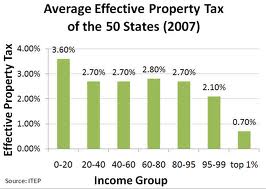
Here's another reason to reform the system. From the Institute on Taxation and Economic Policy.

Here’s another reason to reform the system. From the Institute on Taxation and Economic Policy.

In its press release, VR described the results of two questions. There were other questions, and VR is not releasing those numbers. It says it “has shared the results of the survey directly with candidates for office in an effort to initiate a dialogue about the need for property tax reform…”

So… it wants to tell candidates what the voters think, but it doesn’t want to let the voters know? That’s a bit curious.

I suspect that some of the other survey results were perhaps less forceful. If, say, respondents were asked how best to fix the system, I’m guessing there wouldn’t be any real consensus. Because all the alternatives are unpalatable. And that’s why it’s been so difficult for the Legislature to tackle the issue.

One other oddity: The VR release is dated September 29. At the time, apparently, it got zero attention in the media. This morning, VTDigger posted the release in its ever-popular “Press Releases” section, which is where I noticed it.

If you can’t grow the grassroots, lay down some astroturf

Campaign for Vermont, now firmly in the post-Lisman era — organizationally, at least; I have a feeling that Bruce is still writing most of the checks — is chugging along, trying to find ways to engage The People in its putatively centrist agenda.

Its latest effort? The Legislator Outreach Tool. It’s a way to take a basic template Letter To Your Lawmaker, make whatever changes you want, click a button, and have it sent by email to the legislator of your choice. Once it’s been vetted by CFV to make sure you haven’t written anything “profain (sic), illegal, threatening or otherwise inappropriate.” A screenshot is below.

The subject of the letter is high property taxes, and the basic letter includes CFV’s talking points on the subject: high per-pupil spending, rising taxes, “a system with little incentive for efficiency.” The letter specifically mentions a Campaign for Vermont report. And I wonder, based on CFV’s past practices, if using the Tool gets you on CFV’s member list. And if the letter arrives in the lawmaker’s inbox with some sort of CFV identifier attached.

Maybe I’m being overly suspicious. But the letter is, at best, a two-edged sword. It facilities contact with your lawmaker (you don’t even have to know your lawmaker’s name to send a letter!) — but on an issue of CFV’s choice, including a reference to CFV and a list of its canned talking points. Look at it one way, it’s an attempt to foster democracy. Look at it another way, it’s an attempt to reinforce CFV’s agenda and strengthen its profile at the State House.

The truth, I think, is somewhere in between.

Screen Shot 2014-10-13 at 3.28.49 PM

Beware the fast-talking gentlemen bearing snake oil

Must be fall. Traditional time for fairs and festivals around our state. And one of the traditional accompaniments to these events is the patent-medicine man, selling his Secret Natural Herbal Remedies, good for whatever ailments may befall Man, Woman, Child, Horse, and Dog.

And hightailing it to the next town before too many locals get sick from the dubious contents of those thick, opaque bottles.

Well, here come our snake-oil salesmen of politics, hawking their Foolproof Solutions To Our School Funding Ills. Just a tablespoon of my tincture, they cry, and all your problems are solved.

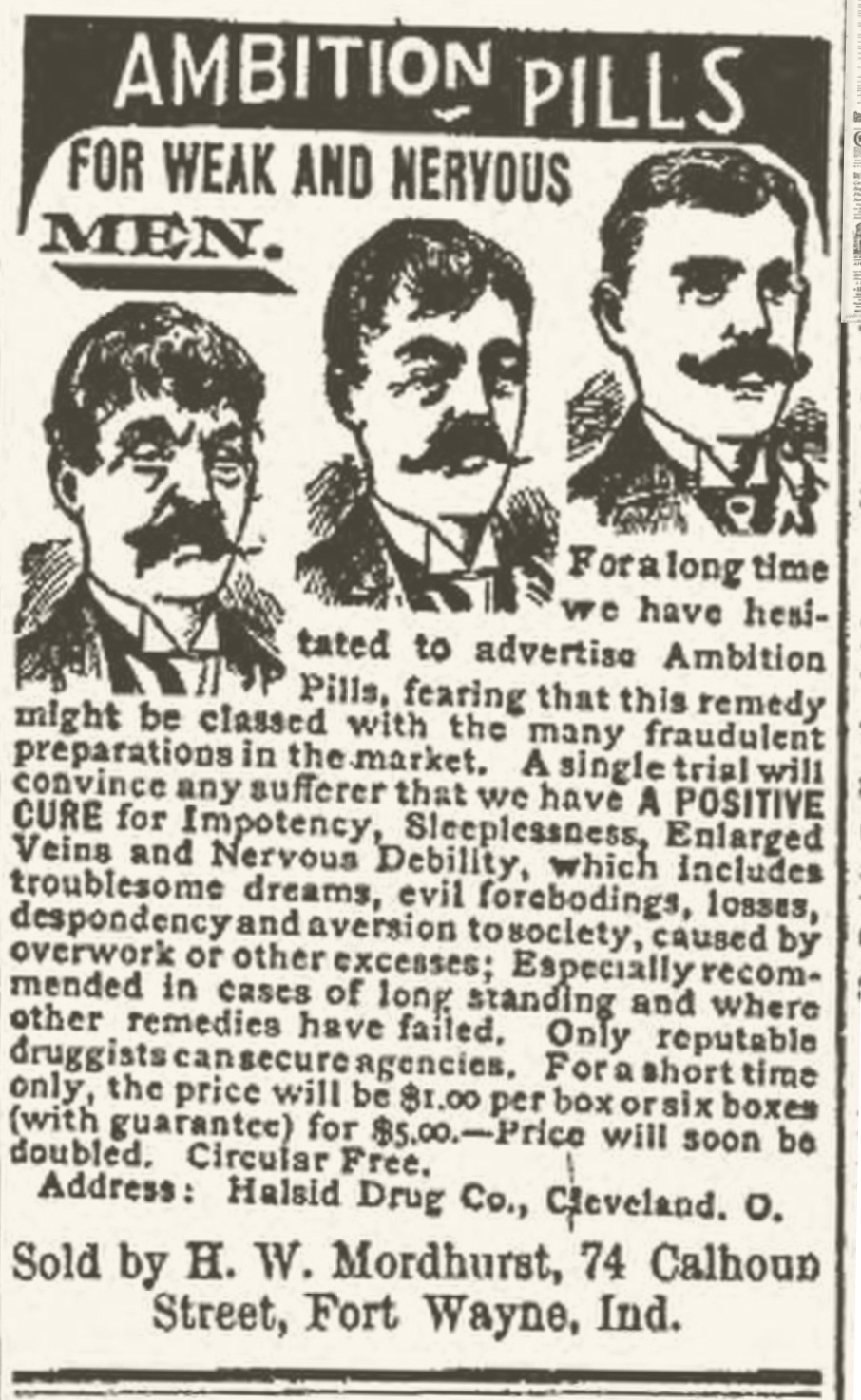
ambition-pillsOn the back of one horse-drawn cart we find a tall slender redhead brandishing a bottle of Olde Mahatma’s Secret Curative, a formula crafted by the Wise Men of the Far East (a.k.a. Pomfret), a stern purgative guaranteed to cleanse the system of blockages, growths, tumors and humors of all sorts, paving the way for a fresh start in a bright new tomorrow.

Behind all the label’s mumbo-jumbo, Olde Mahatma’s Curative is a simple solution with only one active ingredient: a two-year freeze on property taxes. This seemingly harsh treatment pays no heed to complications or practicalities; it just reams out the entire waterworks.

Over here, across the town square, is a dark-haired figure of serious mien offering Doc Feliciano’s Ache-Be-Gone, an elixir which, taken internally or applied externally*, is strong enough to banish every trace of pain from any cause, including lumbago, neuralgia, ague, impetigo, quinsy, and The Screws. Doc F has used all his extensive scientific training to fashion a singular combination of analgesics, potions, and elixirs, including some that have been foolishly prohibited by unimaginative authorities.

*You choose the method and dosage, for each man is the best judge of his own medicinal needs. 

Doc Feliciano promises to banish all pain and discomfort from the unrelenting pressure of property taxes through the indubitable mechanisms of the Free Market. His solution for a public school system with too few students and rising costs? A whole lot more schools! Free Choice For All! Which will, somehow, magically, bring down the cost of the system.

My friends, you would be wise to eschew the easy blandishments of the political snake-oil salesman. Complicated problems require time and care, and nuanced approaches by learned practitioners. You will not find the answers to your educational troubles at the bottom of a murky brown bottle! Keep your hard-earned money in your pocket, and let the peddlers be on their way.