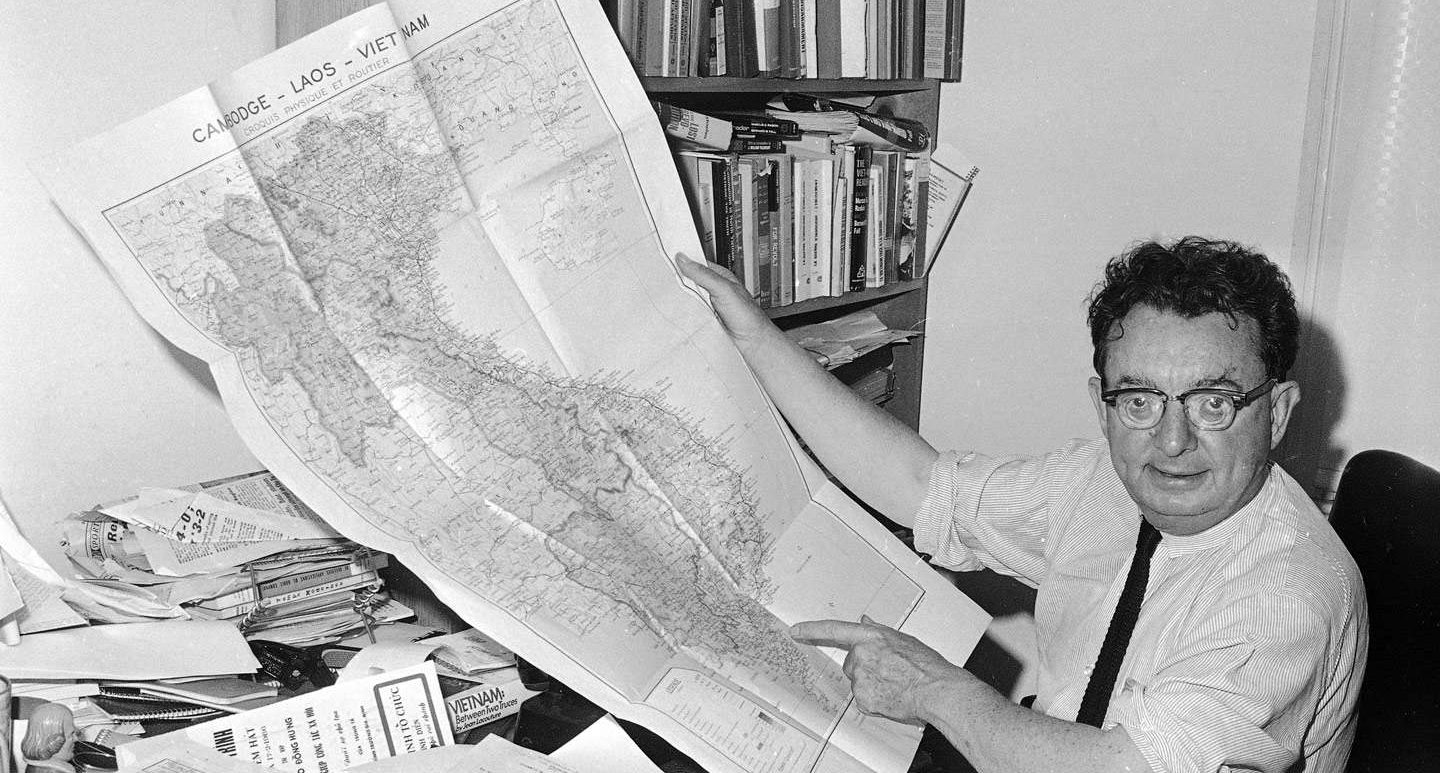
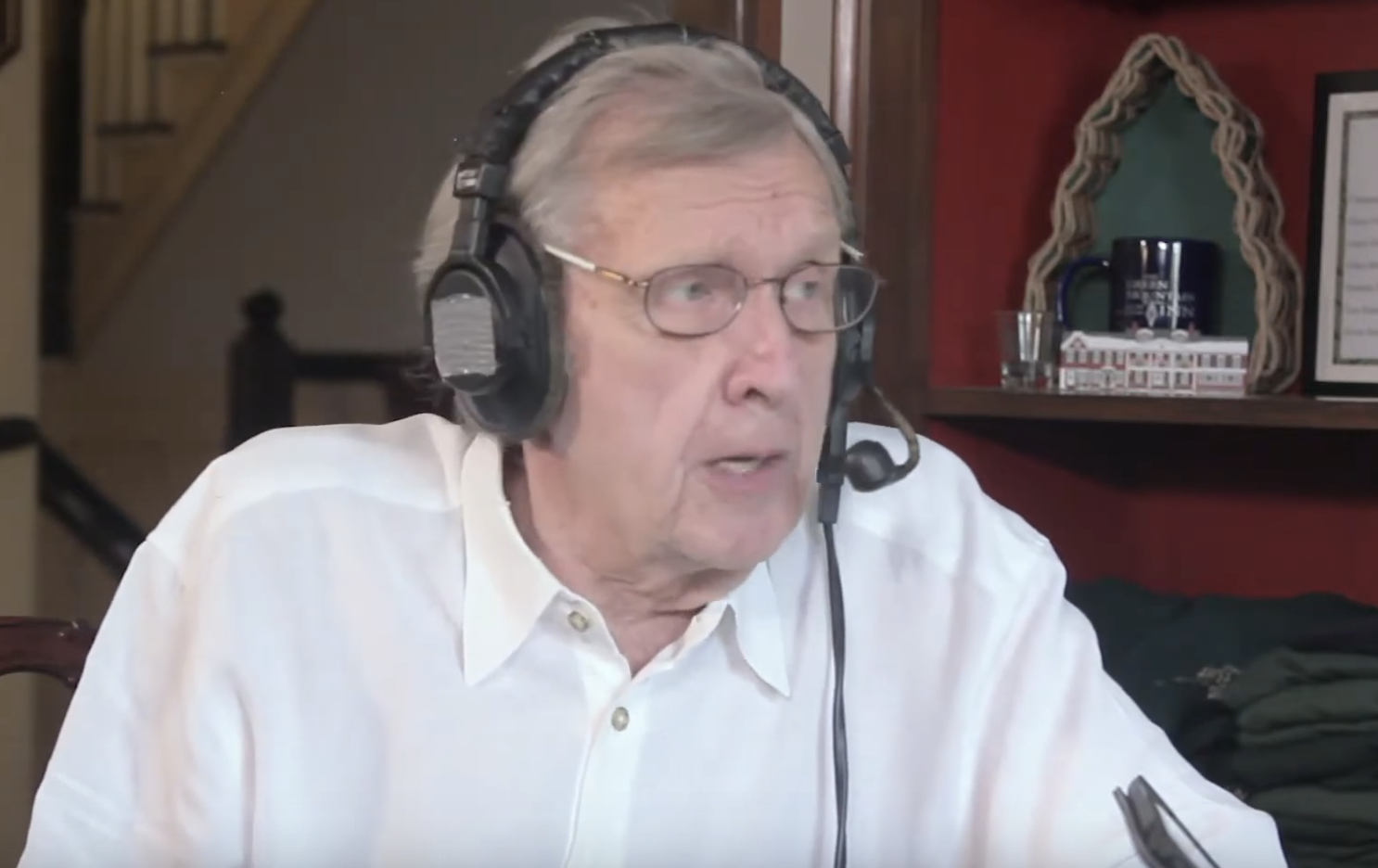
A fond farewell to Ken Squier, member of the NASCAR Hall of Fame, owner of Thunder Road, and the last vestige of a lost species: the locally-oriented broadcaster. His passing made national headlines in broadcasting circles because of his place in the history of NASCAR broadcasting. Around these parts, Squier is best known for single-handedly keeping Waterbury-based WDEV Radio going for decades as an independent voice after the vast majority of his peers had sold their stations to big national corporations.
Squier was a solid Phil Scott Republican, but he did his best to keep his station open to all viewpoints because he firmly believed he was the steward of a public trust. I have nothing but respect for him and his life’s work.
There used to be WDEV equivalents in every community in America big enough to warrant an FCC license. Those stations were basically the public commons of the airwaves, virtual gathering places for their communities. It’s impossible to imagine the impact these stations had. We’ve got nothing like them anymore. And we have no idea what we’re missing.
If you want to get a taste of what these stations meant to the people they served, I recommend Granite and Ether, a book about radio in New Hampshire by longtime broadcaster Ed Brouder. It’s been an age since I cracked it open, but I remember a story he told about one of those locally-owned small-town stations. When its best-known host died suddenly, his memorial service attracted a huge crowd — far larger than the population of the town itself. He was simply that great a presence to his listeners.
The downfall of community-oriented radio began under Ronald Reagan, who launched a deregulation wave that stripped broadcasters of any obligation to serve the public interest and progressively raised limits on ownership. As a result, massive conglomerates came to dominate the field. Station licenses were more valuable as poker chips than as community resources.
I spent several years working for a WDEV equivalent in another state: a small station with predominantly local programming and a sizeable news staff. It was a shoestring operation but a delightful place to work because everyone, from the general manager on down, was committed to the mission. And we did some damn fine stuff with limited resources.
(This will be of interest to virtually no one, so feel free to skip to the next paragraph. At the time, my station played its ads and its most popular music on “carts,” which were little eight-track sort of tapes low on audio quality but high on convenience and utility. One of my spare-time duties was to open up the worn-out carts and thread new tape into them so we could keep using them. Even then, in the late 80s and early 90s, carts were on their way out and it was hard to buy new ones. Not to mention our budget for new equipment was vanishingly small.)
The station was owned by a local rich guy who was proud to put his name on a station that served the whole community. When he neared the end of his life and started selling assets, he had an offer from a local entity that wanted to keep it the way it was, but he got a slightly better offer from a national conglomerate and opted for the biggest bag. Cutbacks were thorough and immediate, and the station became yet another outpost of right-wing talk radio.
WDEV reminds me very much of that station before the buyout. Low budget, but everyone working toward the same goal: providing listeners with programming that reflects the community. Squier did his best to plan a transition that would give WDEV every opportunity to survive. I hope it does. It would be a fitting legacy.
 The Vermont Political Observer.
I didn’t know a lot of or about Ken Squier, but the one little piece I did get to know impressed me.
It was back in ’98 or ’99 and I was doing some morning radio and a noontime hyper local news program from WSNO in Barre. Squier and Thunder Road were bringing some big deal in the racing world town and Barre was expected to see a noticeable increase in traffic and business.
Squier held a public meeting of sorts up Quarry Hill at the labor union meeting and office space. It was very well attended. Somebody in the audience stood up to thank Squier for all he’d done for Barre and area and wanted to know what the community could do for Squier and Thunder Road in appreciation.
Ken didn’t blink. He said he didn’t need anything. This meeting was being held so Barre and area could prepare. And this is the part of Ken Squier I got to know. Glad I did.
A re-broadcast (podcast) by David Goodman of a very sweet Ken Squier interview he did a year ago is over on vtdigger. I do hope ownership can stay in local hands. A recent example that such custodianship is possible was Dick Drysdale making it financially possible for Tim Calabro to buy the Randolph Herald a couple years ago to keep it local.